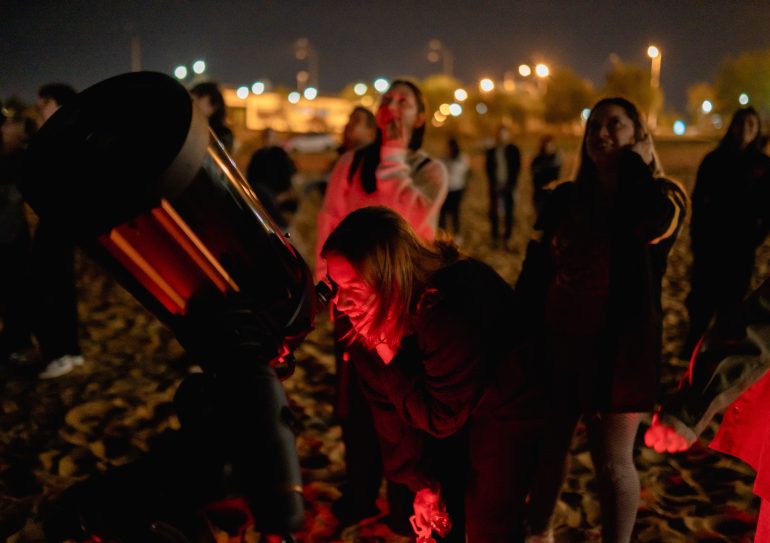

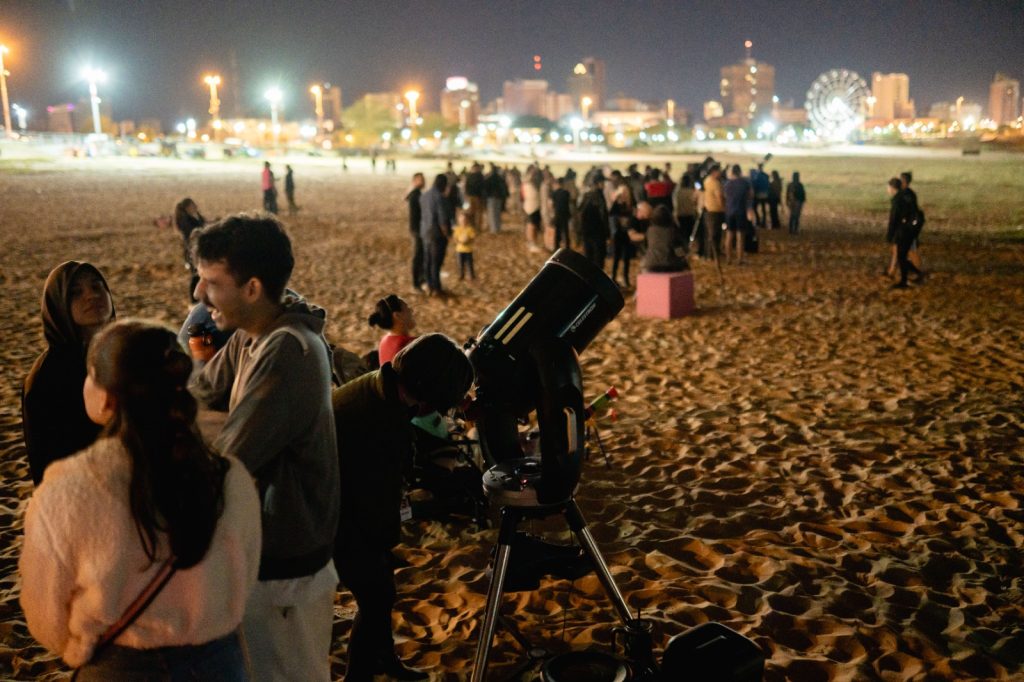
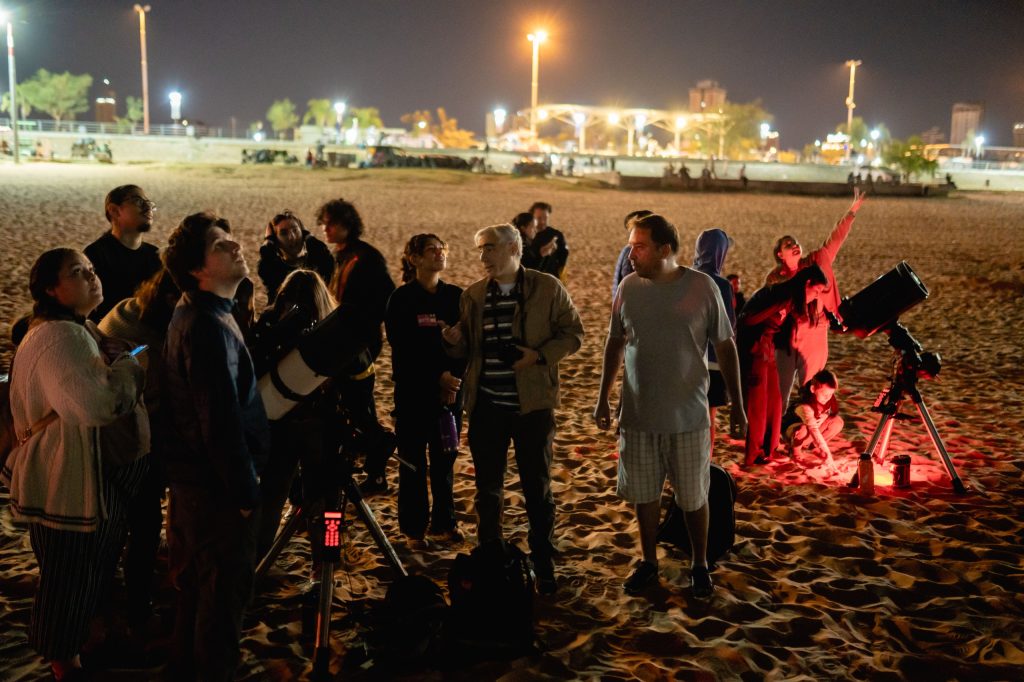
Nine powerful telescopes will be set up at Asunción’s Costanera Norte on Thursday 27 August 2026, giving the public a close-up view of a rare lunar eclipse, August’s Blood Moon. The Museo de Ciencias (MuCi) will host its second annual Stargazing Night from 22:00, offering free access to families, astronomy enthusiasts and anyone curious about the night sky.
The meeting point will be the Costanera Norte beach, near the Palacio de López and the #YoAmoAsu landmark letters. Visitors must register through MuCi’s website, and a responsible adult must accompany all children.
A 93% Lunar eclipse
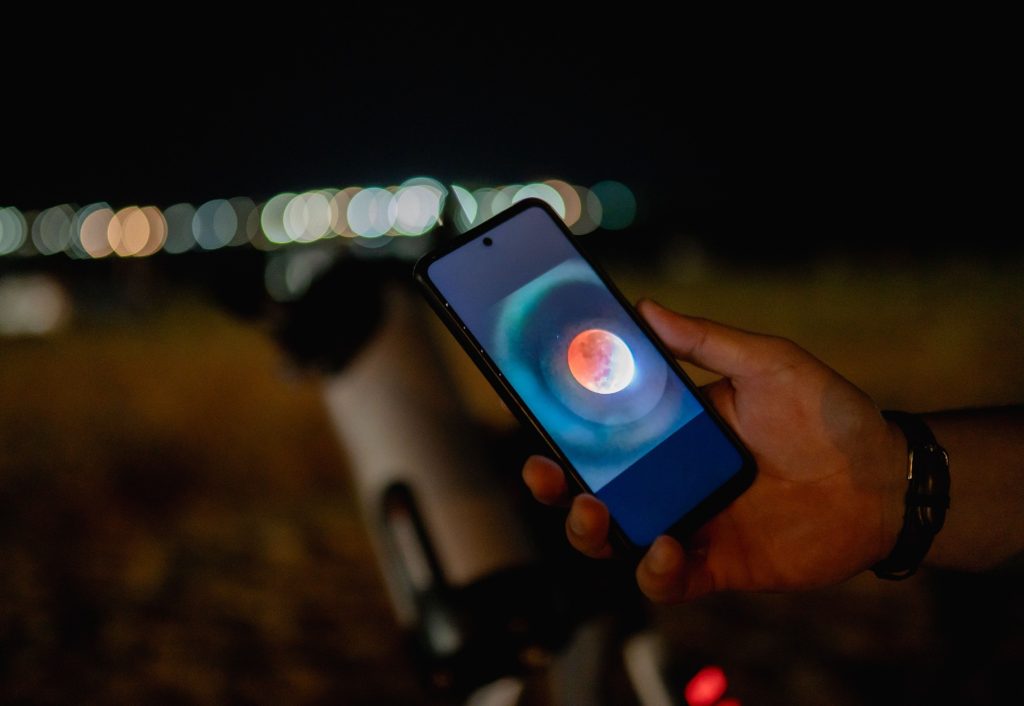
Between the night of 27 August and the early hours of 28 August, Earth will pass between the Sun and the Moon. Its shadow will cover approximately 93% of the Moon’s surface, making this a deep partial lunar eclipse. As sunlight passes through Earth’s atmosphere, some wavelengths are filtered while reddish light is refracted towards the Moon. This will give the lunar surface its characteristic coppery-red appearance, commonly known as a “Blood Moon”.
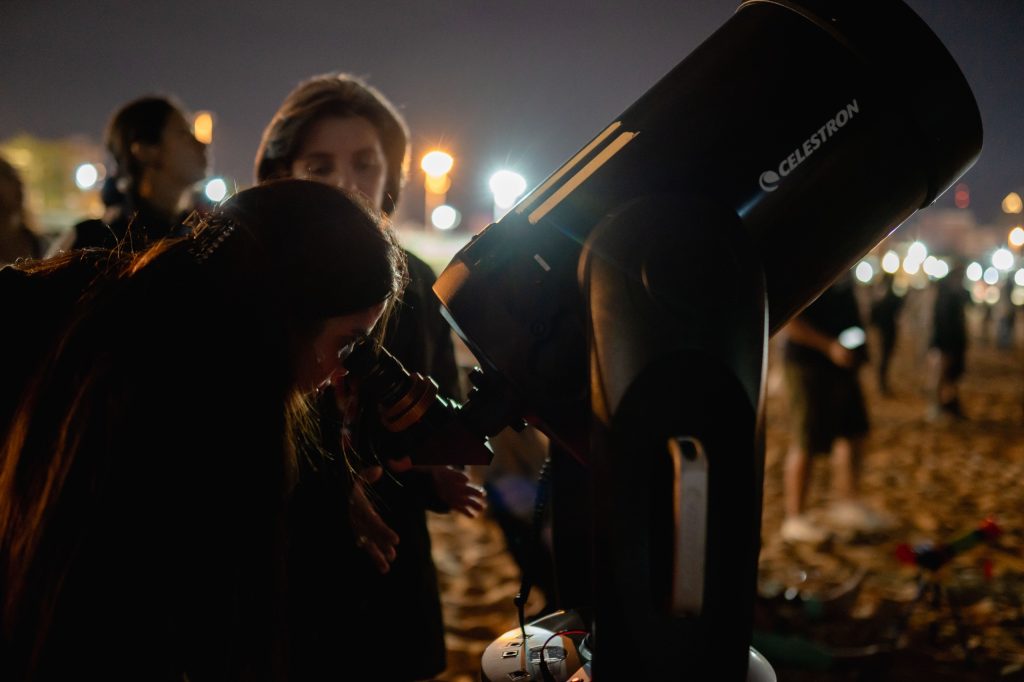
In Paraguay, the eclipse will reach its maximum at 01:19 on Friday 28 August. The phenomenon will continue until approximately 04:00, giving visitors several hours to observe its changing appearance. MuCi will provide three of its own telescopes, while six additional instruments will come from local amateur astronomy groups. The telescopes will have apertures ranging from eight to 11 inches, allowing visitors to see the eclipse, lunar craters and subtle colour changes.
“They are computerised telescopes with apertures of eight, 9.25 and 11 inches,” says Rodrigo Ríos, director of MuCi’s Planetarium. “They will allow us to observe the eclipse in detail and see it almost as an astronaut would during a hypothetical journey to the Moon.”
MuCi staff and local astronomy experts will be available throughout the evening to explain the August’s Blood Moon phenomenon and answer questions.
Bringing science closer
For Ríos, events such as the Stargazing Night can turn an interest in the universe into a hands-on learning experience. “Astronomy has an enormous capacity to awaken curiosity and connect people with science. Many people are fascinated by the sky, the universe and its mysteries.”
The event also offers a preview of what visitors can expect from the future MuCi headquarters in the Costanera. Its planned Astronomy Terrace will provide a dedicated space for observing the sky and exploring scientific questions in an accessible setting. Last year’s event attracted more than 1,000 people. This year, MuCi hopes to double that number while keeping the activity free and open to everyone.
“MuCi wants science to truly be for everyone,” says Paola Martínez, the museum’s executive director. “Families, young people, children and enthusiasts can approach, observe the sky and share a scientific experience without needing prior knowledge.”
What to bring
Visitors should bring water, binoculars and blankets if they plan to sit on the beach while watching the sky. MuCi is also partnering with Bolt, a ride-hailing and mobility platform, which offers attendees a special discount for trips to the Costanera with the code MUCIBOLT2026. Unlike a solar eclipse, observing a lunar eclipse does not pose a risk to eyesight. Visitors therefore do not need special protective glasses.