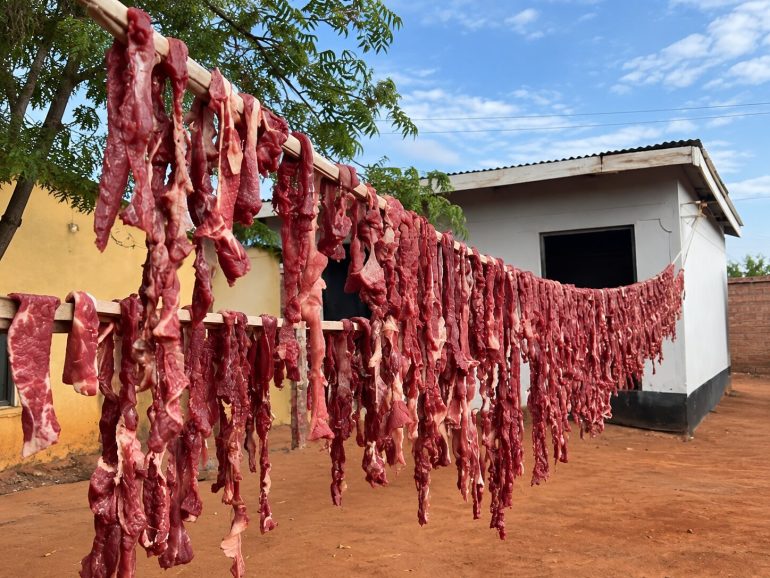

When travelling through different parts of Paraguay, visitors may notice long, thin strips of meat hanging outside butcher’s shops. These strips are known as Cecina, a traditional form of dried beef particularly found in rural communities and the Chaco. For generations, Paraguayans have used traditional methods to preserve meat and extend its shelf life. Beyond its practical purpose, this method of preservation has become part of Paraguay’s culinary heritage.
A tradition of preserving meat
The origins of cecina are connected to a much older tradition of meat preservation. Indigenous communities in the region were already using dried meat before the arrival of Europeans, as removing moisture provided a way to preserve it for longer.
In Paraguay, these practices later developed alongside other forms of preserved meat. Rather than having one precise point of origin, cecina forms part of a longer history of adapting meat preservation to local conditions.
How is cecina made?
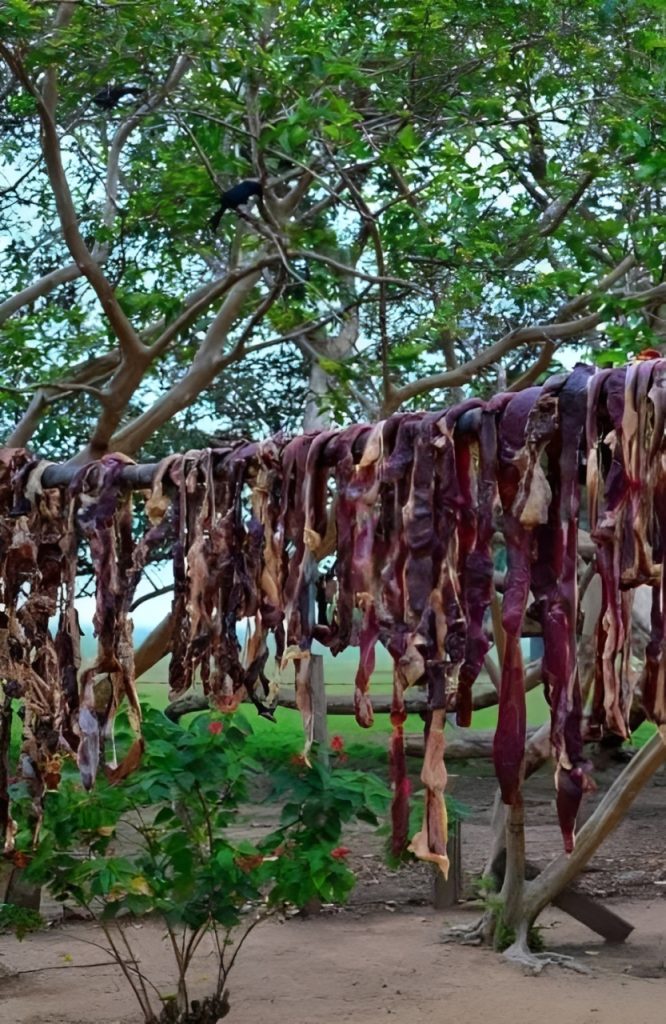
The preparation begins by cutting the meat into long, thin strips, allowing it to dry more easily. The pieces are then salted to help preserve them before being exposed to the sun and circulating air. Depending on the traditional method used, the strips can be laid out on a suitable raised surface or hung from a line or wooden support, allowing air to circulate around the meat.
However, direct sunlight is not the only method used. Some cecina traditions use smoke as part of the preservation process. Modern preparations may use ovens or dehydrators to control temperature and drying time. Nevertheless, traditional outdoor drying remains particularly relevant, making weather conditions an important factor.
The drying period can vary considerably, but traditional preparations commonly take several days. References to sun-dried cecina often give a range of two to seven days, depending on the thickness of the meat, temperature, humidity and airflow.
Cecina in Paraguayan dishes
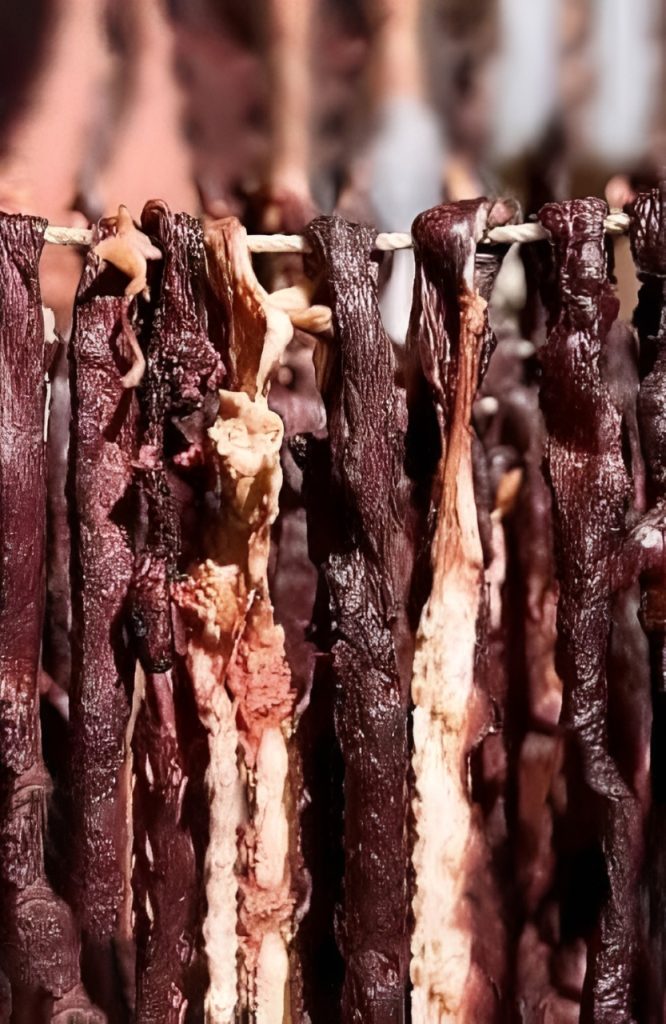
Cecina is not only eaten as preserved meat but is also used as an ingredient in several traditional dishes, including empanadas and guisos (stews). In the Chaco region, cecina is also used in Pirón, a preparation made with fariña (cassava flour), cheese, onion and meat.
Chastaca is another example of a traditional dish prepared with cecina, along with ingredients such as onion, eggs and broth. It is particularly associated with rural cooking and has become less familiar in urban areas, where refrigeration has reduced the need to preserve meat through salting.
A tradition that continues
The cultural importance of cecina was recognised in 2025 by Paraguay’s National Secretariat of Culture. The institution declared the traditional knowledge, techniques and methods associated with the empanada de cecina of Villa Hayes part of the country’s National Intangible Cultural Heritage. The declaration highlighted the importance of passing this knowledge from one generation to the next.