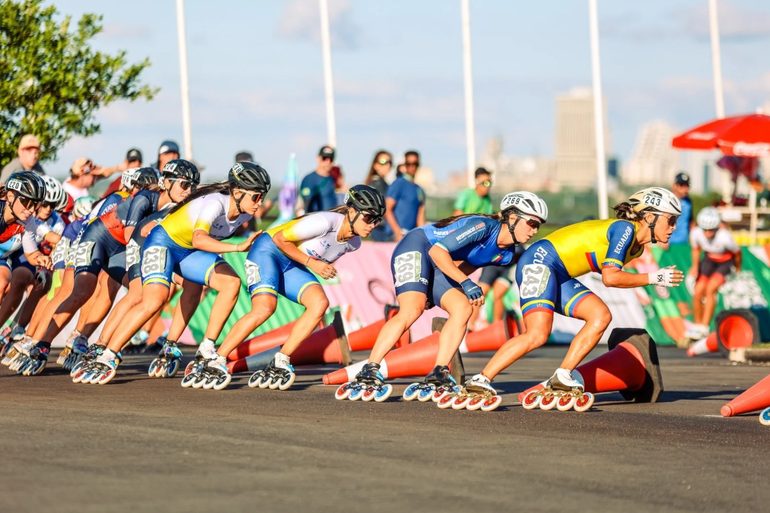

The World Skate Games ASU26 in Paraguay have been highlighted by officials as a major success, attracting 10,000 accredited participants and confirming Paraguay’s position as a host for international sporting events. Larissa Schaerer, the Director General for the Games, praised the significant impact of the competition, which brought together thousands of athletes, officials, and representatives from around the world.
Schaerer, who also serves as the deputy general coordinator for the country’s major sporting events, explained the scale of the operation during an interview on state media. She emphasised that the event presented a considerable organisational and logistical challenge to meet the high standards required by World Skate, the international governing body for roller sports.
A major organisational achievement
The games mobilised a vast number of individuals. Schaerer confirmed the impressive attendance figures, which underscore the magnitude of the competition.
“It was a truly huge event. We received 10,000 accredited people, including athletes, officials, technical staff, doctors, judges and journalists, including a significant presence of international media,” Schaerer stated.
According to the director, the country successfully rose to this large-scale organisational challenge. Furthermore, it consolidated the experience Paraguay has gained in recent years from hosting other international competitions. Schaerer believes one of the principal achievements of ASU26 was demonstrating the nation’s ability to manage sporting events of this magnitude while catering to thousands of international visitors.
Safety concerns
Despite the praise for the scale and success of the World Skate Games ASU26, there was also significant criticism of the event organisation over the unsafe conditions on Asunción’s Costanera. Skaters refused to compete and staged a sit-in because of unsafe asphalt conditions. The road speed events were disrupted by potholes, freshly repaired and still-wet asphalt that lacked grip (especially in curves), and multiple falls.
After organisers announced adjustments to the track and a new schedule, several skaters still refused to race and sat down in protest. They cited ongoing safety concerns, lack of guarantees for their physical integrity, and inadequate preparation of the track.
A lasting legacy for sport
Beyond the immediate sporting results, the event, according to Schaerer, has left a lasting legacy for Paraguay. She noted that the infrastructure developed specifically for the games will be a significant asset for the future. This will allow the country to host further competitions and support the growth of urban and wheeled sports nationwide.
In addition, the organiser pointed out that the international event provided valuable technical experience and brought important international visibility to Paraguay: “It was an extraordinary experience and a demonstration that Paraguay can organise world-class sporting events.”
Also read: Speed Skater Julio Mirena Wins Paraguay’s Only Medal At World Skate Games ASU26.