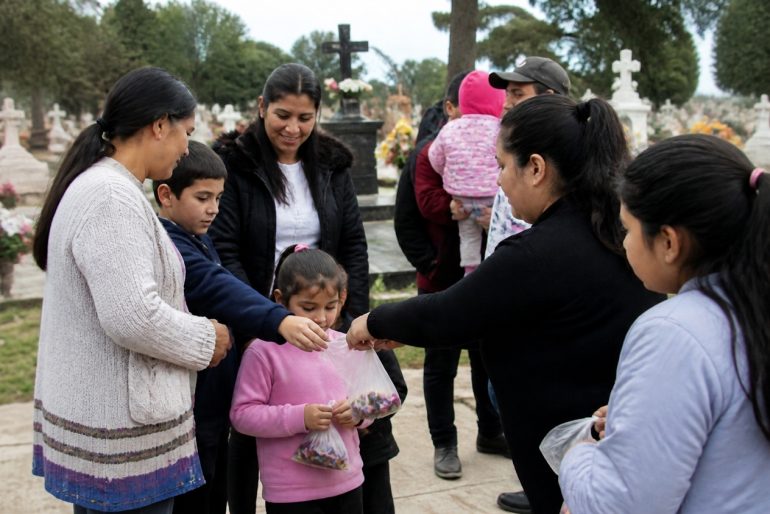

Children collecting sweets at cemeteries may seem like an unusual twist on the Halloween trick-or-treating. However, beyond the simple joy of sharing treats, this practice carries deep cultural and religious significance for many Paraguayans. On 1 and 2 November, during All Saints’ and All Souls’ Days, families in Paraguay visit cemeteries to remember their deceased loved ones. People also hand out small bags containing treats, chipas and even toys to children in memory of those who have passed away.
This tradition offers families a way of honouring their dead by bringing moments of joy to the living. Passed down through generations, this custom can still be seen in rural areas and among traditional Paraguayan families.
Honouring little angels through trick-or-treating
In some Paraguayan communities, this practice is linked to the remembrance of angelitos or little angels, explains Selva Salinas, a 22-year-old university student researching Paraguayan folklore.
“In folk-Catholic tradition, angelitos are children who died before the age of seven or eight. These angels are considered pure, innocent and free of sin. After death, their souls are believed to fly directly to heaven,” Salinas tells The Asunción Times.
For Felipa Ávalos, 68, who grew up in a traditional Paraguayan household, the practice has personal significance. “I have two angelitos,” she says. “On All Saints’ Day, I light candles for them at home and give sweets to children in their memory.” Following her mother’s example, Ávalos sees the practice as “a voluntary act rather than an obligation. My mother was like that. She wanted to share with people.”
Remembrance and joy
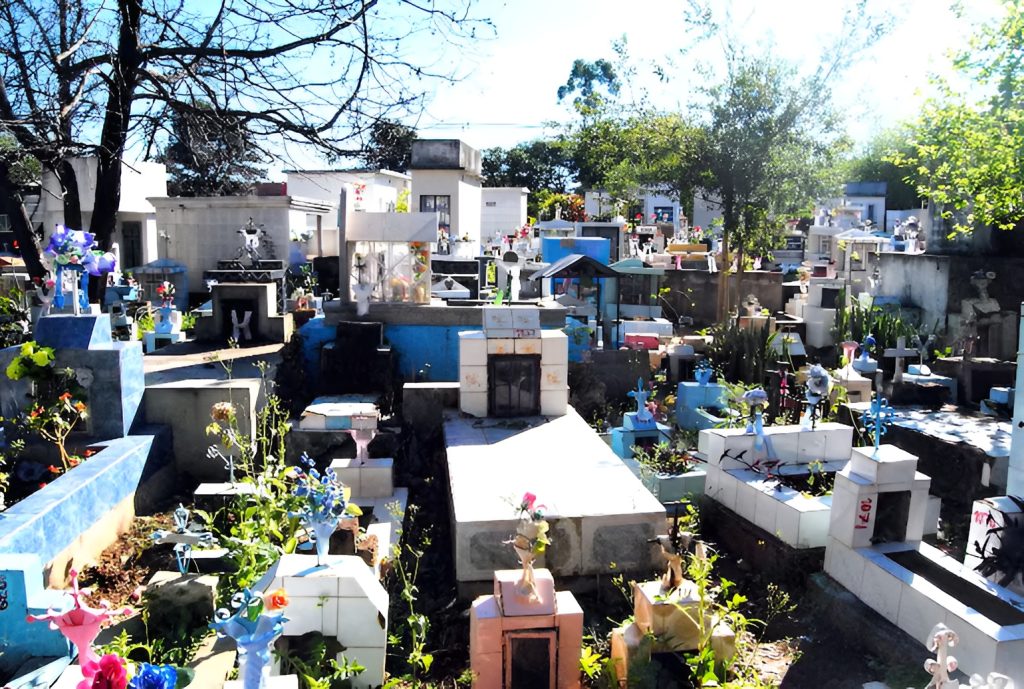
“On 2 November, it is All Souls’ Day. I visit my parents’ and sisters’ graves, light candles, change their kurusu paño (the cloth covering a cross) and stay for a while to pray. Some people also choose to bring sweets for children and the elderly during that day,” Ávalos explains.
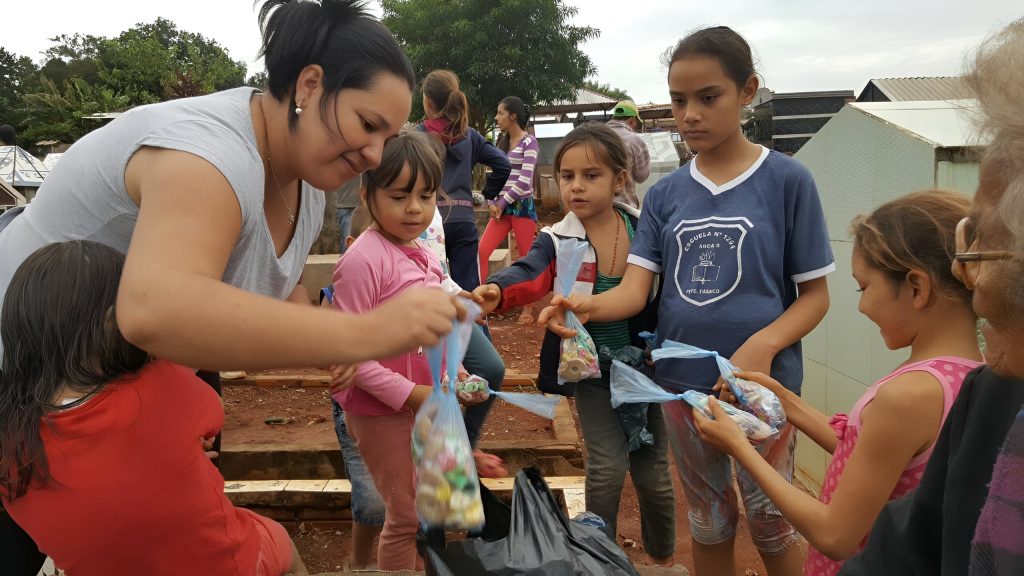
Treat bags filled with candies, lollies, biscuits, toys and chipa are distributed at cemeteries and even around neighbourhoods. For some, giving these gifts fulfils a promise made to a loved one before their death. For others, it is a custom passed down to them from previous generations.
By bringing sweetness and joy to others, these families keep both the memory of their loved ones and a long-lasting custom alive.
Food, faith and community
In traditional Paraguayan communities, food-sharing is not limited to cemetery visits. After a novena (a series of nine days of prayers for a deceased person), those who take part also receive bags filled with treats. Trays of biscuits and fizzy drinks or juice are also passed around after the prayer sessions. The final day may also include a karu guasu, a communal meal honouring the deceased. Moreover, during Christmas, children visit homes to admire pesebres (Nativity scenes) and pray before them, receiving fruit, sweets and chipa afterwards.
These acts of remembrance and generosity allow families to honour their loved ones while bringing joy to their communities. Although these customs are becoming less common in urban areas, they are still practised in rural communities and among traditional Paraguayan families. As a result, they remain an important part of Paraguayan culture and religious traditions.