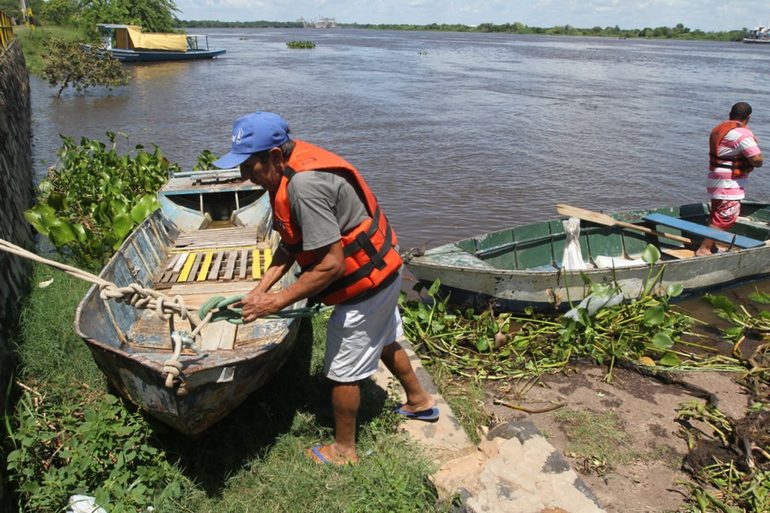

Paraguay’s Ministry of the Environment and Sustainable Development (MADES) has announced the start of the 2026-2027 fishing ban on 2 November. The measure aims to protect fish species during their crucial reproduction period. This annual prohibition is a key strategy for ensuring the long-term sustainability of the country’s aquatic ecosystems.
According to the Director of Fisheries for MADES, Adán Leguizamón, who spoke to loca media, the ban will have different durations depending on the location. In waters shared with Argentina, the prohibition will last until 20 December. However, in waters shared with Brazil, the ban will extend until 31 January 2027.
Restrictions and enforcement
Throughout the ban, all boat-based fishing, whether for sport or commercial purposes, is strictly forbidden. The use of fishing equipment, as well as the transport and sale of fish products, will also be prohibited in accordance with current regulations. The annual ban, or veda pesquera, is established under Paraguayan law to allow species such as dorado, surubí, and pacú to reproduce, safeguarding future fish populations.
Authorities have stated they will implement stringent controls to ensure compliance with the measure. They warned that any infractions discovered will be subject to sanctions and fines. These penalties can be severe, often calculated in multiples of the daily minimum wage, and may include the confiscation of boats, vehicles, and fishing equipment.
Subsistence fishing exception
The regulation includes an exception for subsistence fishing, though it is subject to strict conditions. This type of fishing may only be carried out from riverbanks by licensed commercial riverside fishers. Permitted equipment is limited to a hook, line, or a rod with or without a reel. The use of any type of boat is expressly forbidden.
Furthermore, each fisher is limited to catching a maximum of five kilograms of varied fish. The rule specifically excludes certain high-value species from being caught, including surubí, manguruyú, dorado, and pacú. Crucially, any fish obtained through subsistence fishing cannot be sold and must be for personal consumption.
Rules for commercial sellers
Businesses involved in the fish trade, such as fishmongers, supermarkets, restaurants, and canteens, must adhere to specific procedures. Those registered with the National Register of Fisheries and Fishermen are required to submit a sworn declaration of their current stock to the Directorate of Fisheries and Aquaculture. This must be done within the timeframes established by the regulations.
Once the stock has been declared, these businesses will have a period of ten consecutive days from the start of the ban to sell their existing inventory. After this period, the sale of these products will be prohibited. Additionally, the sale and transport of live bait for sport and commercial fishing will be forbidden.
The Directorate of Fisheries and Aquaculture, alongside the Directorate of Integrated Environmental Enforcement, will be responsible for monitoring and enforcing these rules throughout the annual fishing ban.
Also read: A Practical Guide To Fishing In Paraguay: Best Spots, Licences And Tips.