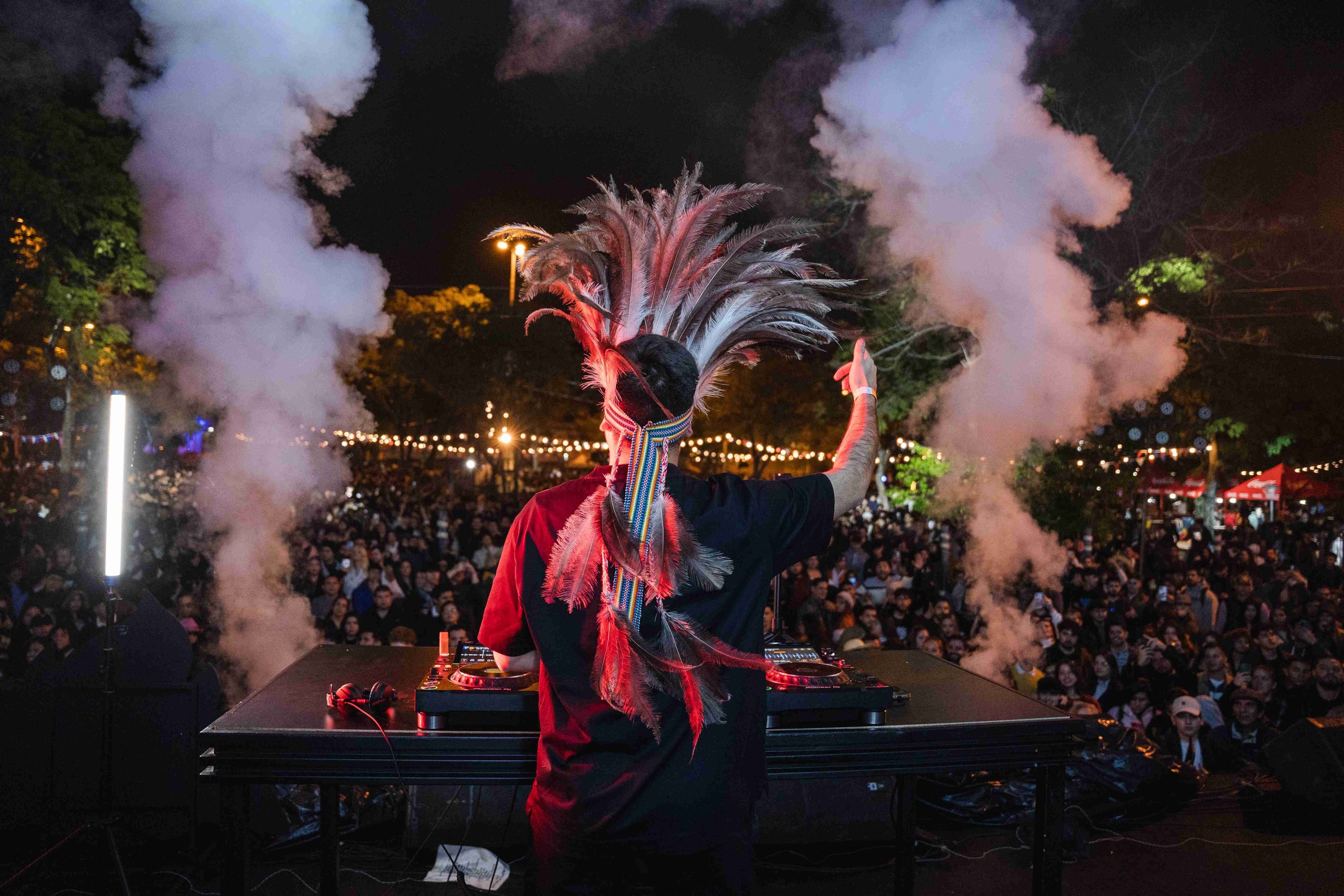

Paraguayan DJ and producer Indio Rubio has spent years turning Paraguayan folk melodies into electronic dance tracks. In July 2026, that project took him to Tomorrowland, one of the world’s largest electronic music festivals, held every year in the Belgian town of Boom.
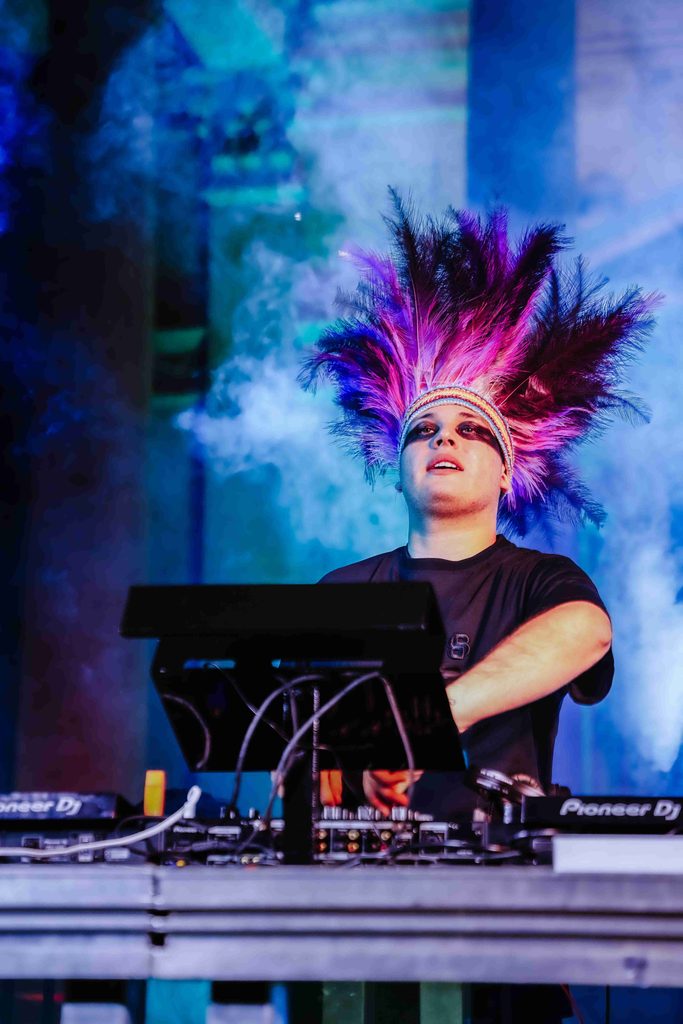
Performing as part of Tomorrowland Academy, the festival’s educational programme, Indio Rubio closed his roughly 20-minute set with an electronic version of Pájaro Campana, one of Paraguay’s best-known harp melodies. The DJ wanted his first appearance on a Tomorrowland stage to leave audiences with a distinctly Paraguayan sound.
The Paraguayan sound
“Of the three songs I could play, I wanted the last one to be the one that best represented Paraguay,” he tells The Asunción Times. “The idea was that anyone who stayed until the end would take away that harp sound, that identity, that little piece of Paraguay.”
Around 20 Paraguayans who travel to Tomorrowland each year were present during his set, helping draw the attention of other festival-goers. Passers-by stopped to watch, while some international visitors joined in dancing when Pájaro Campana began to play.
“In the videos, you cannot really appreciate everything that was happening around it. But for me, it was very special to see people from other countries reacting with curiosity to something so much our own.”
Three songs, one message
Indio Rubio performed three tracks during his Tomorrowland set: 13 Tuyutí, India, and Pájaro Campana. Each has its own place in Paraguayan culture. He built energy with the first two before closing with Pájaro Campana, his strongest expression of Paraguayan identity.
His appearance came through Tomorrowland Academy, where he has been a student for more than a year. During this year’s festival, the Academy opened a booth where students could sign up for short live sets on one of its stages. Indio Rubio took the opportunity. He is not the only Paraguayan name to have come through the programme. 13-year-old DJ OcO, from Asunción, was selected for the same Academy earlier this year.
For Indio Rubio, however, performing at Tomorrowland is not the final destination. “I felt I was taking a small step towards a dream that is still enormous for me,” he says, reflecting on his first time stepping onto a Tomorrowland stage. “This experience was not an arrival, it was the beginning of a much bigger journey.” He first visited Tomorrowland as a spectator in 2023, only days before his debut live performance in Paraguay under the name Indio Rubio.
Who is Indio Rubio?
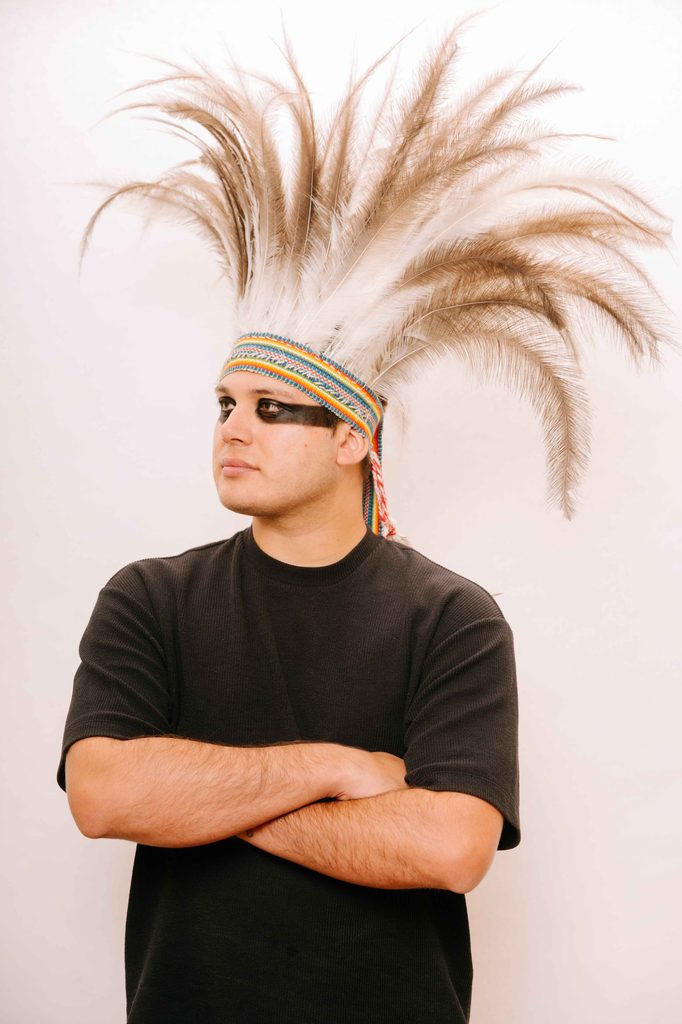
The name Indio Rubio, which translates roughly as “blond native,” reflects the artist’s own mixed heritage: his father’s Paraguayan roots and his mother’s German ancestry. That blend inspired both his stage name and his musical concept. He developed his fusion sound six years ago, releasing debut single India with producer and singer Redemm four years ago.
His music combines tech house and Afro house with traditional Paraguayan sounds. His tracks India and Pájaro Campana have together drawn more than 400,000 streams on Spotify alone. His broader goal, he says, is to reconnect younger Paraguayans with music from their own country.
“What I really want with these fusions is for young people to listen to Paraguayan music again, and to give more value to what we have. There are incredible songs that often do not get played where young people go out, so I try to bring them into electronic music in a way that connects with them.”
Working with the Maká community
Before using Guaraní-inspired ornaments and body art, Indio Rubio consulted the Maká community in Mariano Roque Alonso, near Asunción. He spoke with community leader Mateo Martínez Mateiko about his project, and Martínez Mateiko authorised him to use the community’s ornaments on stage.
“For me, it was fundamental to do this from a place of respect, with the community’s knowledge, rather than simply taking a cultural element because it looked visually striking.” His effort to connect electronic music with Paraguayan identity also extends beyond sound and performance. He has also filmed sets at Paraguayan landmarks, including the Pantheon of the Heroes, the Ñandutí Footbridge, and the Jesuit Ruins of Trinidad.
“I do not just want to record a DJ set, I want each production to also show Paraguay, so that someone watching from anywhere in the world might ask where that place is and want to learn more about our country.”
‘We have to keep making noise abroad’
For Indio Rubio, his Tomorrowland appearance is one step in a longer effort to give Paraguayan music sustained international exposure. “It is not enough for something to happen just once. We have to keep producing, travelling, showing our music, building connections, and making noise abroad.”
His stated ambition is to eventually join Tomorrowland’s official line-up and perform on its Main Stage. Further down the line, he hopes to headline stadium shows built around Paraguayan music.
“I want to reach those stages carrying as much Paraguayan music as possible with me, and to show that our identity can also fill enormous spaces on the international scene.”