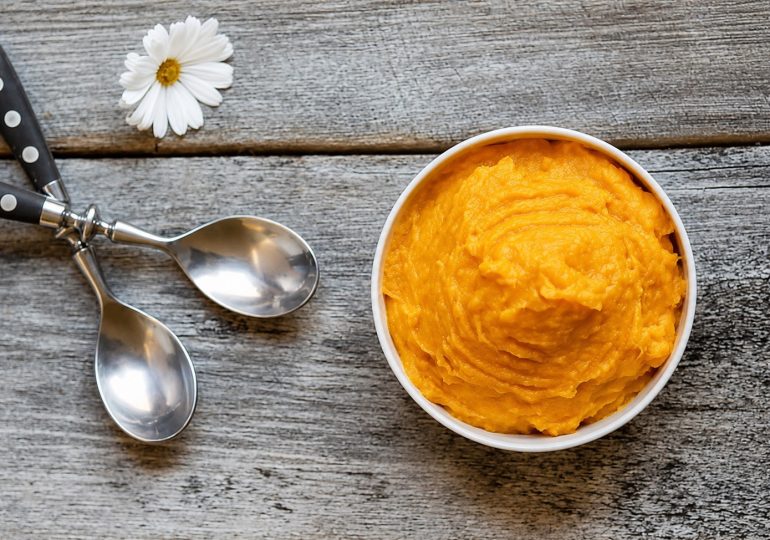

Kivevé is a distinctive semisweet dessert made primarily from andaí pumpkin. The recipe combines indigenous culinary traditions with ingredients introduced during the colonial period. Kivevé reflects Paraguay’s agricultural rhythms, particularly the seasonal availability of the andaí pumpkin. Today, it remains a familiar presence during the country’s annual winter festivities.
A dish rooted in Guaraní tradition
Kivevé, sometimes referred to in Spanish as quibebé or polenta de calabaza, is a semi-sweet dish of Guaraní origin. The name is derived from a Guaraní term associated with a reddish or orange hue, in reference to the vibrant colour of the andaí pumpkin used in its preparation. Researchers have traced the dish’s origins to culinary traditions that developed in the Guaraní-Jesuit missions. Local ingredients formed the basis of everyday cooking in these communities.
While kivevé’s exact evolution remains difficult to document, it is widely regarded as one of Paraguay’s longstanding traditional foods. Like many classic Paraguayan dishes, kivevé reflects the blending of indigenous ingredients with products introduced during the colonial era. Native pumpkin varieties were combined with dairy products, cornmeal, and cheese, creating the distinctive preparation that remains popular today.
How to prepare your Kivevé
Preparation begins by peeling and boiling the pumpkin until tender. The vegetable is then mashed or strained before being combined with milk, sugar, and finely sifted cornmeal. The mixture is stirred continuously while cooking until it reaches a thick consistency. Cheese is added at the end, creating the characteristic contrast between sweetness and savoury richness that defines the dish.
Kivevé is typically served warm, either on its own or accompanied by milk. While often classified as a dessert, it occupies a unique place, sitting somewhere between a pudding, porridge, and savoury stew. Traditional accounts describe kivevé being prepared in clay pots, a method that many cooks believed enhanced the flavour and texture of the finished dish.
A taste of Paraguay’s folklore season
Kivevé is closely connected to Paraguay’s traditional food culture, making late August an especially fitting time to try it. Paraguay celebrates National Folklore Day on 22 August, when communities highlight the country’s traditional music, customs, crafts and cuisine. Kivevé frequently features among these traditional foods, particularly at cultural events and food fairs.
Although the dish is eaten throughout the year, kivevé has been featured at traditional food fairs held during the Paraguayan winter, between June and September, giving it a natural connection to Paraguay’s late-winter culinary traditions.
Kivevé is also served during San Juan celebrations in June, alongside favourites such as chipa, mbeju, pajagua mascada and pastel mandi’o. However, its place in Paraguay’s food culture extends well beyond the festival season, making August’s folklore celebrations a timely opportunity to discover a dish that remains part of both festive and everyday Paraguayan cuisine.
A recognised part of Paraguay’s culinary heritage
In 2018, Paraguay’s National Directorate of Intellectual Property (DINAPI) included kivevé in its officially recognised catalogue of traditional foods as part of the country’s Gastronomic Culinary Heritage. The designation acknowledged the culinary knowledge that has been passed down through generations, helping preserve an important element of Paraguay’s food culture.
Today, kivevé continues to occupy an important place in Paraguayan cuisine. Made from simple ingredients and shaped by centuries of culinary tradition, the dish remains a vivid reminder of the relationship between Paraguay’s agricultural landscape and Guaraní roots.