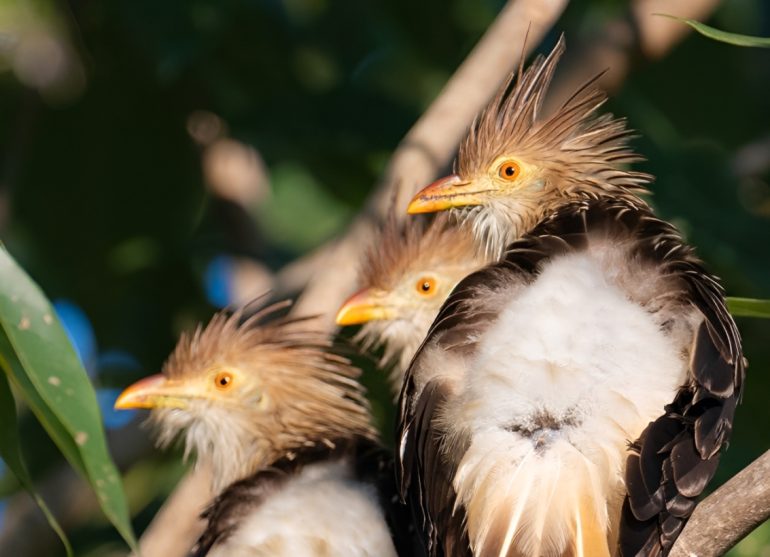

Paraguay is home to an extraordinary variety of birds, inhabiting everything from forests and wetlands to grasslands, the Chaco and urban spaces. Yet many of these species often go unnoticed, even when they live close to us. In this new Birds of Paraguay series, The Asunción Times, with the support of the Club de Observadores de Aves del Paraguay (CON), invites readers to discover the country through its birdlife, exploring different species, their habitats, behaviours and role in Paraguay’s ecosystems. In Birds of Paraguay #2: The Piririta, or Guira Cuckoo.
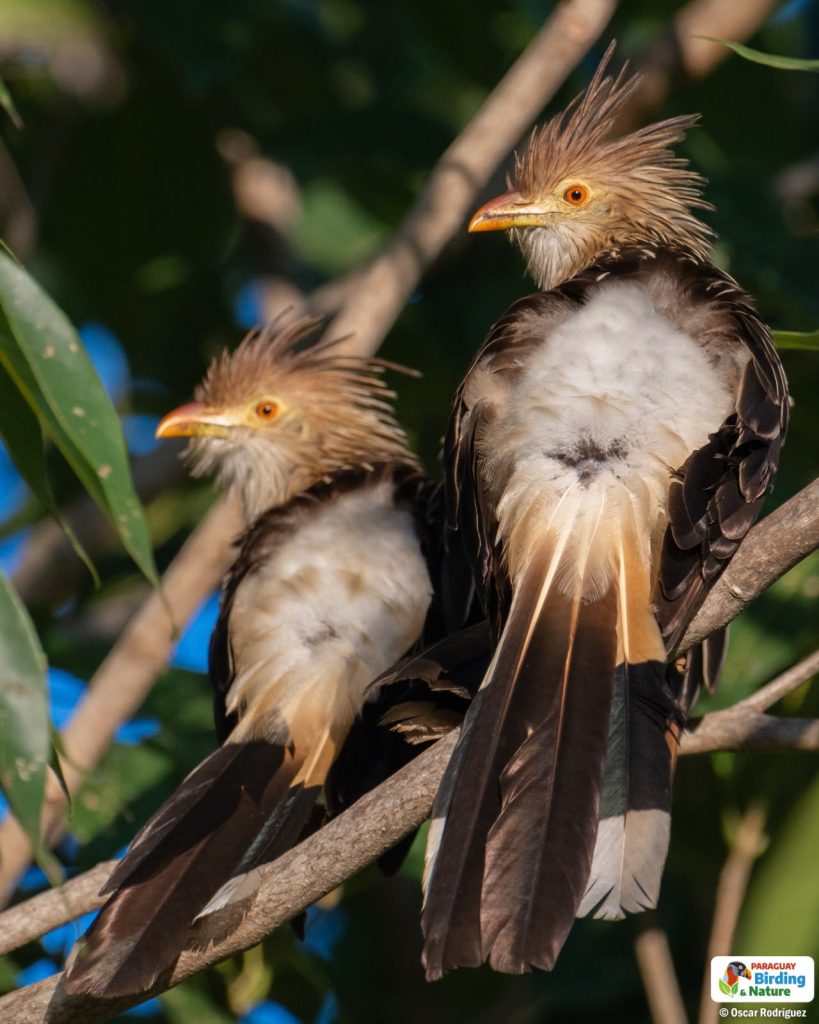
If you have ever walked through a park in Asunción and spotted a bird that looked like it had not slept well, with a crest sticking up as if it had just fought with the wind, and on top of that screaming at full volume without anyone asking… congratulations: you have just met the Piririta (Guira guira)!
The bird that calls itself “bird”
Its scientific name, Guira guira, comes from the Guaraní word guyra, which simply means “bird.” The Guaraní people called it Piririguá. They named it that because sometimes, when it flies, it sings Piriri, and other times igua igua, in a loud, whining, and unpleasant tone. The name is a perfect onomatopoeia. The Piririta essentially baptised itself with its own song.
Did you know?
Guira Cuckoo is one of the easiest birds to spot, well known for its bold habits. It inhabits open areas, savannas with woodlands, and is common in parks. The bird lives in flocks and breeds communally: several females can lay up to 20 eggs in a single nest. A feathered daycare. Competition among chicks is intense, and mortality is significant. Life in a Piririta nest, bluntly put, is quite wild.
Guira Cuckoo’s diet is varied: insects, small reptiles, amphibians, and more. And most importantly, the bird’s call is unforgettable (even if you would rather forget it): long, shrill, somewhere between a whistle and a lament.
Protecting the Guira Cuckoo habitat matters
Although the Piririta adapts well to urban spaces, its presence should not fool us into thinking everything is fine. Its range has expanded precisely because of deforestation, which destroys the habitats of more specialised birds and opens the way for generalists. Seeing more Piriritas can paradoxically be a sign that native forest is disappearing.
Paraguay is home to more than 700 bird species that depend on unique ecosystems such as the Atlantic Forest of Alto Paraná, the Cerrado, and the Chaco. Agricultural expansion and unplanned urbanisation threaten these environments, pushing dozens of species to the brink of oblivion. Protecting habitat begins with concrete decisions: planting native trees in yards, designing parks with local vegetation, and embracing the conviction that nature is not a nuisance.
If you are interested in birds…
If this article sparked something like ornithological curiosity, we have the perfect news. The South American Bird Fair is coming to Paraguay. To be held at the Cultural Center of the Port of Asunción from 17 to 20 September 2026, the event will provide a vital opportunity to connect scientific knowledge, field experience, and public interest. Birdwatchers, researchers, and newcomers alike will gather for talks, guided outings, and educational activities focused not only on the species themselves but on the habitats that sustain them. More information on the South American Bird Fair official website.