The Panini stickers are everywhere again. Weeks before the FIFA World Cup 2026 kicks off across the United States, Mexico and Canada, people in Paraguay have already found their own way to live the tournament, collecting the official Panini World Cup stickers. This is the story of Paraguay’s World Cup sticker craze.
An immediate rush
The official sticker collection for the 2026 World Cup, produced by Italian publishing giant, went on sale in Paraguay in late April and triggered an immediate rush. Within less than a week, kiosks, supermarkets and convenience stores across Asunción and the wider metropolitan area reported stock shortages. The enthusiasm has not let up since. For many families in Paraguay, buying packets and hunting for missing stickers has become a daily ritual.
The biggest album in Panini history
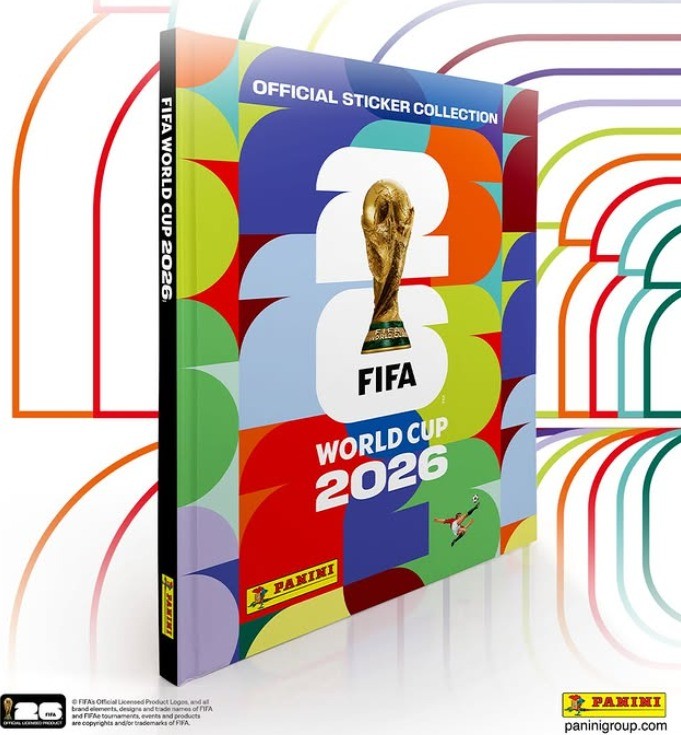
This edition is, by every measure, the largest Panini has ever produced. The 2026 tournament expands to 48 national teams, up from 32 in previous editions, and the album reflects that scale. It runs to 112 pages and requires 980 stickers to complete.
In Paraguay, the flexible-cover album retails for ₲25,000 (approximately US$4.00) and the standard hard-cover version for ₲30,000 (approximately US$4.85). Each packet contains seven stickers and costs ₲8,000 (approximately US$1.30), while a full display box of 104 packets carries a price of ₲832,000 (approximately US$134). Completing the collection through packet purchases alone requires a considerable outlay, which is why swapping with others remains the most practical strategy, as it has been for every World Cup generation before this one.
Demand has driven prices sharply upward on the secondary market. Hard-cover editions have appeared on resale platforms for up to ₲200,000 (approximately US$32). That is nearly seven times the official retail price. Counterfeit products have also been reported. Buyers are advised to purchase from authorised points of sale. These include Biggie, Superseis, Stock and the Club Panini outlet at Hiperseis on Avenida Boggiani.
The Albirroja effect
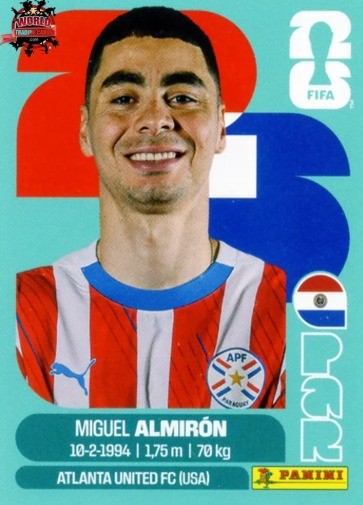
The fervour carries a particular charge this year. The national team, the Albirroja (so called for its red and white stripes), is returning to the World Cup for the first time since 2010. That 16-year absence made qualification a cause for national celebration, and the sticker album has become a physical extension of that joy.
The stickers of Paraguayan players are among the most coveted on the local market, competing in swap value with those of global stars such as Lionel Messi, Cristiano Ronaldo and Kylian Mbappé. Midfielder Miguel Almirón, captain Gustavo Gómez, Brighton’s Julio Enciso and Diego Gómez are among the figures in Paraguay’s 2026 World Cup squad that collectors most want to find.
The enthusiasm has spilled beyond the playground: Almirón’s wife shared a video on social media of their young son, Francesco, finding his father’s sticker in a freshly opened packet and covering the image with kisses. Gustavo Gómez, meanwhile, autographed his children’s album, but reportedly charged them a negotiated price in household favours first.
A World Cup sticker swap in every plaza
On a recent weekend, dozens of children and parents gathered at Plaza Herminio Giménez, albums in hand. The scene, part open-air market, part sporting event, has become familiar across the city since the collection launched. Participants move through the plaza calling out which stickers they need, trading repeats and occasionally scoring the elusive shiny editions.
The swapping culture has moved online as well. WhatsApp groups and Facebook pages dedicated to sticker exchanges have multiplied.
Social media has also been the stage for more creative transactions. Some passengers on ride-sharing platforms reportedly paid their fares in sticker packets. It speaks to how completely the collection has captured the public imagination.
A tradition that now has a price tag
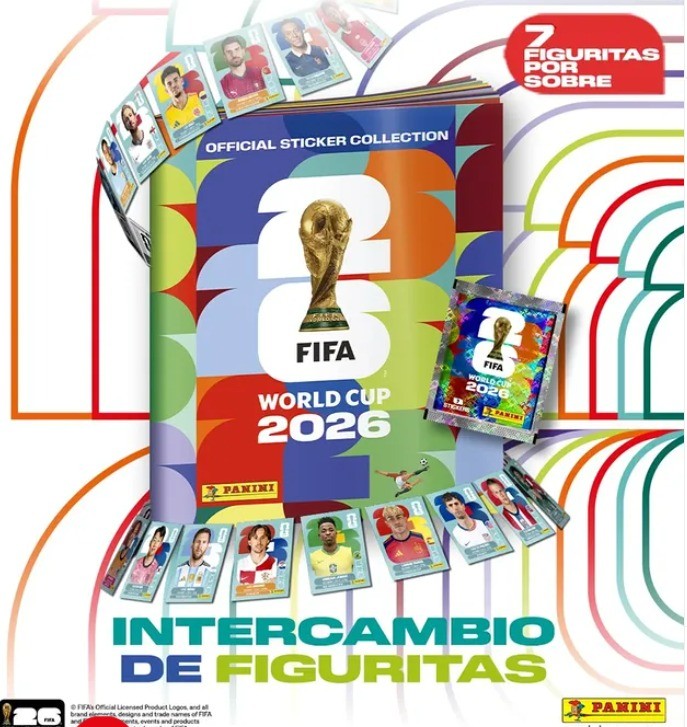
The enthusiasm is real, but so is the cost. Completing this edition individually requires a substantial outlay across Latin America. Analysts point to the album’s unprecedented size and regional inflation as the main causes. In Argentina, a single packet now costs dramatically more than in Qatar 2022. Currency devaluation and accumulated inflation are largely to blame.
In Paraguay, where inflation has been more contained than in neighbouring countries, the economic pressure is less acute. Still, completing the 980-sticker album solo remains out of reach for many families, which makes that tradition all the more important, and all the more alive.
For collectors on a tighter budget, a digital version of the album is available through the official FIFA Panini Collection app, free to download on Android and iOS.
More than stickers
The album is, in one sense, a commercial product. In another, it is a cultural one. Panini has distributed its World Cup collections in more than 130 countries since the 1970s, and the ritual of tearing open a packet has outlasted countless other childhood pastimes. In Paraguay, where an entire generation grew up without seeing the national team at a World Cup, the 2026 album carries something extra, a chance to peel back the wrapper and find, perhaps, the face of an Albirroja player heading to the tournament at last.