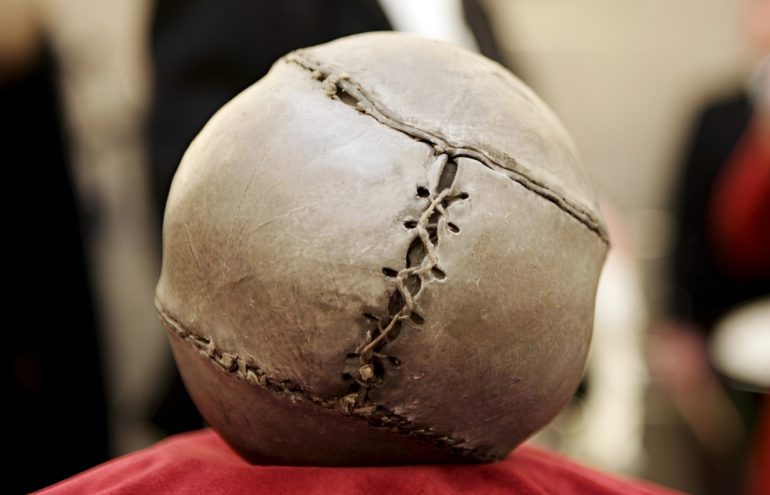

A dictionary printed in Madrid in 1639 may hold the earliest written proof that people were playing football. It describes a ball game practised by Guaraní communities in what is now Paraguay, at a Jesuit mission called San Ignacio Guazú. Researchers, filmmakers, and even South America’s own football confederation (CONMEBOL) have spent the past decade building a case around that discovery: that Paraguay, not England, saw the game’s true beginnings. So, did the Guaraní invent football?
A mission town called San Ignacio Guazú
San Ignacio Guazú lies roughly 250 kilometres south-east of Asunción, Paraguay’s capital. Jesuit priests founded the settlement in 1609, the first mission of its kind anywhere in South America. The town’s Guaraní-Jesuit heritage now has a dedicated museum that opened its doors in 2026. According to the missionary and linguist Antonio Ruiz de Montoya, communities from the wider Río de la Plata region played a foot-and-ball game there after Sunday Mass. Ruiz de Montoya recorded the practice in a Guaraní-Spanish dictionary published in 1639, naming the local tree whose sap was used to make the ball.
That single line in a 300-year-old dictionary predates two familiar milestones in the history of English football. Cambridge University wrote its first football code in 1846. The Football Association followed in 1863, in London. Paraguayan researchers argue that a gap of more than two centuries is too wide to dismiss as a coincidence.
How the game was actually played
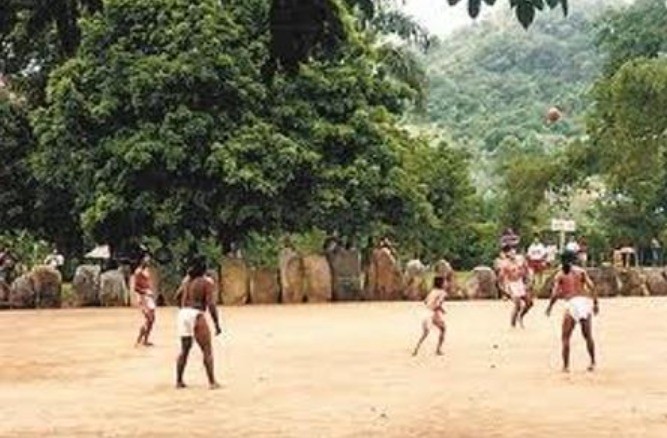
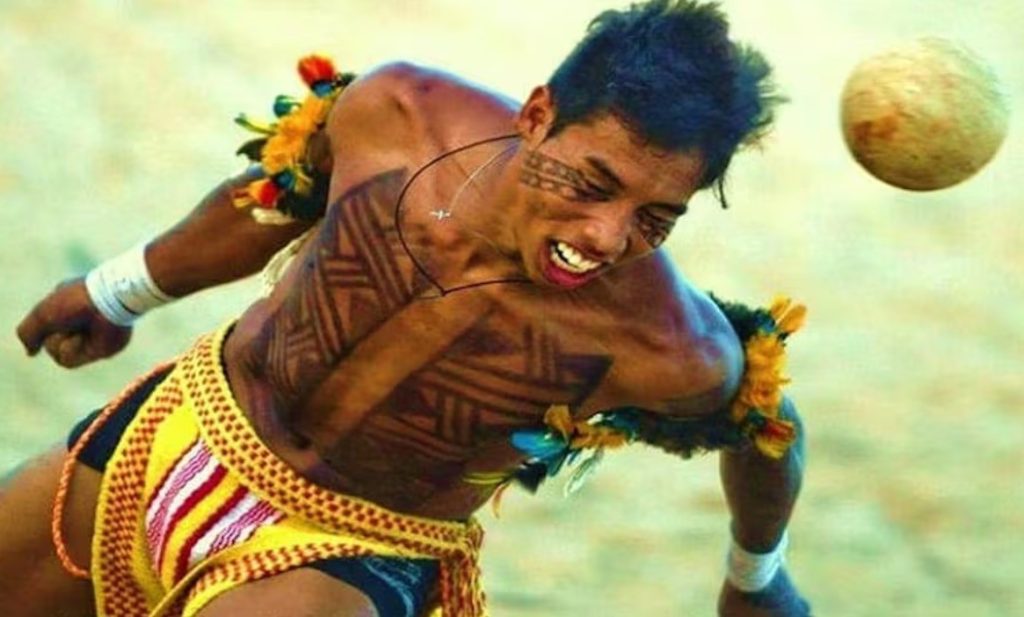
Two later Jesuit accounts help to reconstruct what a match looked like. Writing in 1771, the priest José Cardiel described young men gathering most days after Mass to play, striking the ball with the top of the foot rather than the hand, as Spaniards did. A second missionary, José Manuel Peramás, added in 1793 that the solid rubber ball seemed to keep bouncing under its own momentum, controlled with notable precision using bare feet.
Some details would be unfamiliar to a modern football fan. There were no goals and no fixed length of play. A match simply continued until the sun set, or until the players’ legs failed them, whichever came first. Teams wore matching outfits: the same white shirt and dark trousers worn to church. Onlookers gathered at the edges to bet on the outcome.
Paraguay was not the only place with a ball
Playing with a ball is not unique to the Guaraní, which matters for judging how strong Paraguay’s case really is. Centuries earlier, soldiers in Han dynasty China trained using a kicking game called cuju, aimed at a raised net. In Mesoamerica, the Maya and Aztec peoples struck a solid rubber ball with their hips, in ceremonial matches that sometimes ended in ritual killing.
According to the Paraguayan filmmaker Marcos Ybáñez, the Guaraní version stands apart: the only one of these ancient games played almost entirely with the feet, which he considers the defining feature of football today. Ybáñez has researched the subject for over ten years and directed two documentaries on the topic, released in 2014 and 2015.
Did the Guaraní invent football? The Vatican spoke
The strongest official endorsement so far has come from an unexpected source. In 2010, the Vatican’s newspaper, L’Osservatore Romano, published an article recognising a close forerunner of football in Paraguay as early as the seventeenth century, timed to coincide with Paraguay’s opening match at that year’s World Cup. CONMEBOL has since aligned itself with the same research, crediting Guaraní communities with encouraging Europeans to abandon hand-based ball games in favour of using their feet.
FIFA has made no such adjustment. Football’s global governing body still dates the sport’s founding to the Football Association’s establishment in 1863. San Ignacio Guazú has not waited for outside validation. Its municipal government passed a resolution in 2017 formally declaring the town the cradle of world football.
Not every historian is persuaded. The Paraguayan historian Jorge Rubbiani accepts that similar foot-and-ball games existed across many unconnected ancient cultures. In his view, this makes it difficult to credit any single civilisation with inventing the sport outright.
A legacy still being argued over
For Ybáñez, the stakes go beyond academic credit. He argues that England adopted an idea that originated among the Guaraní and other indigenous peoples of the Americas, without acknowledging where it came from, and sees this as part of a broader pattern in which Indigenous communities are denied recognition they are owed.
He also draws a speculative line between the old mission game and character traits often associated with Paraguayan football over the decades: resilience, discipline, and a reluctance to give ground. That same warrior spirit runs through the songs Paraguayans are playing on repeat this World Cup, several of which lean on Guaraní themes of grit and pride. He points to the seventeenth-century matches, which had no winner until exhaustion decided the outcome, as an early echo of a style built on holding firm rather than overpowering an opponent. No study documents this link directly; it remains his own reading.
What is easier to state plainly is this: three centuries after the first recorded match in San Ignacio Guazú, the claim to football’s origins is still being argued, from international newspapers to a small town’s town hall.