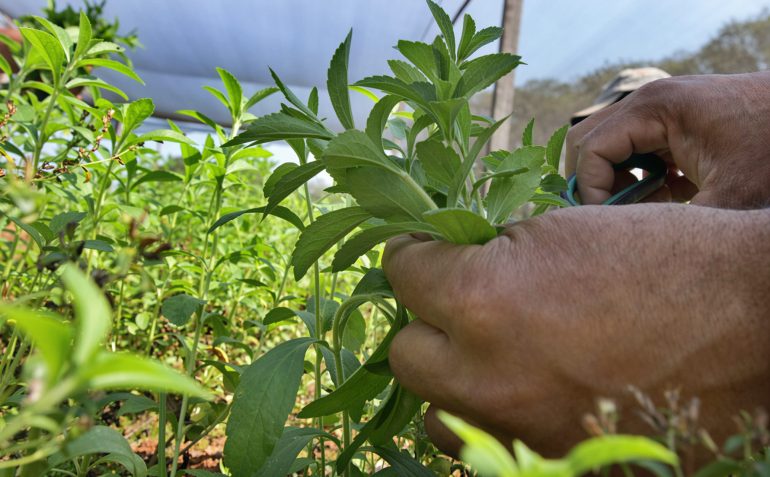

Prior to stevia’s role as a popular sugar substitute, the plant was growing wild in the forests and grasslands of Paraguay. Known in Guaraní as ka’a he’ẽ (sweet herb), it has been valued for centuries by the Guaraní people, whose traditional knowledge laid the foundation for its international recognition.
Today, stevia is cultivated across several continents and appears in thousands of food and beverage products. Yet, its story begins in a small region where Paraguay, Brazil, and Argentina meet, making Paraguay central to the plant’s cultural and scientific history.
An indigenous tradition
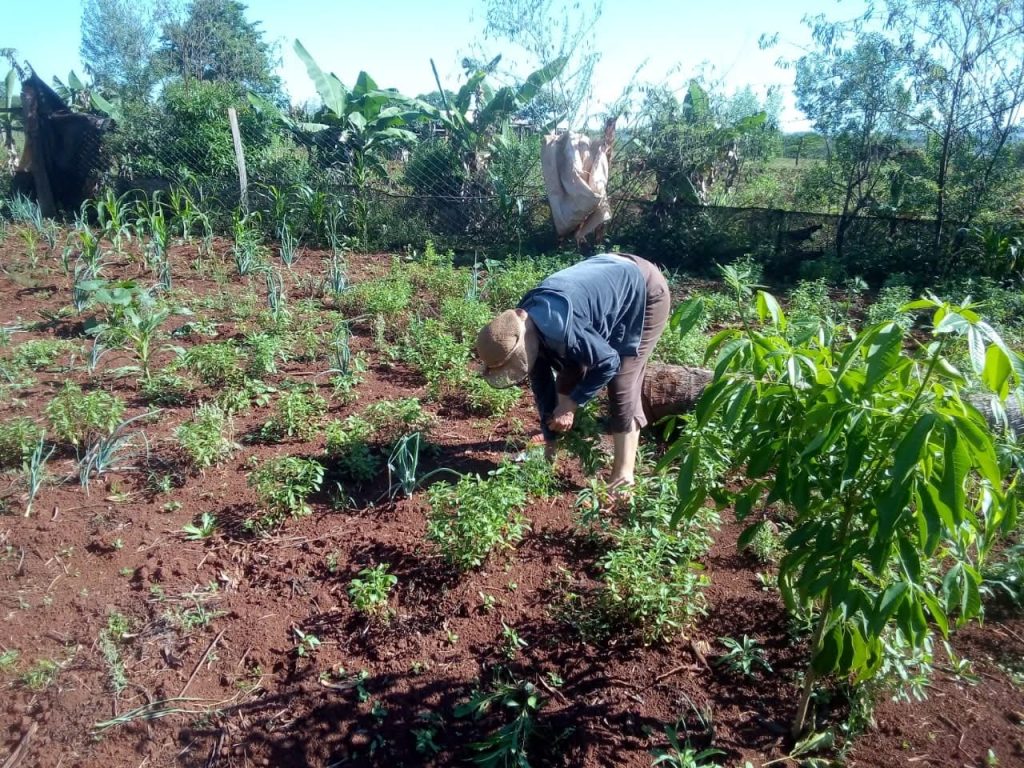
For generations before European contact, the Guaraní people used the leaves of ka’a he’ẽ as both a medicinal plant and a natural flavouring. The Guaraní commonly added the leaves to yerba mate and herbal infusions or chewed them for their naturally sweet, liquorice-like taste.
Traditional healers used the herb to treat a variety of ailments. It was valued for properties now described as antioxidant, antiseptic, diuretic, and healing. The Guaraní people believed it helped regulate blood sugar long before diabetes became recognised as a modern disease.
Historians note that the Guaraní did not generally use stevia to sweeten foods. Honey remained their preferred sweetener, while ka’a he’ẽ serving a more specialised role in mate and traditional medicine.
Scientific discovery
Although indigenous communities had known the plant for centuries, it only entered scientific literature in the late nineteenth century. In 1887, Swiss botanist Moisés Santiago Bertoni, who lived in Paraguay, documented the remarkable plant after learning of its use from local people. He later gave it the scientific name Stevia rebaudiana Bertoni. The species honours both Bertoni and Paraguayan chemist Ovidio Rebaudi, whose research helped identify the plant’s chemical composition.
Bertoni quickly recognised its extraordinary sweetness and reported that even amounts greater than those required for sweetening produced no harmful effects. His observations sparked growing scientific interest in the plant.
Unlocking the sweet derivations
Research continued throughout the early twentieth century. In 1931, French scientists M. Bridel and R. Lavielle isolated the plant’s naturally sweet compounds, known as steviol glycosides.
Scientists have since identified at least 60 different steviol glycosides, with stevioside and rebaudioside A among the most abundant. Depending on the specific compound, they can be between 50 and 450 times sweeter than sucrose while containing no calories. These discoveries transformed ka’a he’ẽ from a local South American herb into an international alternative sweetener.
From Paraguay to the global market
Commercial interest accelerated during the 1970s when Japan became the first country to embrace stevia on a large scale. A Japanese company developed an integrated system for cultivating, extracting, and refining stevia. This helped introduce the ingredient to the food industry.
Over the following decades, cultivation expanded beyond South America into Asia. This is where much of today’s commercial production takes place. Steviol glycoside extracts now sweeten a wide range of products, from soft drinks and confectionery to yoghurt and tabletop sweeteners. Stevia has become increasingly popular as consumers seek plant-based, calorie-free sweeteners that do not raise blood sugar levels.
A Paraguayan legacy
While stevia is now a global agricultural crop, Paraguay remains at the heart of its story. The plant’s scientific name reflects the work carried out in Paraguay by Bertoni and Rebaudi. Its Guaraní name continues to acknowledge the indigenous communities that first understood its value centuries ago.
Once used by the Guaraní as a medicinal herb and natural flavouring, stevia has become one of the world’s best-known natural sweeteners. Yet every packet still traces its origins back to ka’a he’ẽ, the sweet herb that first flourished in Paraguay.