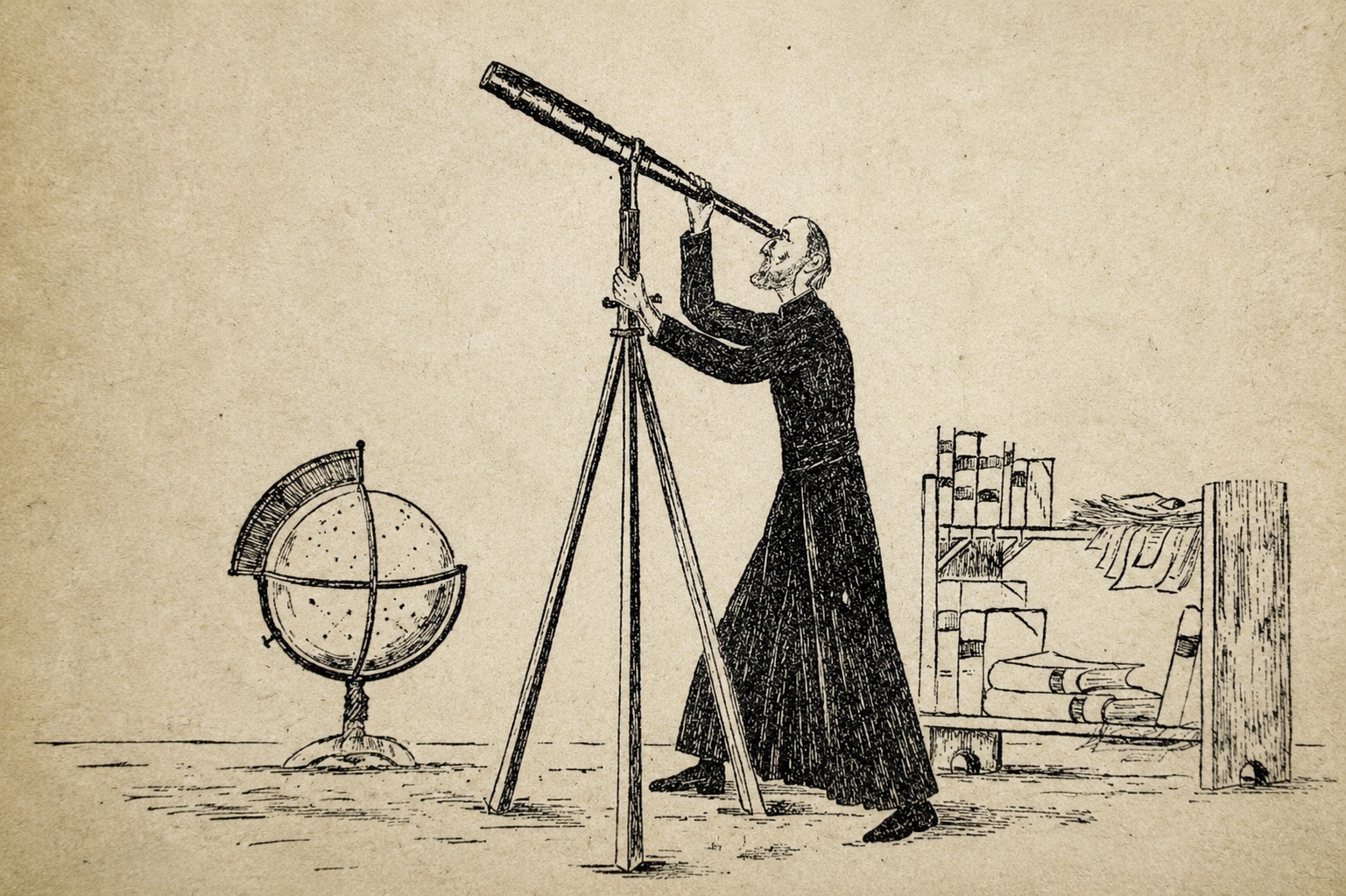

Born in Asunción on 3 September 1679, the pioneering Jesuit missionary Father Buenaventura Suárez is being remembered as one of the country’s most important scientific figures. Suárez is widely regarded as South America’s first astronomer, and as the first astronomer to conduct sustained observations in the Southern Hemisphere. He combined scientific curiosity with ingenuity, producing astronomical research that earned international recognition despite working in one of the most remote parts of the continent.
As Paraguay marked the 276th anniversary of Father Buenaventura Suárez’ death on the last week of August 2026, the country remembers him not only as an astronomer, but also as a mathematician, geographer, inventor, and missionary whose work demonstrated that scientific discovery could flourish far from Europe’s established centres of learning.
From Asunción to the Jesuit missions
Suárez received his early education at the Jesuit school in Asunción before continuing his studies in Córdoba. At the age of 16, he entered the Society of Jesus, embarking on a life that would eventually take him to the Jesuit reductions of San Cosme and San Damián.
It was there, surrounded by dense forest rather than university laboratories, that he began making detailed observations of the night sky. It was there, surrounded by dense forest rather than university laboratories, that he began making detailed observations of the night sky. At the time, sophisticated scientific instruments were almost impossible to obtain in the region. Father Buenaventura relied on his own craftsmanship and the knowledge of the local Guarani community. Together, they helped him create the equipment he needed.
An observatory with local materials
The father constructed his own scientific instruments because the province rarely received them. He designed many of his own scientific tools using materials found in the surrounding landscape, including wood, reeds, metals, and locally sourced quartz crystals.
Working alongside Guaraní assistants, he built telescopes with varying magnifications, an astronomical quadrant, and a pendulum clock capable of measuring minutes and seconds. These instruments allowed him to determine true solar time and conduct systematic astronomical observations.
In 1706, he permanently installed his first telescope in the bell tower of the Church of San Cosme. This created what is recognised as the first permanently operating telescope in the Southern Hemisphere. Mounted on a wooden structure with pulleys and fitted with two convex lenses, it became the centrepiece of an observatory established in the middle of the Jesuit mission.
He later wrote that constructing these instruments himself was essential. Mathematical sciences received little attention in the region, and scientific equipment was not imported.
A century of celestial predictions
The most enduring product of Father Buenaventura’s work was Lunario de un siglo (Lunar Calendar of a Century), first published in 1740. The volume predicted lunar phases, conjunctions, and eclipses covering more than one hundred years. The work first appeared in 1740. It was reissued in multiple editions over the following century, with editions appearing until 1856.
In addition, the Father produced comparative tables of the longitudes and latitudes of the thirty Jesuit missions, using San Cosme as a prime meridian. He, therefore, contributed to some of the earliest geographical mapping of the region. He also created terrestrial and celestial globes, built a sundial, and compiled astronomical tables and ephemerides.
More than an astronomer
Although best remembered for his astronomical achievements, His interests spanned numerous fields. He possessed medical knowledge and compiled a herbarium, improving the process of casting bells. He even devised his own recipe for medicinal chocolate.
Historians also believe he was probably familiar with the ideas of Sir Isaac Newton. Newton’s theories were being taught at the University of Córdoba during the Father’s lifetime, continuing working in the Jesuit missions for 33 years. He died in 1750 at the age of 69, in what is now Uruguay.
A legacy that endures
Although many of his original instruments disappeared after the expulsion of the Jesuits, later accounts suggest that Spanish naturalist Félix de Azara encountered some of the abandoned equipment during his travels through the former mission territories.
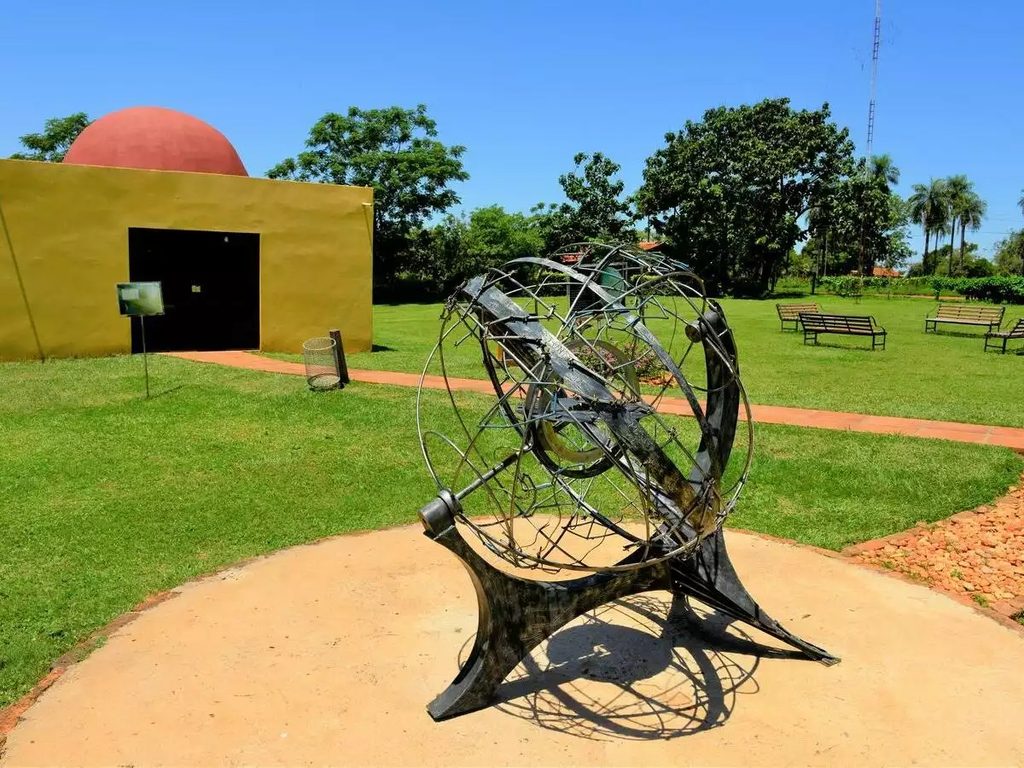
Today, the Planetario Buenaventura Suárez Astronomical Interpretation Centre commemorates Father Buenaventura’s contributions. The centre opened in 2010 within the historic Jesuit mission of San Cosme y San Damián in southern Paraguay.
The centre includes a planetarium, observatory, exhibition hall, and an armillary sphere, alongside a sculpture honouring the Jesuit scientist. Visitors can also explore Guarani knowledge of the stars and observe the night sky through one of Paraguay’s most significant telescopes. Read more about planetariums that are under development in Paraguay, like the Blas Servín Planetarium, set to open in 2028.