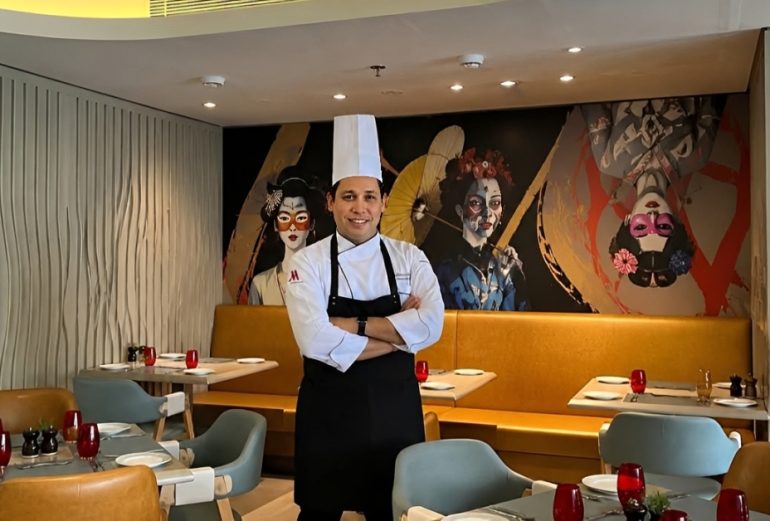

Guillermo Benítez Cáceres left Paraguay with a guitar. Two decades later, the Asunción-born chef has been named Executive Chef of the Marriott Riyadh Diplomatic Quarter in Saudi Arabia. He now oversees six restaurants, banqueting and a brigade of more than 50 cooks in the West Asian country.
Among those restaurants is NOMAS, recently named Best Saudi Arabian Restaurant at the What’s On Awards 2026, and shortlisted for the same title at the Time Out Awards.
“It was the best thing I had ever tasted”
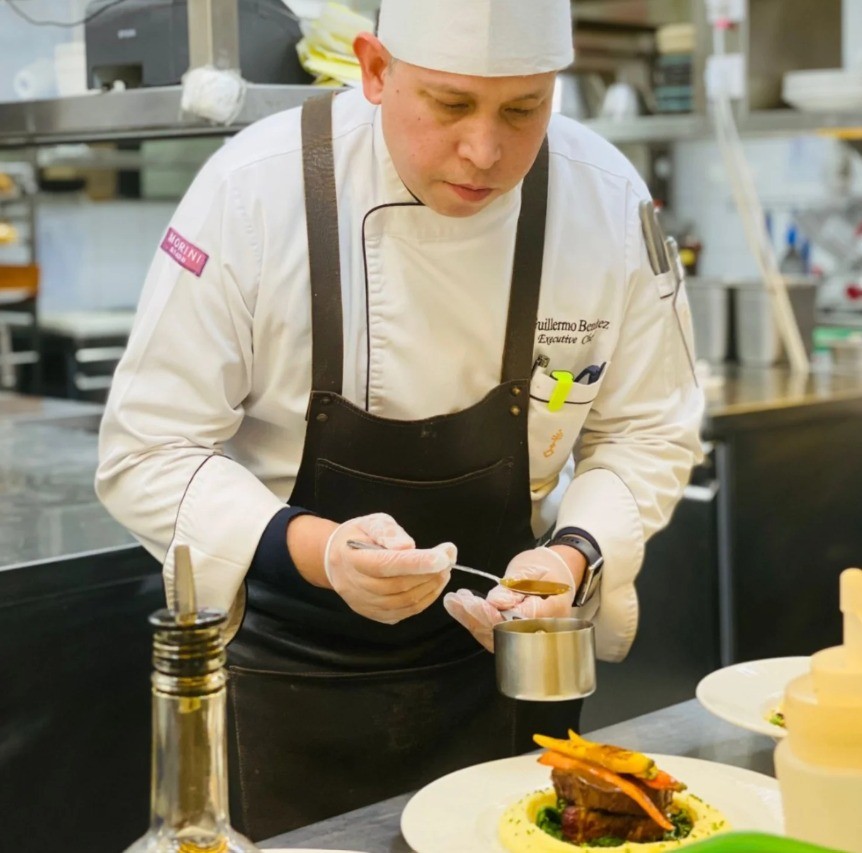
Benítez moved to Spain in 2005 with his wife, Rocío Ruiz, settling in Torre del Mar, a coastal town near Málaga. He made his living as a musician and singer, taking on kitchen jobs on the side. Everything changed over a single lunch at El Salmón, then considered the best restaurant in town, run by Belgian chef Philippe Bommerez.
“I remember telling Rocío that it was the best thing I had ever tasted,” Benítez says to The Asunción Times. He began performing music at the restaurant and grew close to Bommerez, who eventually offered to sell him the business. Bommerez spent months training him in classic French technique. “At the end of 2007, me and my wife took over as owners. Philippe is more than a friend to me, he is a brother.”
“The true value of real friends”
The couple ran El Salmón through the 2008 Spanish financial crisis, then opened a barbecue concept, Cowboys Smokers BBQ, in 2011. Around the same time, Rocío’s brother Gustavo fell ill and died. The couple left their jobs the same day, travelling to Paraguay to be with family. “It is in moments of uncertainty like that when you discover the true value of real friends.”
With little more than what the sale of Cowboys BBQ had left them, the couple had to start over. Bommerez offered them the keys to his flat in Torre del Mar for as long as they needed it. A childhood friend, Felipe Villa, drove down to collect him. Benítez set off for a new city with a single suitcase, his kitchen knives and his scooter. Within a month he had landed the job of opening a new restaurant in Barcelona. “That meant I could bring over his wife, and soon after, his mother-in-law.”
Chef Guillermo Benítez, always the student
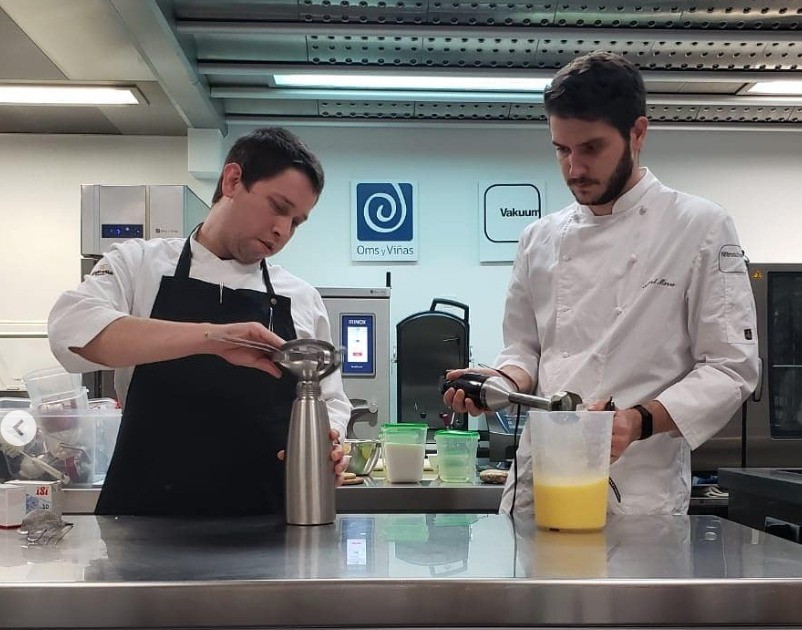
Once settled, Benítez set out to fill gaps in his training. “While working at Tanta, the first Peruvian restaurant opened in Spain by chef Gastón Acurio, I studied pastry, chocolate work and charcuterie. I then completed a master’s degree in Haute Cuisine at CETT, a hospitality school affiliated with the University of Barcelona.”
That led him to Vakuum, a workshop specialising in vacuum and molecular cooking run by chef Martín Lippo, where he became Lippo’s right-hand man and an instructor.
Years earlier, while glued to a specialist cooking channel, Benítez had become fascinated by chef Sergio Fernández Guerrero, a veteran of the Spanish culinary scene.
“On the drive from Málaga to Barcelona, I made a detour to Madrid to see Fernández Guerrero’s restaurant, arriving minutes before closing. In two minutes I summed up my life and my passion for cooking.” Rather than send him away, Fernández Guerrero sat down, cooked for him, and shared what he knew.
The same chef invited Benítez to wear his chef’s jacket into a lecture hall at Madrid’s Escuela Superior de Hostelería. There, he addressed a room of culinary students about his career. Those years, working under pressure across some of the country’s most demanding kitchens, shaped how Benítez thinks about food to this day.
“Whatever the concept, the raw ingredients or the scale of the project, technical rigour and respect for the craft must always be non-negotiable.” He later applied it leading the kitchen at Arume, in Barcelona, and during stages at several Michelin-starred restaurants across Spain.
A pioneer in Riyadh’s dining boom
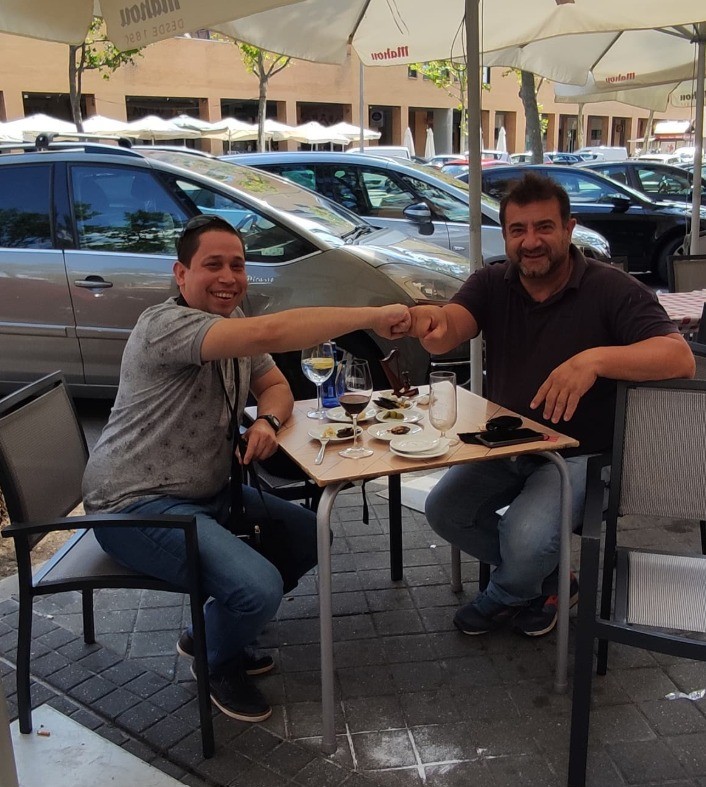
Benítez arrived in Saudi Arabia in 2019 to open El Lechazo at The Boulevard, an entertainment district in Riyadh. The launch coincided with the first edition of Riyadh Season, the city’s annual festival. “I got to live through this process as a pioneer.” Since then, he has opened seven restaurants and led the culinary operations of two five-star hotels.
That boom has drawn chefs from every corner of the globe to the Saudi capital, making the market far more competitive, though Paraguay still finds its way onto his menus. He singles out corn flour and cassava starch as ingredients whose texture and versatility deserve wider recognition in international haute cuisine.
Each morning, guests at his hotel can order freshly baked chipa, a traditional Paraguayan cheese bread. “It is a subtle, elegant way of bringing in a piece of my culture, in a five-star international setting.”
Six restaurants, one Michelin ambition
Among the six concepts now under his supervision is NOMAS, a fine-dining Saudi restaurant that has been awarded three toques, Gault&Millau’s highest rating.
With the Michelin Guide having arrived in Saudi Arabia last year, Benítez believes NOMAS has what inspectors look for: an intimate setting, a clear culinary narrative and an unmistakably Saudi identity. “We are without doubt on the radar of the Michelin Guide.” The task now, as he sees it, is to hold that standard steady across six different kitchens, without letting any lose what makes it distinct.
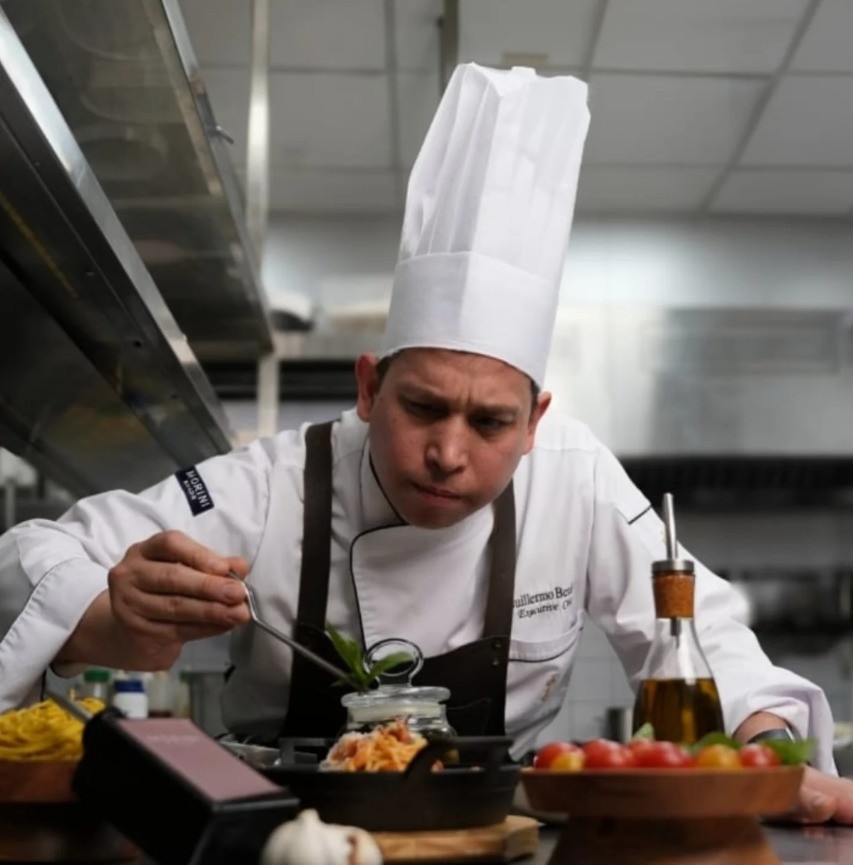

Looking back on more than 20 years in professional kitchens, Guillermo Benítez wants his name to mean something beyond the awards. “There is no greater satisfaction in my career than knowing I have contributed, even in a small way, to the growth of every cook who has been part of my brigade.”
Follow Guillermo Benítez on Instagram to know more about him and for another Paraguayan chef making a name for himself abroad, read how Diego Joubert brought Paraguayan asado to Prague.