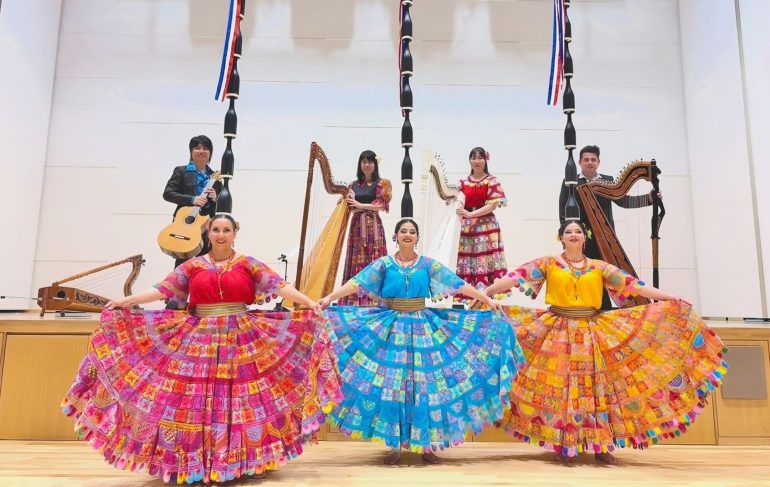

The Paraguayan dance group Jeroky Paraguay brought the vibrant spirit of their culture to Tokyo with the presentation of Flower of Sounds. This performance was a celebration of national identity, showcasing Paraguay’s rich cultural heritage through a variety of typical dance. From the elegance of the galopera, a patrimony for the nation, to the breathtaking danza de la botella (bottle dance), where dancers balance bottles with precision and artistry.

The history behind Jeroky Paraguay
Jeroky Paraguay, led by Estrella and Roberto Godoy, has brought Paraguayan culture to Europe for over 20 years. What began as a family passion grew into a Paraguayan-Austrian Cultural Association (ASOPARA), a non-profit cultural association dedicated to preserving and promoting Paraguay’s rich traditions.
Their performances are not just dance shows, they are cultural journeys that weave together music, gastronomy, and folklore. “Excellence above all,” says Roberto Godoy, highlighting their commitment to professionalism and authenticity to The Asunción Times.
Furthermore, ASOPARA is recognised as Tourism Ambassadors by SENATUR and honored by Paraguay’s National Congress, “We founded ASOPARA to preserve and promote Paraguayan traditions, because our roots must never be lost,” Estrella Godoy adds, reflecting on their mission.
A historic experience in Japan
Among their many international performances, Japan stands out as a milestone. Jeroky Paraguay was invited recently, to perform before the Japanese Imperial Family. “Thirteen harps on stage, and there we performed couple dances, the bottle dance, and dances with the cántaros,” Estrella says.
The strict protocol made the encounter even more extraordinary. “The Imperial Family stayed to meet us, shake our hands, greet us, and ask about what the bottle was and what the costumes meant,” Estrella continues, reflecting on the meeting.
“Language is extremely important, I had to explain in English what the bottle and the cántaro symbolize, because of course they don’t speak Spanish or German.” Paraguayan heritage received rare recognition on one of the world’s most prestigious stages.
Collaboration with other musicians
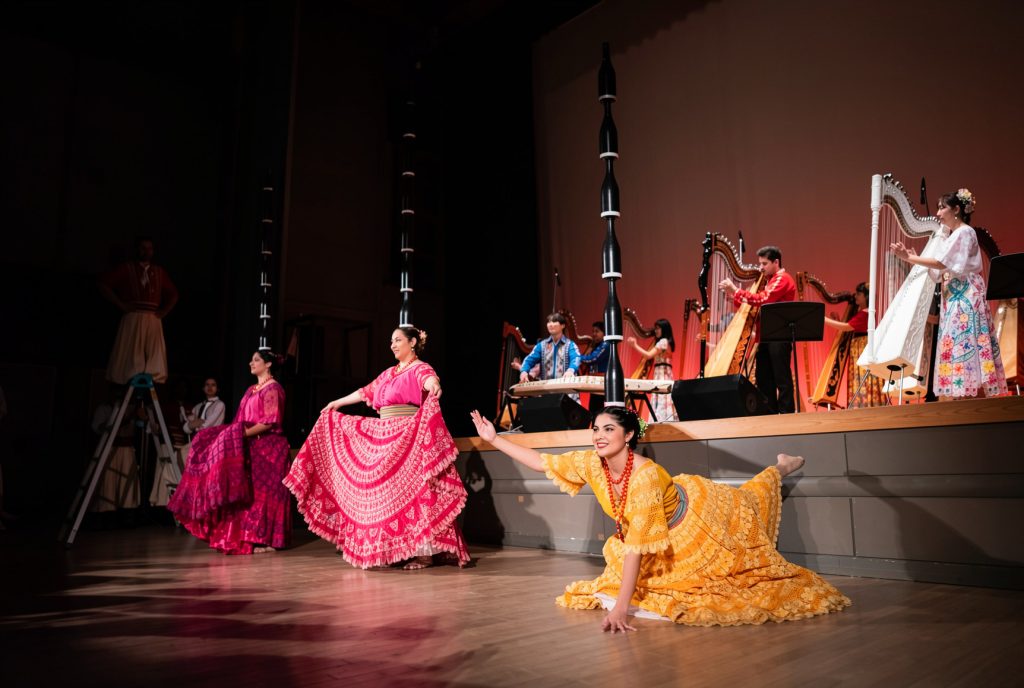
The Jeroky Paraguay journey has also been enriched by collaborations with other artists. “In Japan we connected with maestro Arisa and her group Arpa Sonrisa.”
Arpa Sonrisa, whose harp ensemble gave even more depth to the Paraguayan repertoire. “We always collaborate with other artists, because music is universal and our traditions can dialogue with other cultures,” Estrella says, expanding on the collaborators.
Beyond Japan, Jeroky Paraguay has shared stages with folkloric groups across Egypt, Qatar, and Europe. “Everywhere we perform, we make sure to explain in German and English the meaning of our dances and costumes, so the tradition is never distorted.”
“These partnerships show that Paraguayan folklore can stand alongside other cultures, enriching both sides,” added Roberto.
Looking ahead
The future is just as vibrant. Upcoming projects include tours in Spain, Greece, and Germany, with potential collaborations once again with Arpa Sonrisa. International festivals highly anticipate their performances. Organisers often save Paraguay’s show for the finale, knowing it will captivate audiences. “The seedbed of the bottle dance is the most important, it truly shows what the Paraguayan woman is: courageous,” Estrella emphasises on this cultural patrimony.
“This is a path that is just beginning, for young people in our country to feel proud of their traditions and customs,” concludes Roberto. Their story is not only about dance but about identity, resilience, and the enduring power of tradition.
For further information, you can check Jeroky Paraguay on Instagram. Also, you can visit ASOPARA on Facebook.