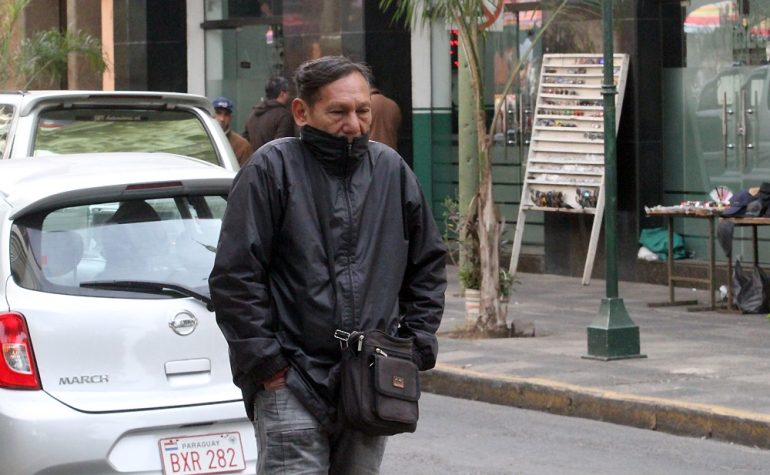

Eight degrees during winter in Paraguay, to newcomers, does not sound dramatic. In Amsterdam, London or Berlin, on good days this barely justifies a coat. In Asunción, it can mean frost on windscreens, and families huddled in one warm room with every door closed.
Paraguay’s Ministry of Agriculture and Livestock (MAG) has issued a fresh alert as cold fronts sweep across the Eastern Region, the country’s main agricultural area. It warns of so-called agrometeorological frosts, when air temperature falls to 3°C or below. The departments at risk, Itapúa, Ñeembucú, Misiones, Alto Paraná, Caazapá and Paraguarí, lie in the south and southeast of the country. The coldest hours fall between 5 AM and 6 AM.
The alert is routine for winter in Paraguay, which runs from late June to September. What is less obvious is why a temperature unremarkable in much of the world feels punishing in Paraguay. The problem is not the thermometer but homes designed for Paraguay’s scorching summers.
Winter in Paraguay: A country built for 40°C, not 8°C
Paraguay’s defining climatic feature is not winter. It is summer, when temperatures regularly climb past 38°C and occasionally beyond 40°C. For most of the year, the dominant design problem for any building is how to stay cool, not how to stay warm.
That priority shows up in the walls. Architect César Aquino says Paraguayan homes prioritise airflow and sunlight because the climate is mostly warm. The Asunción Times previously explored how brick, the country’s signature building material, and the large glass façades now fashionable in newer builds both work against residents once a cold front arrives. Thermal insulation rarely features in design decisions, Aquino notes, while waterproofing against rain takes priority instead. The result, he says, is that cold enters a Paraguayan house and has no way out. Heating systems remain rare and expensive, so most homes are designed without them.
Geography compounds the problem. Paraguay sits in an open corridor where the cold pampero (strong westerly wind) meets the country largely unobstructed, with no mountains of its own to soften the blow. This is why forecasts so often centre on a “frente frío” pushing up from the south.
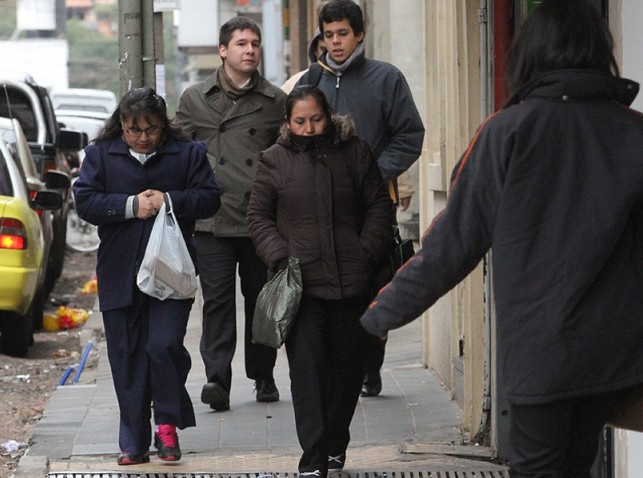
The lived result is familiar to anyone who has spent winter in Paraguay. Tile floors act like a cold battery, soaking up the night’s chill and releasing it long after the sun outside has warmed up. Daily habits change with the season. Thick socks stay by the bed. Families heat a single room. Rugs cover cold floors. Firewood is purchased early to avoid higher prices.
A look into Paraguay’s historical inventory
Cold fronts of this kind are not new. According to the historical inventory kept by Paraguay’s Directorate of Meteorology and Hydrology (DMH), the country’s lowest temperature on record is -7.5°C. It was registered at Pratts Gill, in the Chaco, in July 2000.
Encarnación, in the south, hit -6°C in 1945. Snow is almost unheard of in Paraguay. Yet light flakes settled on Encarnación’s rooftops for ninety minutes in 1975. In June 2025, ten localities set daily record lows during one cold front. Presidente Hayes reached -3.3°C. Asunción dropped to 1.6°C.
When the cold reaches the fields
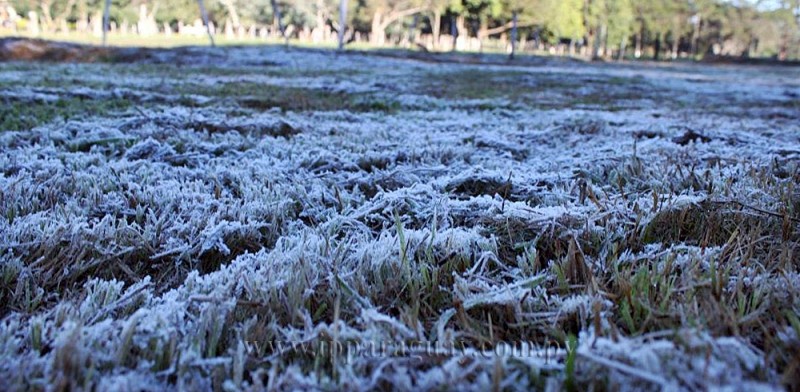
For Paraguay’s agricultural sector, a forecast of 8°C in the cities can mean far lower readings, and far higher stakes, in the countryside. The MAG’s Risk Management Unit defines an agrometeorological frost as air temperature dropping to 3°C or below, threatening both crops and animal welfare.
Coordinator Édgar Mayeregger has said the south, southeast and southwest bear the brunt. Tomatoes, peppers, and chia are considered most vulnerable, alongside sugar cane and cassava, prompting recommendations for overnight irrigation and thermal covers. Cereal growers, meanwhile, favour cold-tolerant varieties and direct seeding, which leaves a protective layer of stubble as natural insulation.
Livestock face a quieter risk. Pasture tends to recover quickly once temperatures rise, but animals caught on low-lying or flood-prone land during a cold, damp night are vulnerable to hypothermia. The advice is to move livestock to higher ground with natural windbreaks, with particular attention to newborn calves, the first to suffer when conditions turn hostile.
A familiar pattern, repeating
A cold front forms over the South Atlantic, and the pampero sweeps north unimpeded. A country whose homes, infrastructure and farming calendar were shaped around a tropical summer must improvise, room by room and field by field. The MAG has stressed that this latest frost is “normal” for the season. For Paraguayans, that is the point: 8°C is not unprecedented, but a yearly reminder of a country built for 40°C.