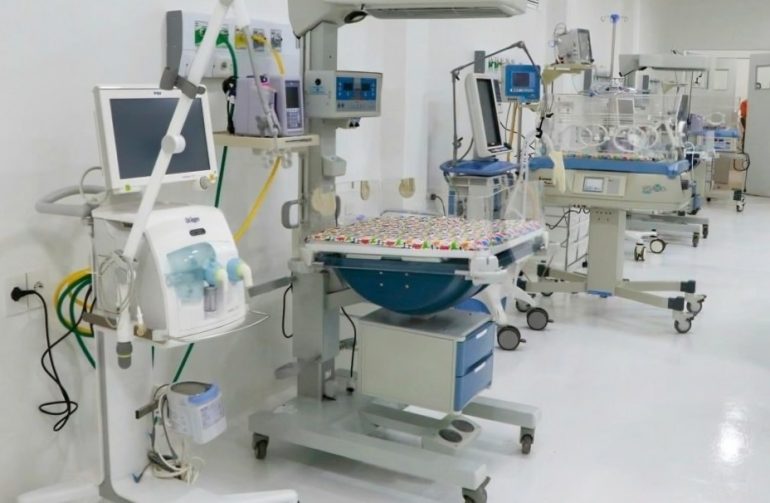

Paraguay’s public health system, according to Ministry of Public Health and Social Welfare officials, has significantly increased the operational capacity of its intensive care units from 76% in August 2023 to 94%. This substantial improvement follows a period of focused development between 2025 and 2026. The ICU capacity expansion was driven by the incorporation of 177 new critical care beds, an investment of over ₲107 billion in specialised equipment, and the recruitment of 707 new healthcare professionals.
In March 2025, the Paraguayan Government established the National Team for the Intervention and Comprehensive Improvement of Health. The initiative was created with the specific goal of enhancing the quality of the public health system, with a particular focus on intensive care services. Consequently, the actions taken have led to paediatric intensive care units reaching 90% capacity, neonatal units operating at 96%, and adult units achieving 94% capacity.
Strategic investment in critical care
Between July 2025 and June 2026, targeted investments facilitated the addition of 177 operational beds in neonatal, paediatric, and adult units across the country’s 18 sanitary regions. The Ministry of Public Health and Social Welfare (Mspbs) also invested more than ₲15 billion to install 181 multiparameter monitors and 120 electric beds.
In parallel, the Ministry executed contracts exceeding ₲92 billion for the acquisition of vital medical equipment. This procurement included high-complexity pulmonary ventilators, servo-cradles, closed intensive care incubators, and transport incubators. It also provided for new crash carts, defibrillators, laryngoscopes, echocardiographs, and fibrobronchoscopes to be distributed throughout the system.
ICU capacity: Advanced technology enhances diagnostics
As a key part of this technological upgrade, the Ministry recently delivered a state-of-the-art fibrobronchoscope to the “Prof. Dr. Manuel Giagni” Trauma Hospital. The equipment, representing an investment of ₲130 million, strengthens the response capabilities of its Adult Intensive Care Unit. The device allows medical teams to visualise the interior of airways, extract secretions, take samples for microbiological studies, and evaluate injuries in polytraumatised patients.
Another significant advancement introduced into intensive care is the use of ultrasonography and echocardiography at the patient’s bedside. This diagnostic technology drastically reduces diagnosis times. Furthermore, it allows for the evaluation of cardiovascular pathologies and other conditions in a matter of minutes, which supports faster and more opportune clinical decision-making.
Significant increase in specialist staff
To support the expanded ICU capacity infrastructure, the Ministry of Health contracted 707 new professionals to reinforce the intensive care units. The new hires include 270 doctors, with a monthly salary allocation of ₲5,000,000 each, and 437 licensed professionals, with a monthly salary of ₲4,000,000 each. The total cost for this personnel expansion for the fiscal period is ₲40,274,000,000.
In addition to these appointments, the Ministry is currently advancing the selection and incorporation of approximately 240 additional intensivists. This next phase of recruitment aims to cover the remaining staffing gaps within the nation’s critical care system, ensuring all new beds are fully operational with specialist staff.
Real-time monitoring improves coordination
A centralised digital monitoring system has been consolidated to provide real-time information on the status of critical care beds. The system, which updates every five minutes across all 18 sanitary regions, is managed by the Extra-Hospital Medical Emergency Service (SEME). This tool enables more precise coordination of patient transfers and significantly reduces response times during emergencies.
Simultaneously, the Ministry of Health has implemented the Oxygen Monitoring System (SIMOX). This system supervises the operation of more than 40 oxygen-generating plants throughout the country online. It ensures the constant and reliable supply of medical oxygen, a critical component of intensive care.
Progress and future challenges
Minister María Teresa Barán highlighted the comprehensive strategy behind the recent achievements, acknowledging both the progress made and the work that remains.
“The investment we are making is strengthening infrastructure, equipment, human resources, and management. This is already producing concrete results, although there are still problems that we must continue to resolve with the same priority,” stated Barán.
Also read: Paraguay’s Public Health System: Nearly Four Million Consultations In Q1 Of 2026.