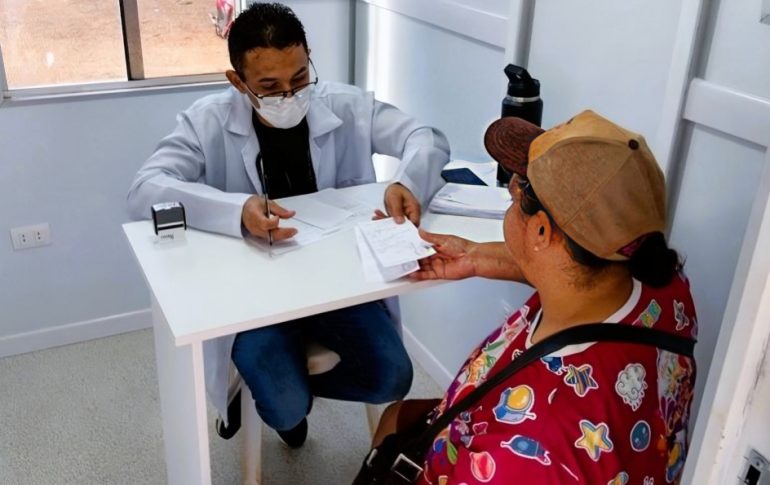

Paraguay’s Ministry of Public Health and Social Welfare (Mspbs) has released its figures for the first quarter of 2026, revealing a total of 3,827,629 medical consultations across its national network. This significant number indicates a high level of activity within the public health system. Furthermore, the month of March emerged as the busiest period, accounting for a substantial portion of the quarterly total with 1,322,222 consultations recorded across the country’s 18 Health Regions.
A closer look at patient care in March
The March data can be broken down further to understand patient care pathways and service delivery. A significant majority of consultations, numbering 898,369, took place in traditional healthcare settings. These include hospitals, health centres, ambulatory clinics, and local health posts. This activity highlights the central role these established facilities play in delivering comprehensive medical care to the population on a daily basis.
Additionally, the Family Health Units (USF) managed a notable 423,853 consultations during the same month. This figure is particularly important as it reflects the government’s ongoing strategy to strengthen primary healthcare across the entire national territory. By focusing on local, community-based care, the USF system aims to provide accessible, preventative, and continuous health services directly to families.
Regional demand for health services
An analysis of the data shows a clear concentration of demand in the country’s more densely populated areas. The Central Health Region recorded the highest volume of consultations, with a total of 156,401 patient attendances. This was followed closely by the Alto Paraná region, which registered 133,386 consultations. The Itapúa region also reported a high number, with 113,644 consultations throughout the month.
According to the ministry, these statistics reflect a sustained growth in the number of citizens choosing to use the public health system. The increasing reliance on public services suggests a growing trust and confidence in the quality and availability of care provided by the state.
Expansion of diagnostic imaging capabilities
In addition to general consultations, the report highlights significant activity in specialised medical services. Over the same first-quarter period, the public health system’s diagnostic imaging departments performed a total of 123,521 studies. This includes a wide range of procedures, such as X-rays, ultrasounds, and other scans that are essential for accurate diagnosis and effective treatment planning.
The regions with the highest number of imaging studies were Caaguazú, which conducted 23,405 procedures, and Itapúa, with 22,451. The Central region followed with 9,061 studies. Officials have attributed this increased capacity, particularly in the interior of the country, to recent strategic investments. The development of two new, modern hospitals in Coronel Oviedo and Itapúa has directly contributed to this enhanced diagnostic capability, improving local access to modern medical technology for residents outside the capital.
Decentralisation of surgical procedures
The report also details the volume of surgical interventions carried out during the first quarter. Across the 18 health regions, a total of 8,058 surgeries were successfully performed. This figure encompasses a wide variety of both scheduled and emergency operations, demonstrating the system’s capacity to handle complex medical needs nationwide.
The distribution of these procedures further demonstrates the government’s push towards decentralisation. Alto Paraná led the regions with 1,590 surgeries, followed by Itapúa with 1,120. The San Pedro region performed 894 procedures, while the Capital region conducted 697. By strengthening surgical services outside of Asunción, the health system ensures more equitable access to critical care for all citizens, reducing the need for patients to travel long distances for essential operations.
Investment and government commitment
To support this high level of activity, substantial investment in resources was made. During the month of March alone, the various health regions received essential supplies and medicines valued at ₲103,306,073,520 (approximately US$16.4 million). This provision is crucial for maintaining the operational capacity of health facilities and ensuring that patients receive the necessary treatments without delay.