

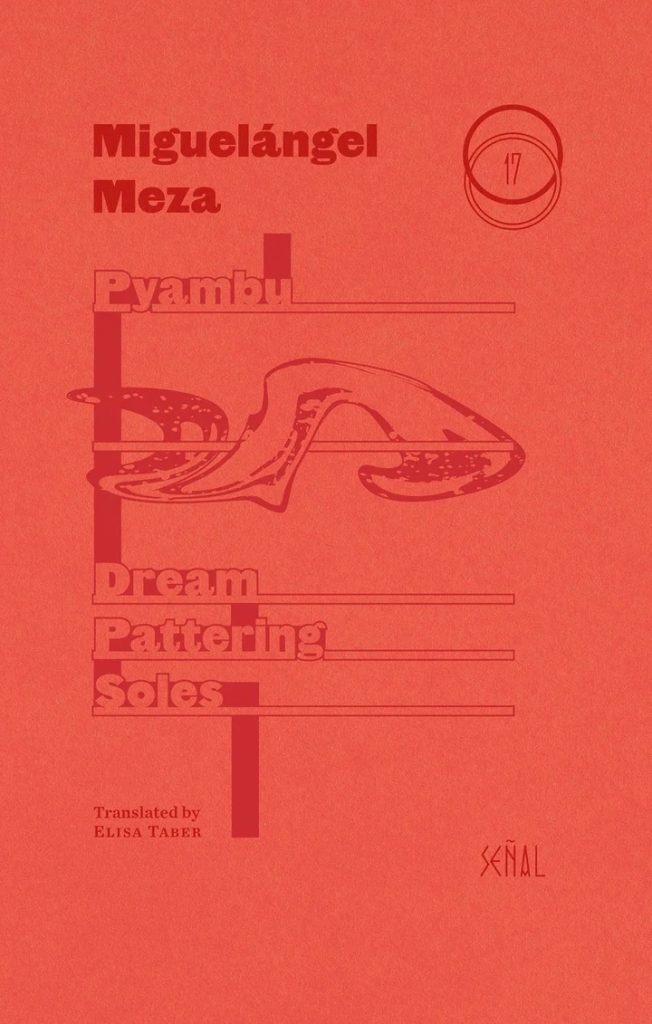
Paraguayan poet Miguelángel Meza is reaching new audiences through a trilingual edition of his work. Pyambu, translated to, Dream Pattering Soles is part of a larger collection that promotes and preserves the Guaraní language and culture. Written in 1985 and translated into English in 2021, the chapbook is available for purchase on Amazon. Through translation, his work accesses a wider audience. Now, it is published in three languages: Guaraní, Spanish, and English.
Meza was born in Caacupé in 1955. Now, he is an accomplished poet and founder of independent publishing house Mburukujarami Kartonéra. Furthermore, Meza has contributed to anthropological and linguistic research studies. His work centers around the preservation of the Guaraní language, and he continued this effort while working with Paraguay’s Ministry of Culture.

Poetry rooted in Guaraní cosmology
The collection’s ten poems draw on Mbya Guaraní mythology and creation stories. In one poem, the declaration “I appear” echoes the Indigenous belief that the world emerged through the utterance of the first ñe’ẽ (word-soul). Rather than treating these narratives as historical artefacts, Meza reimagines them through contemporary poetry. His work explores themes of identity, memory, and humanity’s relationship with the natural and spiritual worlds.
Literary critics have compared the structure of his poetry to ñandutí, the traditional Paraguayan lacework whose name symbolises a spider’s web. Just as intricate patterns emerge from interconnected threads, Meza’s poems weave together individual voices and collective memory.
Bringing Guaraní poetry into English
The new edition builds on a Spanish translation first published in 1985 by Meza, Carlos Villagra, and Jacobo Rauskin. The English translation was produced by writer and anthropologist Elisa Taber, a PhD candidate at McGill University. Taber worked closely with the original Guaraní text and consulted with the poet during the editorial process.
The collection takes its English title, Dream Pattering Soles, from Pyambu, the title of Meza’s original Guaraní work. According to translator Elisa Taber, the term relates to the sound of approaching footsteps. Therefore, carrying associations with deities and supernatural presences found in Guaraní cosmology. The title reflects the collection’s broader engagement with Indigenous narratives. Here, language, sound, and creation are deeply intertwined.
A lasting literary contribution
Meza’s published works include Ita ha’eñoso (1985), Perurima rapykuere (1985; 2001), Purahéi (2001; 2011), Chipi Gonzales guahẽrã (2006), Maleõ (2007), Perurima pypore (2010), and Arami mburukujaguýre (2012). Only Dream Pattering Soles has been translated into English thus far.
Though brief, Dream Pattering Soles offers readers an introduction to the Guaraní literary scene. The poet merges contemporary writing styles and cadence with traditional Guaraní beliefs and values. Furthermore, the poem offers a lens into a language and culture that remains underrepresented in international spheres. The chapbook is available for purchase on Amazon.