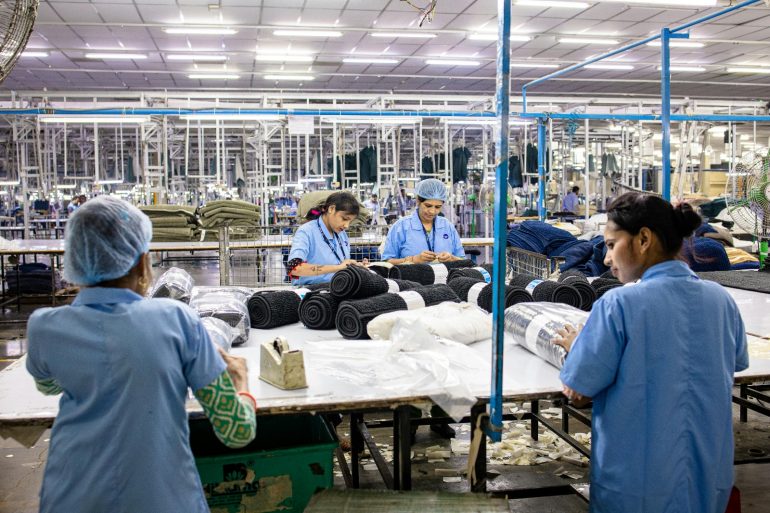

Brazilian companies are increasingly shifting production to Paraguay in search of lower costs, competitive taxes, and abundant renewable energy, while keeping their headquarters and key operations in Brazil. The cross-border trend has grown so pronounced that it is now drawing public alarm in São Paulo: recently, Mayor Ricardo Nunes urged Google Brazil not to send future investments across the border with Paraguay, warning that the outflow of manufacturing represents a clear loss for Brazil. The Asunción Times dives into the Paraguay Pull.
Companies making the move
Among the most notable Brazilian firms expanding into Paraguay are:
- Karsten (2026) – The Brazilian bathroom textile manufacturer expanded production activities to Paraguay, opening a factory in Minga Guazú. While the company is headquartered and retains factories in Brazil, they cited lower operating costs as a motive for the international expansion.
- Grupo Dass (2026) – A footwear and apparel manufacturer, known for producing for brands including Adidas, Nike, Fila and Umbro, launched a major operation in Paraguay through its subsidiary DassTex in 2026. The factory will be located in Mariano Roque Alonso.
- Lupo (2025) – A Brazilian clothing manufacturer who opened their first factory in Ciudad del Este in 2025. The facility was established under Paraguay’s maquila regime, reducing production costs by around 28%, and serves export markets across the region.
- BOOS Mangueiras e Eletrodutos (2025) – The industrial manufacturer announced a maquila plant in Alto Paraná to supply products to the Brazilian market from Paraguay. The shift to Paraguay is attributed to increased production capacity and labor availability.
- JBS (2025) – One of the world’s largest food companies returned to Paraguay in 2025 after an eight year absence. This occurred through a US$70 million investment in the poultry sector, including the acquisition of Pollos Amanecer. The factory is now located in Doctor Juan Eulogio Estigarribia district, in the Caaguazú department.
The maquila advantage
A major factor behind Paraguay’s success in attracting investment is its maquila system. Increasingly, this practice allows companies to import raw materials and components, manufacture products in Paraguay, and then export the finished goods.
Under the programme, companies benefit from a simplified tax structure. Additionally, they pay a 1% levy on the value added in Paraguay. As a result, this system has helped transform the country into an important manufacturing platform for Mercosur markets.
Traditionally associated with textiles and footwear, the maquila regime has expanded into sectors such as plastics, auto parts, food processing, electronics, and industrial manufacturing. Recent reforms have also opened the door for service exports, including technology and knowledge-based industries.
The Paraguay Pull: More than low taxes
Paraguay’s competitive tax environment remains a significant attraction. However, investors also point to other advantages, including low-cost renewable electricity generated by the Itaipu and Yacyretá hydroelectric plants. Furthermore, Paraguay holds a strategic location within South America and therefore has relatively streamlined business procedures.
The country’s tax structure, often referred to as the “triple 10” model, includes a 10% corporate income tax, 10% value-added tax, and 10% personal income tax rate. These conditions have helped Paraguay develop a reputation as an increasingly attractive destination for regional manufacturing investment.
The dual-country model continues to take shape
The arrival of Brazilian manufacturers thorugh the Paraguay Pull has contributed to the growth of Paraguay’s industrial sector and helped diversify an economy historically centred on agriculture and livestock production.
Rather than replacing Brazil, many companies are adopting a dual-country model, maintaining commercial and administrative operations in Brazil while using Paraguay as a competitive production base. For Paraguay, that trend is creating new opportunities for industrial development, employment, and long-term economic growth.