

For decades, thousands of Paraguayan children were adopted by families abroad. Often described as Paraguay’s “lost children” or “Stroessner babies”, many adult adoptees are now searching for their origins. At the same time, questions remain about the systems, vulnerabilities, and unanswered stories behind their departures. In the final years of Alfredo Stroessner’s dictatorship and during Paraguay’s transition to democracy, thousands of children left the country through international adoption. Many grew up abroad, often knowing little about their birth families or the circumstances that led to their adoption.
Decades later, a growing number of Paraguayan adoptees are searching for answers. Some have reunited with biological relatives, while others continue looking for information. The latter because of incomplete records, missing documents, or uncertainty surrounding their origins. This series explores the history of international adoption in Paraguay and the stories of those affected by it.
Adoption during the Stroessner era
Alfredo Stroessner ruled Paraguay from 1954 until 1989, leading one of Latin America’s longest authoritarian governments. His regime was marked by political repression, censorship, and the concentration of power among a small group of elites. While Paraguay experienced economic growth during parts of his government, many communities, particularly in rural areas and among low-income families, continued facing poverty and limited access to social services.
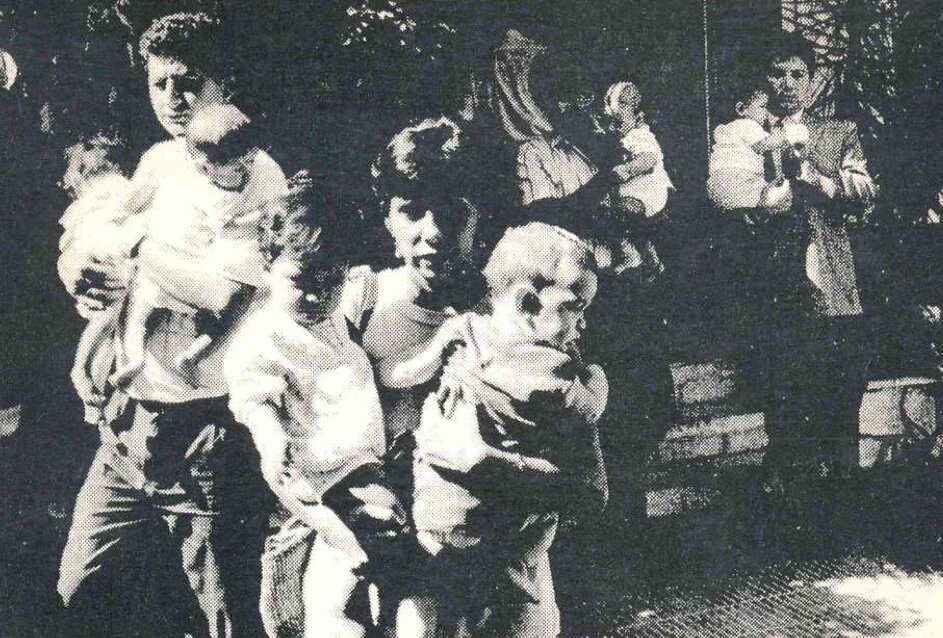
This vulnerability became particularly important in relation to children and adoption. Many families had limited resources to navigate legal systems. Also, to challenge decisions made by authorities, or protect their rights when facing difficult economic circumstances. During the 1980s, international adoption increased as families from abroad sought to adopt children. Specifically, from countries where poverty and weak institutional safeguards created opportunities for foreign adoptions.
Although many Paraguayan adoptions followed legal procedures, concerns later emerged about whether all families had provided informed consent. And on another note, whether authorities had sufficient mechanisms to protect children’s identities and family connections.
The growth of international adoption networks
International adoption expanded across Latin America during the second half of the twentieth century, driven by growing demand from prospective parents in Europe and North America. Paraguay became part of this trend during the 1980s, as foreign couples increasingly travelled to the country to adopt children.
According to the 1994 study Adopción Internacional o Tráfico de Niños – Paraguay, by researcher Rosa María Ortiz of the Centro de Documentación y Estudios (CDE), specialised lawyers often became the principal intermediaries between foreign adoptive parents and the Paraguayan legal system. Many prospective parents arrived in the country already matched with a child, stayed in hotels catering to adoptive families, and depended almost entirely on lawyers to navigate adoption procedures because they were unfamiliar with the language and local institutions.
Investigations raised concerns about falsified documentation, inadequate verification of biological families, and the possibility that some mothers were pressured into giving up their children. The issue was not that international adoption itself was illegal, but that a system designed to protect children could become vulnerable when combined with economic inequality and insufficient oversight.
The 1995 crisis and the suspension of international adoptions
By the early 1990s, questions surrounding international adoption had become increasingly difficult to ignore. According to Ortiz, concerns extended beyond individual cases and pointed instead to structural weaknesses within Paraguay’s institutions. The report argues that limited judicial oversight, inconsistent legal procedures, and the growing influence of private intermediaries created conditions in which irregular practices could flourish.
One of the most significant moments in Paraguay’s adoption history came in 1995, when concerns about irregular international adoptions led authorities to suspend the process. According to reports published at the time, the Supreme Court requested legislative action after determining that adoption procedures were being used in some cases to conceal the illegal trade of children.
The investigations included allegations of clandestine childcare facilities where children were reportedly being held before being placed for adoption abroad. Contemporary reports also alleged that different professionals, including lawyers, judges, notaries, and medical workers, had been involved in irregular adoption networks. However, despite investigations and public concern, many cases did not result in convictions. For many adoptees and families, the lack of accountability remains one of the central unresolved questions surrounding this period.
Paraguay’s Lost Children: A history still being reconstructed
Unlike Argentina, where the dictatorship’s systematic appropriation of babies born to political prisoners has been extensively documented, Paraguay’s history of international adoption followed a different path. Researchers and adoptees have focused on how poverty, weak institutions, and alleged corruption created conditions in which some children and families became vulnerable. Many adult adoptees have had to investigate their own histories through archives, DNA testing, and contact with biological relatives.
Official figures cited in Ortiz’s report illustrate how quickly international adoption expanded. According to judicial statistics reproduced in the study, only five Paraguayan children left the country through court-authorised international adoptions in 1987. That figure rose to approximately 130 in 1990, more than 200 in 1991, and exceeded 250 by 1993. Researchers cautioned that the true number may have been higher, as reliable national records were incomplete.
The adoptee generation searching for answers
Among those trying to understand this history is David Heinzerling, a Paraguayan-born adoptee who was adopted by an American family in 1990 and raised in New York. David always knew he was adopted, but he only began exploring his Paraguayan identity more deeply as a teenager. At 18, his adoptive mother helped him locate his biological family, allowing him to travel to Paraguay and meet relatives for the first time.
Today, he remains connected to his Paraguayan family and has regained his Paraguayan citizenship. His experience, however, is different from many other adoptees who continue searching for answers because of unclear documentation or missing information.
“There are a lot of adoptees who would love to know their families or understand their stories. Some people are just not able to because they do not have the correct paperwork.”
For David and many others, understanding the past is about recognising a broader historical experience shared by thousands of Paraguayan-born adoptees around the world.
Looking beyond the documents
The story of Paraguay’s lost children or international adoptees is still being written. As more adults search for their origins, they are also raising questions about adoption practices, institutional responsibility, and the need for historical recognition. Who were the children who left Paraguay? How many families lost contact with their children? Were enough safeguards in place? And what happened to those who facilitated irregular practices?
These questions remain part of an unfinished conversation about Paraguay’s recent history. In the next episodes of this Paraguay’s Lost Children series, The Asunción Times will explore the personal stories of Paraguayan adoptees who have searched for their roots, reconnected with their families, and rebuilt their relationship with the country where their stories began.