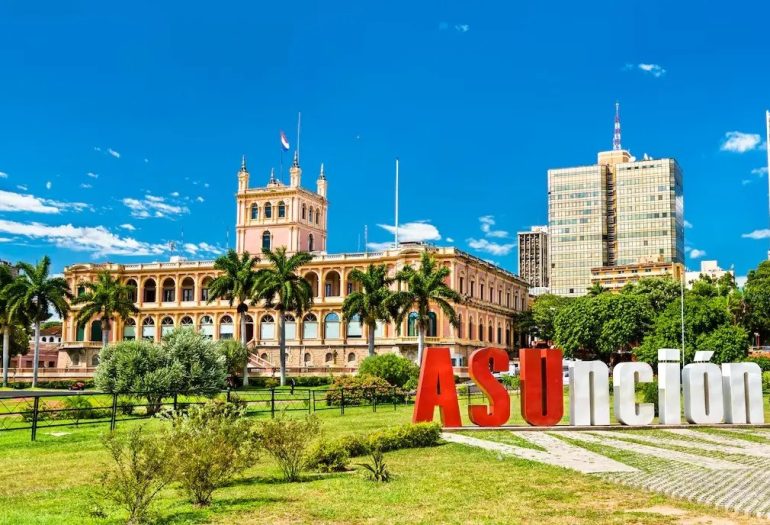

Asunción celebrates its 489th anniversary on 15 August, 2026, but Paraguay’s capital’s importance stretches far beyond its age. Founded in 1537, Asunción played a central role in the expansion of Spanish settlements across South America, earning the historic nickname “Mother of Cities”. The city was founded on 15 August 1537 by Spanish captain Juan de Salazar y Espinosa, on the territory of the Cario-Guaraní people. Located along the Paraguay River, Asunción quickly became an important centre for Spanish activity in the region.
Its strategic position was key. The Paraguay River connected the settlement with the Paraná River and the Río de la Plata, creating a natural route towards the south and west. Asunción therefore became a base from which expeditions travelled into neighbouring territories and established new settlements.
A city that gave rise to others
The title “Mother of Cities” refers to Asunción’s role in the establishment of numerous settlements across present-day Paraguay, Argentina, Bolivia and parts of Brazil. From Asunción, expeditions went on to establish or repopulate cities including Santa Cruz de la Sierra in Bolivia, Santa Fe and Córdoba in Argentina, and several Paraguayan settlements.
Among the most significant examples is Buenos Aires. The Argentine capital had first been founded by Pedro de Mendoza in 1536, but the settlement was eventually abandoned. In 1580, Juan de Garay travelled from Asunción to establish Buenos Aires for a second time. This became the permanent settlement that would eventually develop into Argentina’s modern capital.
Garay’s expedition also demonstrates the close connection between the two cities. Residents of Asunción travelled with him, including 64 young mestizos, alongside other settlers, livestock and supplies. The process did not stop there. According to Paraguayan government sources, settlements established through expeditions originating from Asunción eventually numbered more than 70 over several centuries, extending across a vast area of South America.
More than a colonial story
However, the history behind Asunción’s nickname is not exclusively a story of Spanish expansion. The city was established in Cario-Guaraní territory, and Indigenous communities played an essential role in the development of the settlement. The relationships, alliances and cultural exchanges between Indigenous populations and Spanish colonists shaped Asunción and the societies that emerged from it. This history also helps explain Paraguay’s distinctive cultural identity. The interaction between Guaraní and Spanish traditions influenced language, customs and everyday life, leaving an imprint that remains visible centuries later.
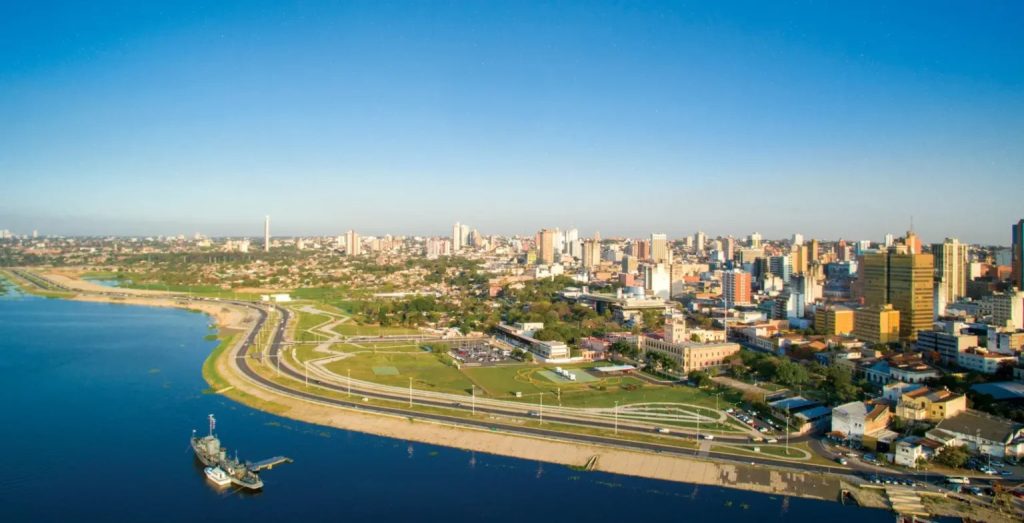
Asunción’s location was another crucial factor. Sitting on one of South America’s major river systems, the city became a point of connection between the interior and the Río de la Plata. Its geographical position helped transform it from a colonial settlement into a launching point for the expansion of Spanish America.
Today, the title “Mother of Cities” is often used as a source of Paraguayan pride. Yet behind the name lies a complex history of migration, exploration, Indigenous and European encounters. Nearly five centuries after its foundation, Asunción remains not only Paraguay’s capital, but a city whose history is closely intertwined with the origins of its neighbours.
Find out more with The Asunción Times’ article History Of Asunción: From Its Founding To Today