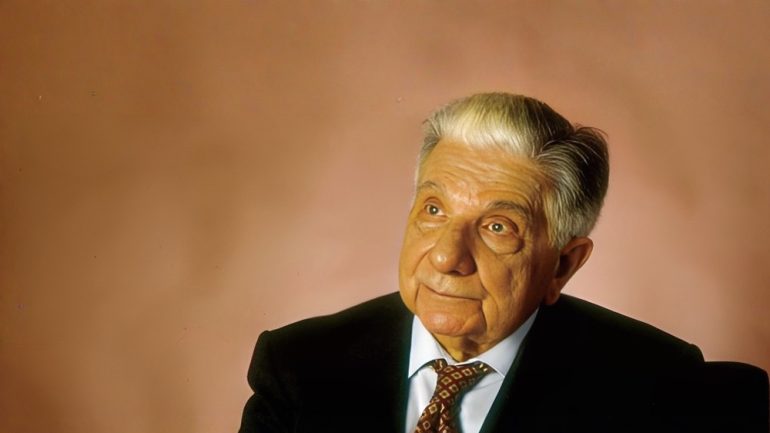

Augusto Roa Bastos remains one of Paraguay’s most influential writers, who transformed national history into powerful literary stories. Born in Asunción in 1917, the novelist, journalist and screenwriter gained international recognition through his exploration of topics like dictatorship and memory. His work continues reaching readers around the world while introducing new generations to Paraguay’s culture, history and enduring spirit.
Recently, a recovered collection of Roa Bastos’ books offered new insight into his life and work. But who was the man who is considered by many to be Paraguay’s greatest novelist.
A childhood that shaped Augusto Roa Bastos’ literary journey
Roa Bastos spent his childhood between Asunción and the city of Iturbe, surrounded by Paraguay’s traditions, languages and rural communities. Guaraní stories and local customs shaped his understanding of Paraguayan identity from an early age. Those experiences later influenced a literary voice that focused on ordinary people and their struggles. Through his writing, he brought Paraguay’s history and forgotten voices into wider conversations.
The Chaco War unfolded during Roa Bastos’ youth and deeply affected his understanding of conflict. Although he never served as a soldier, he witnessed the consequences among families and communities affected by loss. Those experiences remained powerful memories throughout his life and later influenced his literary themes. His novels often examine how violence continues affecting people long after conflicts end.
Exile could not silence Augusto Roa Bastos
Political unrest forced Roa Bastos to leave Paraguay in 1947 following the Paraguayan Civil War. His departure began decades of exile, first in Argentina and later in France. Although distance separated him from Paraguay, his homeland remained central to his identity and writing. From abroad, he continued exploring the country’s history, people and political struggles through literature.
Exile also allowed Roa Bastos to observe Paraguay from a different perspective. He transformed personal displacement into creative inspiration while examining justice, political repression and authoritarian power. His novels combined fictional stories with reflections on Paraguay’s national experience. Through those works, readers encountered a country struggling with memory, identity and political violence.
The novels that define Augusto Roa Bastos
Readers across Latin America recognise Roa Bastos for combining historical events with philosophical questions about power. His novel Hijo de Hombre (Son of Man) explores ordinary Paraguayans facing hardship, violence and political uncertainty. The story also showcases the resilience and strength that emerge during difficult periods. The novel established Roa Bastos as an important Latin American literary voice with international influence.
His best-known novel, Yo el Supremo (I, the Supreme), examines the rule of José Gaspar Rodríguez de Francia. Through an innovative narrative, Roa Bastos challenges readers to question authority and the nature of political power. The novel blends historical material, imagination and psychological exploration into a literary experience. Decades after publication, universities worldwide continue studying the work as a landmark of Latin American literature.
International recognition
The quality and influence of Roa Bastos’ writing eventually earned recognition beyond Paraguay and Latin America. In 1989, he received the Cervantes Prize, one of the Spanish-speaking world’s highest literary honours. The award recognised his lifelong contribution to literature and cultural expression across the Spanish-speaking world. Consequently, the honour strengthened his position among the most respected writers of the twentieth century.
His novels reached international audiences through translations into numerous languages around the world. Readers could discover Paraguay through stories deeply rooted in its history, traditions and political experience. Meanwhile, scholars continue examining his work for new perspectives on memory and political responsibility. His influence extends beyond literature into conversations about democracy, identity, culture and human rights.
A legacy that lives on
After the fall of Alfredo Stroessner’s dictatorship, Roa Bastos returned to Paraguay in 1989. During his final years, he remained involved in the country’s cultural and literary life. He died in 2005, but his stories continue inspiring students, writers and readers worldwide. His work reminds audiences that literature can preserve voices that history might otherwise leave behind.
Today, libraries, universities and schools continue introducing new generations to Augusto Roa Bastos and his work. His novels remain relevant because they encourage readers to question justice, freedom and political power. They also invite audiences to remember the past while imagining a different future. Through every page, Roa Bastos keeps Paraguay’s history alive for readers around the world.