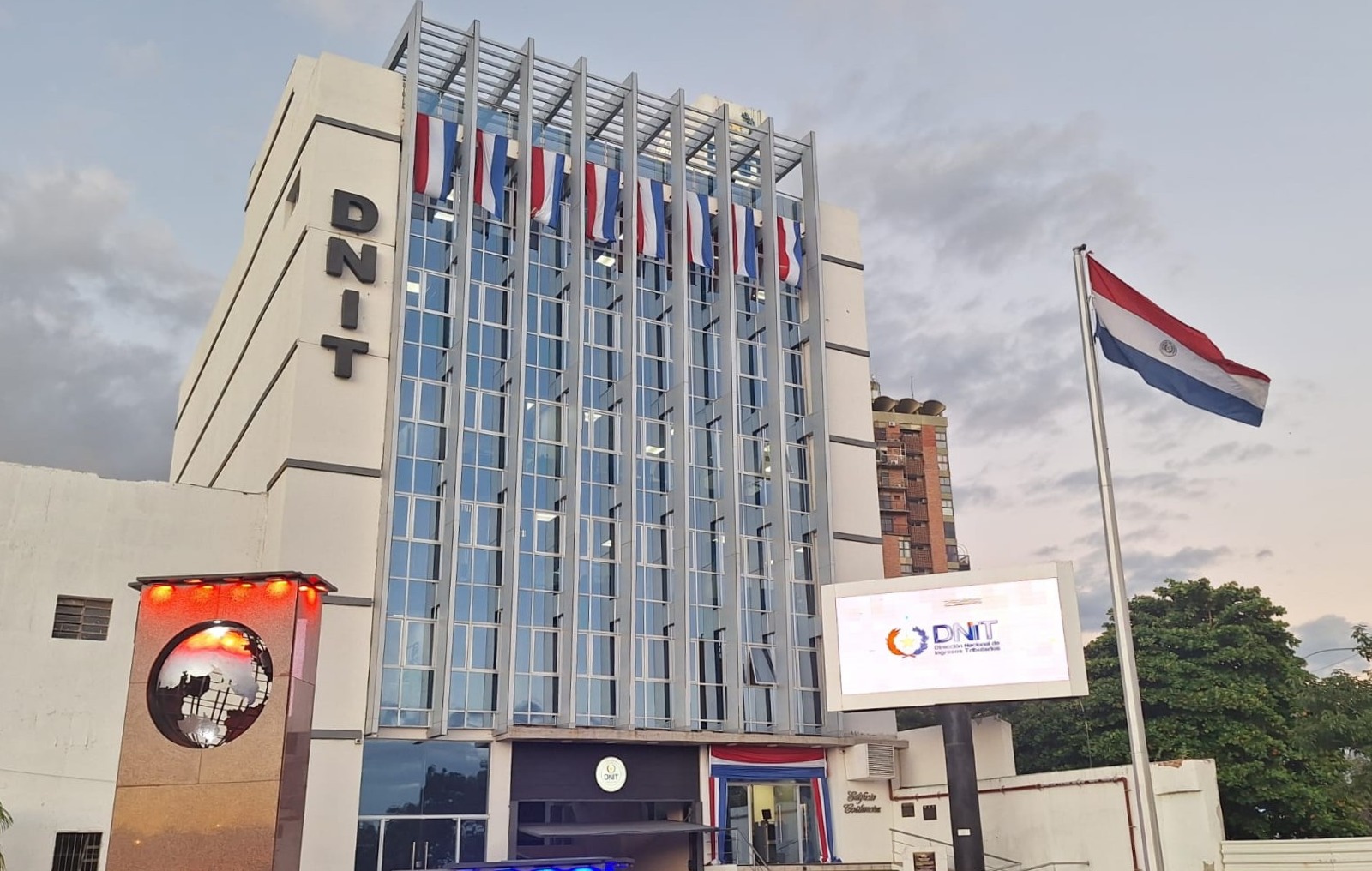

Paraguay’s National Directorate of Tax Revenues (DNIT) has increased its collection by an additional ₲11.5 trillion, equivalent to approximately US$1.53 billion, in the three years since its formation. The Paraguayan tax authority director Óscar Orué announced the results, highlighting that this has raised the nation’s tax-to-GDP ratio from 9.1% to 11.2% by the end of 2025.
In a video released on social media, Orué stated that the integration of the country’s tax and customs departments into a single entity has paved the way for a more efficient, modern, and transparent administration that is closer to the public. The DNIT was officially created by law in 2023, merging the Subsecretaría de Estado de Tributación (SET) and the Dirección Nacional de Aduanas to centralise tax and customs collection.
Paraguayan tax authority enforcement
The DNIT’s enhanced control measures have led to significant financial recoveries. According to Orué, over 2,000 finalised cases involving adjustments resulted in the collection of more than ₲1.6 trillion (about US$230 million) in taxes and fines. This reflects a stricter approach to ensuring compliance with national tax laws.
Furthermore, the director reported that the agency has filed 289 formal complaints with the Public Prosecutor’s Office. These complaints involve 470 taxpayers and the alleged use of over 3,000 fraudulent invoices, with an estimated value of around US$130 million. In the customs sector, 1,900 control and re-verification processes were carried out, which generated additional tax assessments exceeding ₲141 billion.
Taxpayer growth and digitalisation
The number of registered taxpayers has seen substantial growth. Between August 2023 and July 2026, more than 270,000 new contributors were added to the Unique Taxpayer Registry (RUC), bringing the current total to over 1.3 million. This expansion of the tax base is a key factor in the increased revenue.
Digitalisation has been a central pillar of the DNIT’s strategy. The agency reported over 45,800 users of its electronic invoicing system and the management of more than 2.5 billion electronic tax documents since the implementation of the National Integrated Electronic Invoicing System (SIFEN). Tools such as Marangatu, a tax management system, and Ekuatia’i, a free e-invoicing solution for small-scale taxpayers, have been strengthened alongside enhancements in the web portal, cybersecurity, and data analysis.
Anti-smuggling efforts and public outreach
In its fight against contraband, the Paraguayan tax authority has seized over 12 million items of merchandise, with an approximate value of ₲417 billion. These efforts are part of a broader strategy to combat illicit trade and protect the national economy.
Regarding public services, the institution recorded 61 million citizen interactions and has actively promoted fiscal responsibility. Approximately 148,000 people have received training in tax education through more than 1,100 organised talks. Orué also noted that over 3 million kilograms of seized goods have been donated to educational centres, hospitals, community dining halls, fire departments, and charitable foundations.
The head of the DNIT affirmed that the institution will continue its work with a focus on “responsibility, transparency, and innovation to strengthen public revenues and improve services to the citizenry.”
Also read: Paraguay’s DNIT Forecasts 8% Tax Revenue Growth For Second Half 2026.