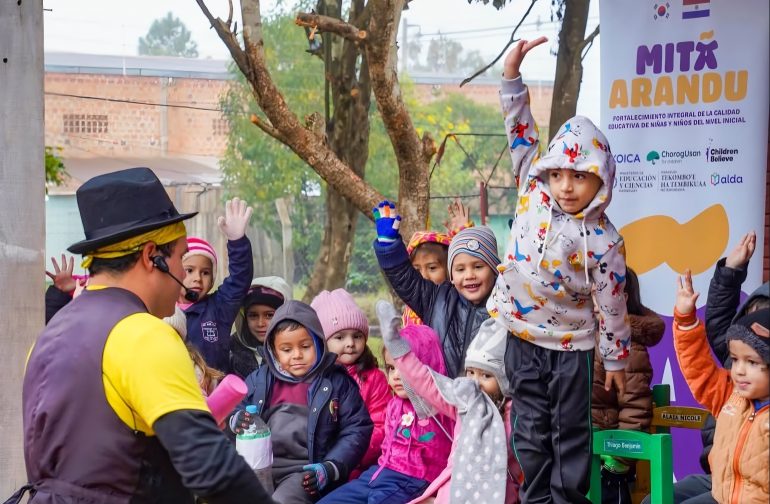

With more than two decades of work in Paraguay, Fundación ALDA is expanding an educational model focused on strengthening teachers, involving families, and connecting schools with their communities. As of August 2026, the foundation works with 346 schools, 49,265 students, 3,087 teachers, and 814 headteachers across eight departments. By the end of 2026, it aims to reach more than 650 schools in all 17 departments, benefiting nearly 470,000 students.
ALDA was founded in 2003 by Spaniards Jordi Robinat and Rita Rosés, who had settled in Paraguay, the country where they formed their family together with their sons Alberto and David, from whose names the name ALDA originates. The foundation began working with state schools in coordination with the Ministry of Education and Sciences (MEC) to address one of the country’s central challenges: improving the quality of education.
Education as a community effort
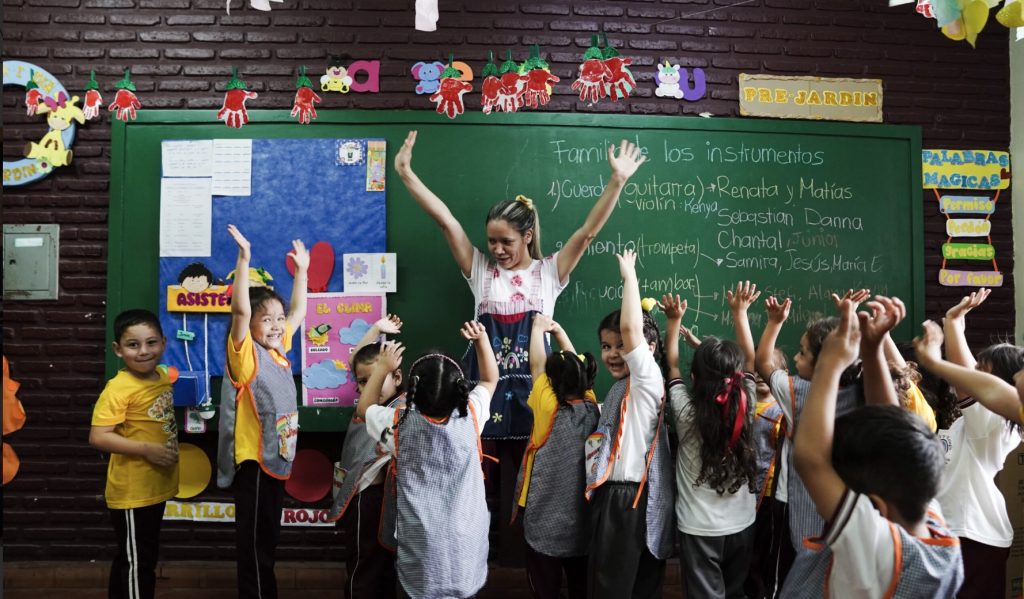
ALDA’s socio-educational model is built on the idea that schools cannot transform students’ lives on their own. Alongside teacher and school leadership training, the organisation works to involve families, local governments, healthcare services, and other community institutions.
In its early years, this included helping children access identity documents, public services, and protection programmes, recognising that basic rights are also part of the educational process.
“Learning happens through the relationship between the school and the community,” explains Diego Martínez, Executive Director of Fundación ALDA. “That is why we seek to make schools open spaces that are connected to their surroundings.”
Reading as a foundation for learning
Reading comprehension has been at the centre of ALDA’s approach since its beginnings. Before each intervention, ALDA assesses students based on their actual reading level, rather than their school year. Teachers then receive training and ongoing support to adapt strategies to their students’ needs.
“If we want to transform schools and improve the quality of learning, teachers and school leadership teams need continuous opportunities for professional development.”
The need is significant: according to Martínez, international assessments show that only 3 in 10 Paraguayan teenagers reach the minimum expected level of reading comprehension, while mathematics and science also present major challenges.
In schools where ALDA’s model has been implemented for several years, however, the organisation reports that seven to eight out of 10 students reach the expected reading level. ALDA argues that teachers can reduce learning gaps when they have the right tools, guidance, and ongoing support.
From school to university
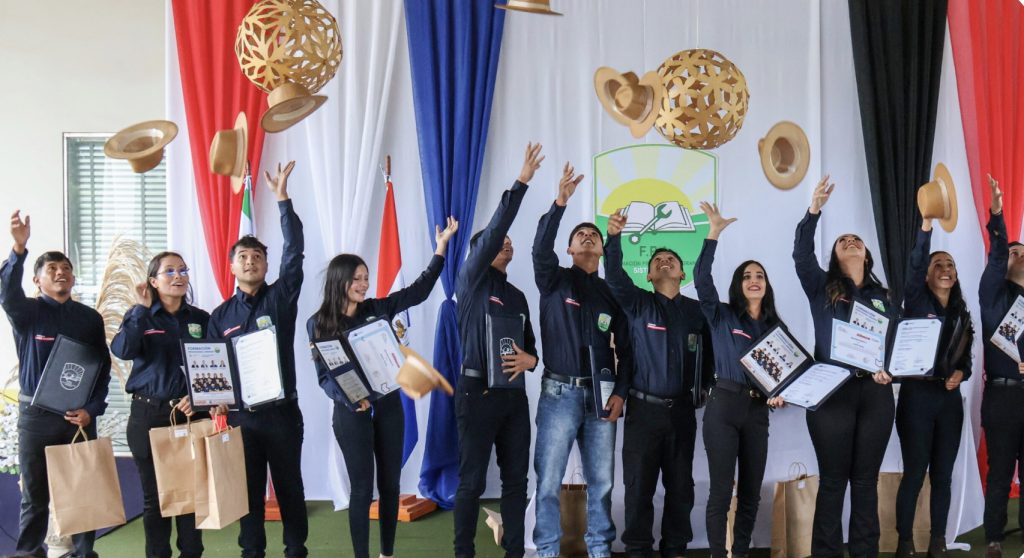
The foundation’s work extends beyond basic education. Fifteen years ago, it created Joven Adelante (Youth Forward), a scholarship programme for young people from vulnerable backgrounds. The programme supports students from their final years of school through university and into the workforce.
Beyond financial assistance, scholars receive career guidance, academic tutoring, psychological support, and preparation for university admission. Former recipients now work as economists, nurses, psychologists, communicators, and teachers. Others have studied abroad or represented Paraguay in international robotics competitions. “When young people have opportunities and the right support, their life plans can be completely transformed.”
Artificial Intelligence in the classroom
Fundación ALDA is also exploring how artificial intelligence can support teachers. Its new platform, Guiando (Guiding), will analyse students’ learning levels and generate personalised activities aligned with the national curriculum.
“The idea is for it to work as a virtual educational adviser that supports teachers and allows them to dedicate more time to the teaching process.”
The platform is set to begin its pilot phase this year. Looking ahead, Fundación ALDA plans to expand its work while focusing on three priorities: early childhood education, improving reading and writing in state schools, and expanding Joven Adelante. It is also preparing an international education conference bringing together educators, authorities, businesses, and cooperation organisations.
After more than two decades, its central premise remains that improving education requires more than changing what happens inside classrooms. It requires stronger teachers, committed communities, and opportunities that allow students to reach their full potential.rooms. It means building stronger communities, empowering teachers, and creating opportunities for every child and young person to thrive. As learning gaps remain one of the country’s greatest challenges, Fundación ALDA aims to show that communities can achieve higher-quality education when they work together.
Those who want to support the foundation’s mission can learn more about its work and find ways to get involved through Fundación ALDA’s website.