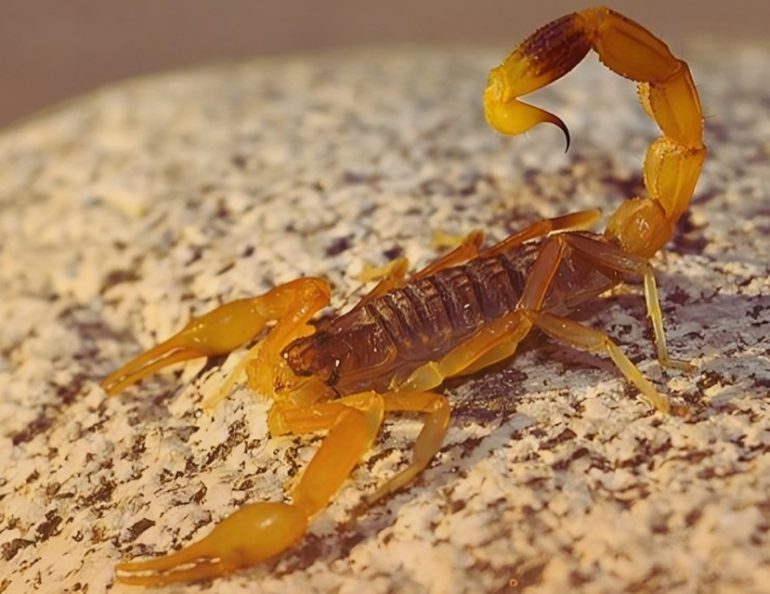

Health authorities in Paraguay have reported over 785 incidents involving scorpions as of 16 October 2026. The cases were notified to the National Zoonosis Control Programme and National Anti-Rabies Centre (PNCZ y CAN) by regional health bodies and medical services across the country that advise people to be on scorpion alert.
Consequently, the Directorate General of Health Surveillance has issued a warning, urging the public to exercise extreme caution. Officials advise that scorpions are more frequently encountered during periods of high temperature and humidity, particularly in the afternoons and at night.
Increased activity in warm, humid weather
During warmer seasons, scorpions often leave their hiding places. These arachnids typically seek shelter in dark, damp locations such as cracks in walls and floors, drains, and under tiles, bricks, stones, and timber. They have adapted well to urban environments, inhabiting both the interior of homes and surrounding areas.
Primarily feeding on cockroaches, scorpions are nocturnal creatures with heightened activity on warm, moonless nights. While they can be found inside homes and in patios, they generally attempt to flee and will only sting if they feel threatened. They are capable of climbing walls and fabrics with ease.
Scorpion alert: The dangers of a scorpion sting
A scorpion sting can cause immediate pain of varying intensity. While some cases may not present systemic symptoms, others can lead to severe neurological and cardiovascular complications that may become life-threatening. Furthermore, the injury at the sting site may not be immediately obvious.
Health officials have identified several groups as particularly vulnerable to scorpion venom. These include young children, pregnant women, and elderly individuals with pre-existing health conditions. Paediatric patients require strict monitoring due to the dose of venom relative to their smaller body mass, and severe cases in young children can be fatal.
Medically significant species and treatment
While all scorpions can inject venom, not all species pose a mortal threat to humans. The most dangerous in the country is the genus Tityus, commonly known as the blond scorpion. This species is distinguished by its long, thin pincers and a double stinger with a second point.
In the event of a sting, individuals are advised to seek immediate medical attention at the nearest health centre. The country has a supply of anti-venom for stings from medically significant scorpions. As a first aid measure, applying a cold compress or ice to the affected area can help alleviate pain while travelling to the hospital. Authorities explicitly warn against trying to squeeze, cut, or suck the venom from the wound, and advise against burning the site or applying other solutions.
Recommendations for prevention
To prevent stings, officials recommend shaking out clothing, shoes, and bedding before use. Caution should also be exercised when examining drawers or shelves, with items removed progressively rather than by hand-searching inside. Additionally, walking barefoot in areas known for scorpions, alert is advised, and should be avoided.
For home protection, it is advised to fit fine-mesh grilles over drains and to seal any openings around pipes, as well as cracks in floors, walls, and ceilings. Regular and thorough cleaning of homes and their surroundings is also crucial. Controlling rubbish helps reduce the insect population that serves as a food source for scorpions. Finally, leaf litter and debris should be handled with care, avoiding the use of bare hands.