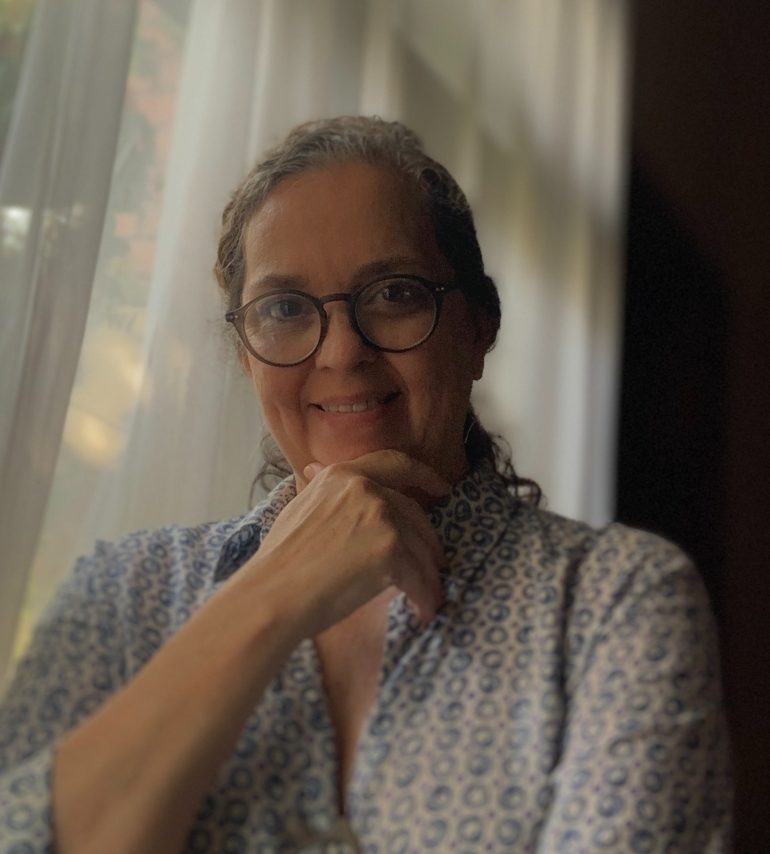

After the death of her partner, Gisele Baddouh (62) turned to Ñandutí and Encaje Jú, two traditional Paraguayan textile arts deeply connected to memory, resilience, and women’s history. In 2017, she began Manos Paraguayas, a YouTube channel dedicated to teaching and preserving both crafts, creating what would eventually become an international community of learners. Out of individual loss, something larger and culturally significant took shape over time.
What started the channel
“I began the YouTube channel in 2017 after my partner died,” she says. “He always encouraged me to do something with Ñandutí, and then Encaje Jú. When he passed, I realised I had to do it.”
What followed was a period of trial and error. “I began trying. At first, I did not like anything I made. I thought my videos were ugly. I did not like my hands; I did not like the lighting. But eventually I started weaving and recording. And in August 2018, I published my first video.”
Today, the YouTube channel is officially recognised by The National Secretariat of Culture (SNC) of Paraguay as a project of cultural interest.
Learning the craft and carrying grief
Her relationship with traditional Paraguayan crafts predates the channel. “I learned both crafts at the IPA, the Paraguayan Institute of Crafts, with two remarkable women. Ramona Cantero was my teacher of Encaje Jú. Eusebia León de Yegros was my teacher of Ñandutí. Two remarkable women whom I still admire deeply.”
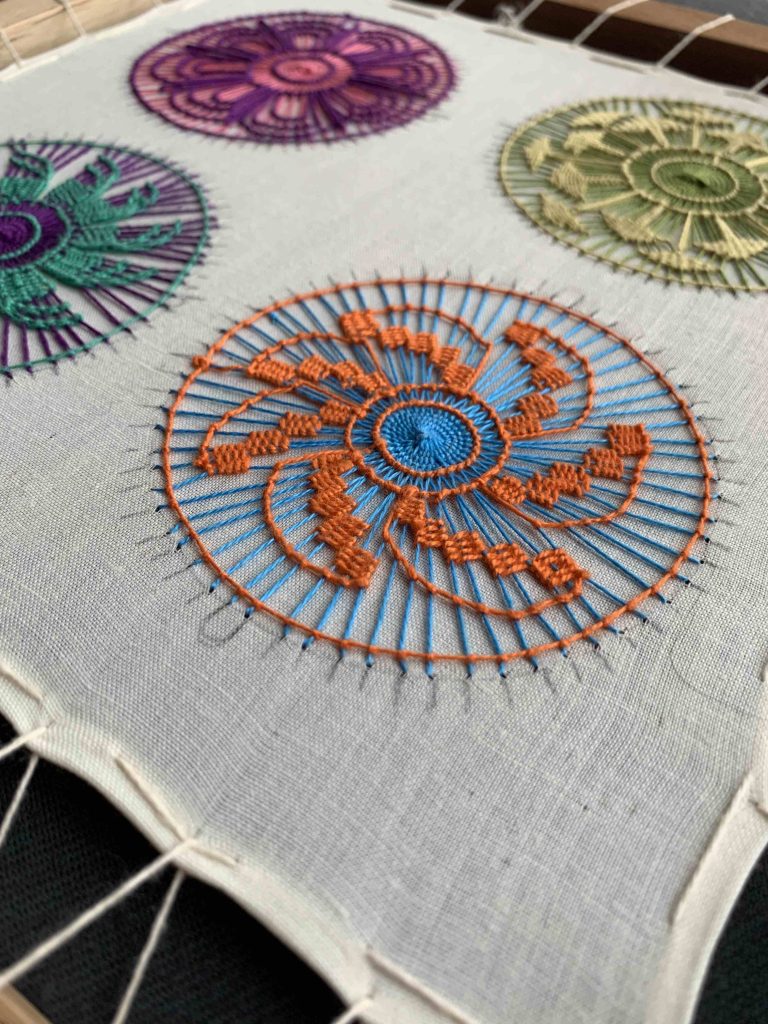
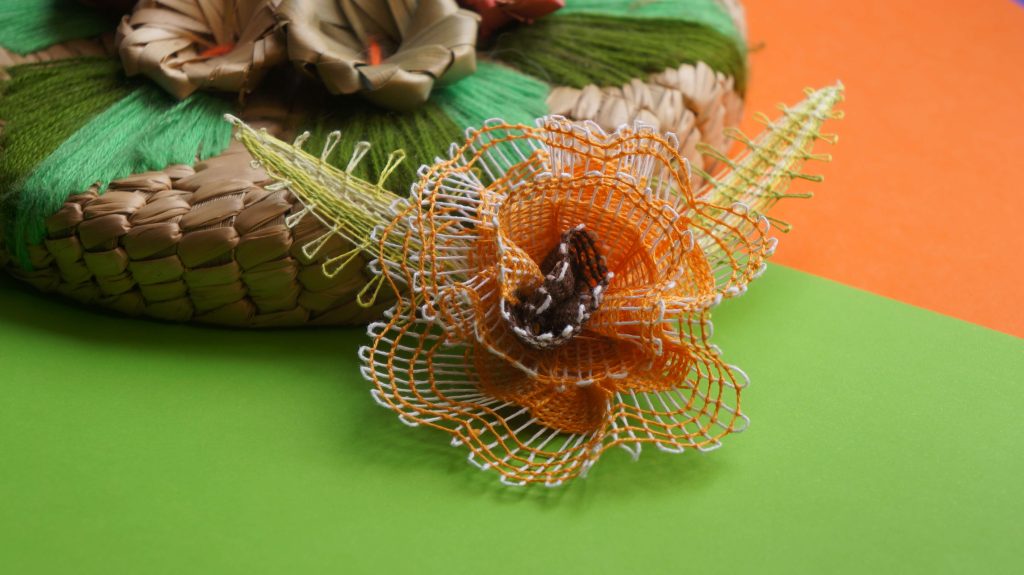
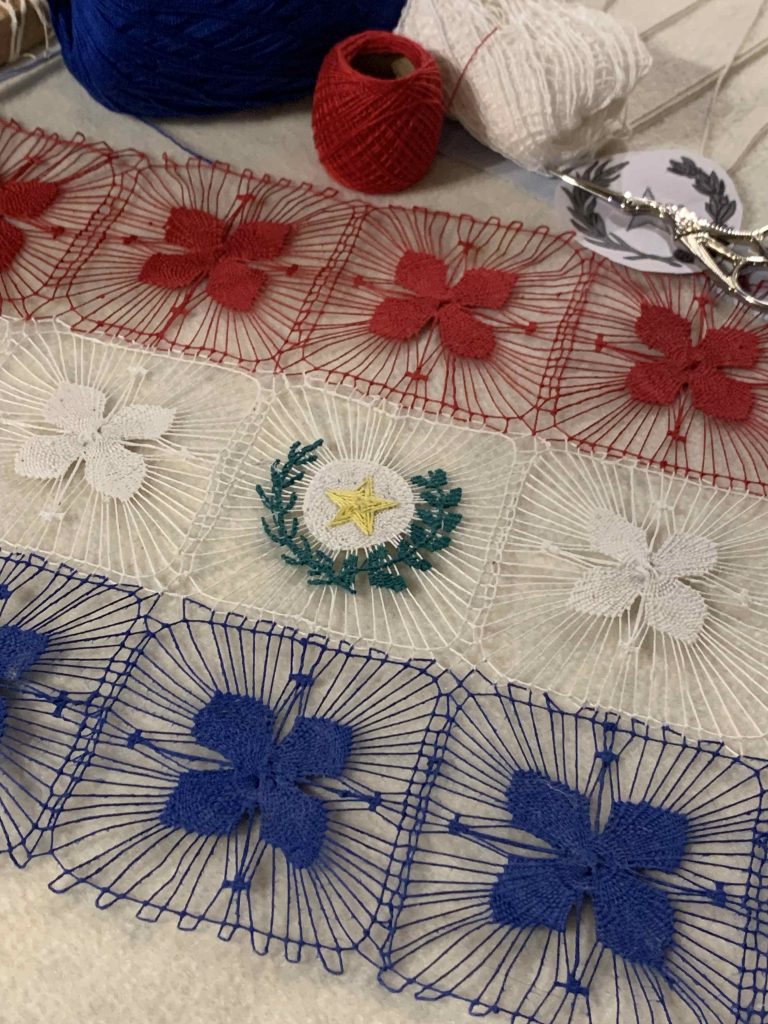
Ñandutí is a Paraguayan lace known for its colourful spider’s-web-like patterns made by hand. Encaje Jú is a Paraguayan embroidery style distinguished by delicate white hand-stitched designs.
Baddouh started learning in her thirties, though her fascination with the craft began much earlier. “I was always very curious. I was always fascinated by how Ñandutí was made. And when I found out that the IPA taught it, I went there with my sister.”
That moment, however, was also shaped by grief. “My sister had just lost her one-year-old baby. She was grieving, and I stayed by her side all the time. She found out that the IPA taught the crafts and asked me to go with her, so I went with her to accompany her while she mourned.”
Ñandutí as memory and heritage
For Baddouh, the craft is inseparable from emotional memory and cultural inheritance. “I think everything is connected. Ñandutí has that element; there is something magical within it.”
“I feel that Ñandutí carries this sense of heritage that we have here in Paraguay, especially for women. Ñandutí is connected to women who lost everything, women who were on the verge of extinction, just as Paraguay itself once was. And yet they kept weaving. With a thread, a needle, a little stick, they supported their families and helped Paraguay survive. So for me it carries that whole history of resilience and love.”
She sees the connection to prior generations of women. “This was also a tribute to my grandmother, who always wanted to teach me. I never found the time to sit down and let her teach me. But of course, there is a connection. It was already in my life; I simply picked up the thread at that moment.”
Tradition in a fast digital world
For Gisele Baddouh, the appeal of traditional crafts stands in sharp contrast to contemporary digital culture. “Today everything is so fast. Everything is instant gratification. And Ñandutí, Encaje Jú, and crafts in general are the opposite. They require time, silence, and calm.”
She sees younger generations adapting the craft in new ways. “A young person might not make a huge tablecloth like my grandmothers used to. Maybe they will make a keychain, a small framed piece, something for a shirt or handbag, something smaller. But the size does not matter. What matters is continuing the craft.”
The channel quickly exceeded her expectations. “When I published my first video, I used to think, ‘If I had a hundred views, I would be so grateful.’ And suddenly I had a thousand views, then two thousand, and people started subscribing—ten, then a hundred. I could not believe it.”
A global community of weavers
Over time, what began as a personal project grew into an international community. Baddouh now receives messages from learners across the world, many of whom discover Ñandutí through her videos.
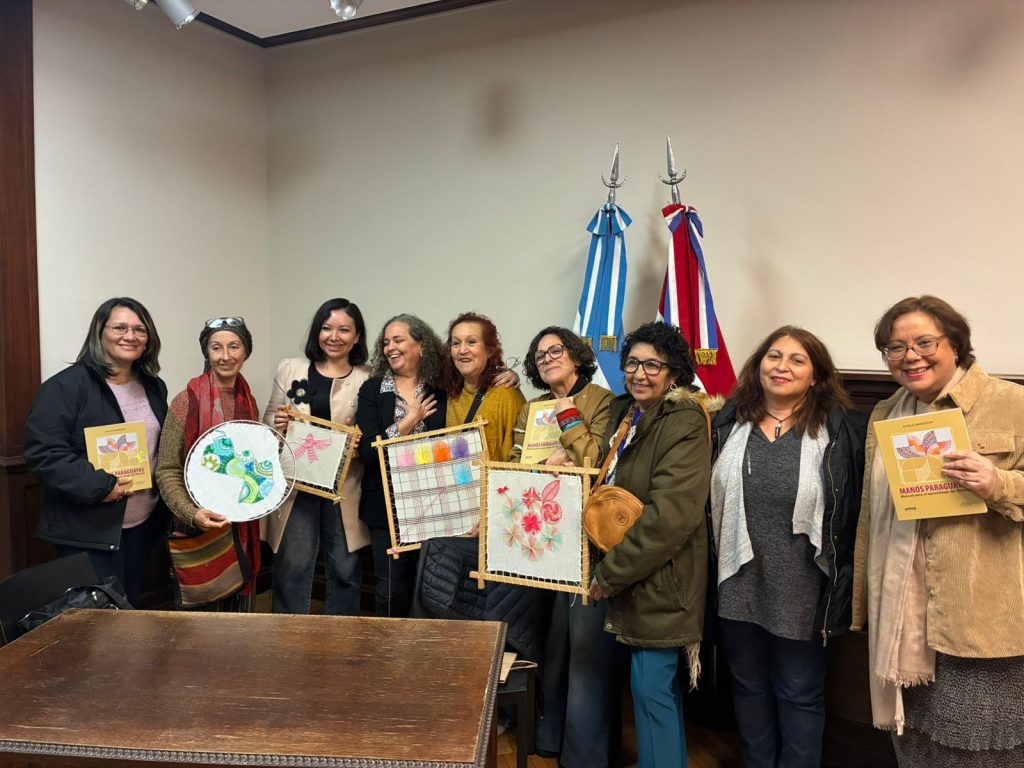
Some stories come from unexpected places. Before the manual became available on Amazon, a retired art teacher in the United Kingdom mailed her payment by post in order to purchase Baddouh’s Ñandutí manual. A woman from Minnesota learned through the channel and later began winning prizes at local fairs.
“But what matters most to me,” Baddouh says, “are the Paraguayans living abroad who tell me this reconnects them with a part of themselves that they miss so much, so many Paraguayans abroad, especially women, reconnect with their roots through this craft.”
Preserving women’s stories
Gisele Baddouh is now expanding beyond tutorials to document the stories of Paraguayan artisans. “Now I am starting interviews and videos about people’s work. I want to show those women, those craftswomen that nobody knows.”
One message from Mexico remains especially meaningful to her. In El Grullo, Jalisco, a viewer decorated the Parish of San José Obrero with a ceiling of Ñandutí after learning through the channel. The parish later wrote to thank Baddouh, explaining that many local women had learned the technique through her videos. For Gisele Baddouh, those moments matter far more than financial reward. “Not everything in life translates into money. In my heart and soul, it means much more than money.”