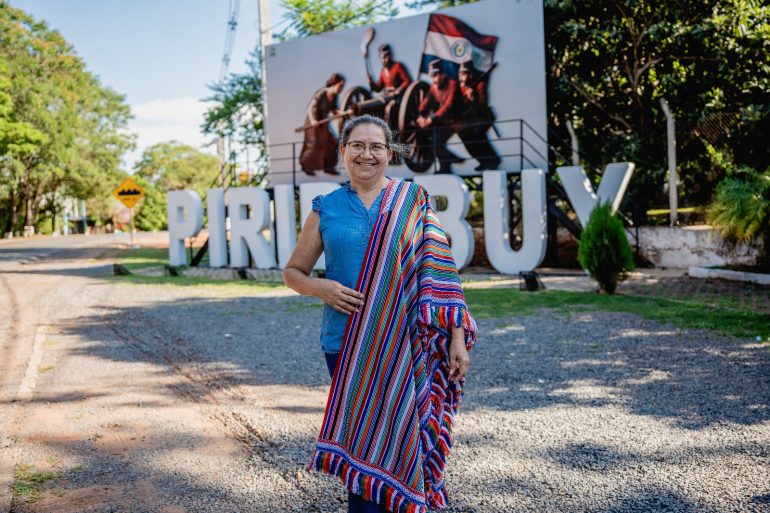

From learning at seven years old to showcasing Paraguayan craftsmanship on the world stage, Rosa Segovia continues to keep the tradition of the Poncho Para’i de 60 Listas alive. For more than five decades, Rosa Segovia has dedicated her life to preserving one of Paraguay’s most treasured textile traditions. Today, the 63-year-old artisan from Piribebuy is recognised as one of the country’s leading weavers, carrying forward the legacy of the iconic Poncho Para’i de 60 Listas while inspiring a new generation of craftspeople.
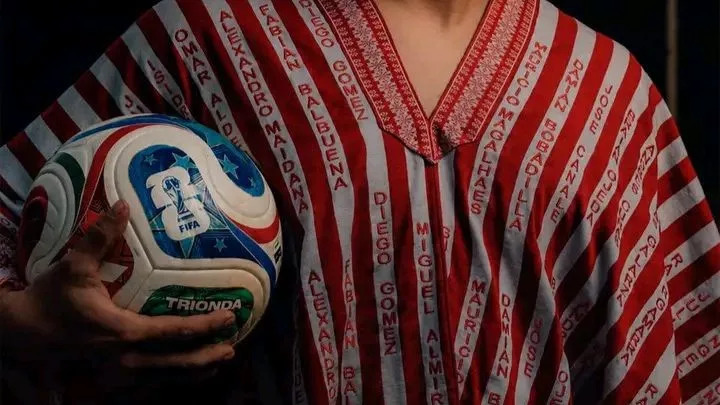
Recent months have brought her work into the national spotlight after the Paraguayan Football Association commissioned special ponchos featuring the names of Paraguay’s national team players for the 2026 FIFA World Cup. The project generated widespread attention and a surge in demand for the handcrafted garments.
A craft learned in childhood
Segovia’s connection to weaving began at an early age. “I learned the border section, the fajita, when I was only seven years old,” she says to The Asunción Times. “When I finished sixth grade, I stayed on to work.”
That early start laid the foundation for a lifelong commitment to the Poncho Para’i de 60 Listas, one of Paraguay’s most distinctive and culturally significant garments.
Creating a Poncho for Paraguay’s national team
Earlier this year, Segovia and her fellow artisans received an unexpected request from the Paraguayan Football Association (APF).
“The APF contacted us. At first, they wanted 26 ponchos for all the players. But because they contacted us with so little time available, it was impossible to make and finish all 26 ponchos. Orders like that should be placed much earlier. So the solution was we could incorporate the names of each of the selected players into one poncho.”
Instead, the artisans focused on producing a smaller number of highly detailed pieces. “In 15 days, we finished one. We managed to make two.”
One of the completed ponchos travelled with the national team delegation, while the other remains on public display at Paseo La Galería mall.
Four women working together
Producing the commemorative ponchos required careful planning and teamwork.
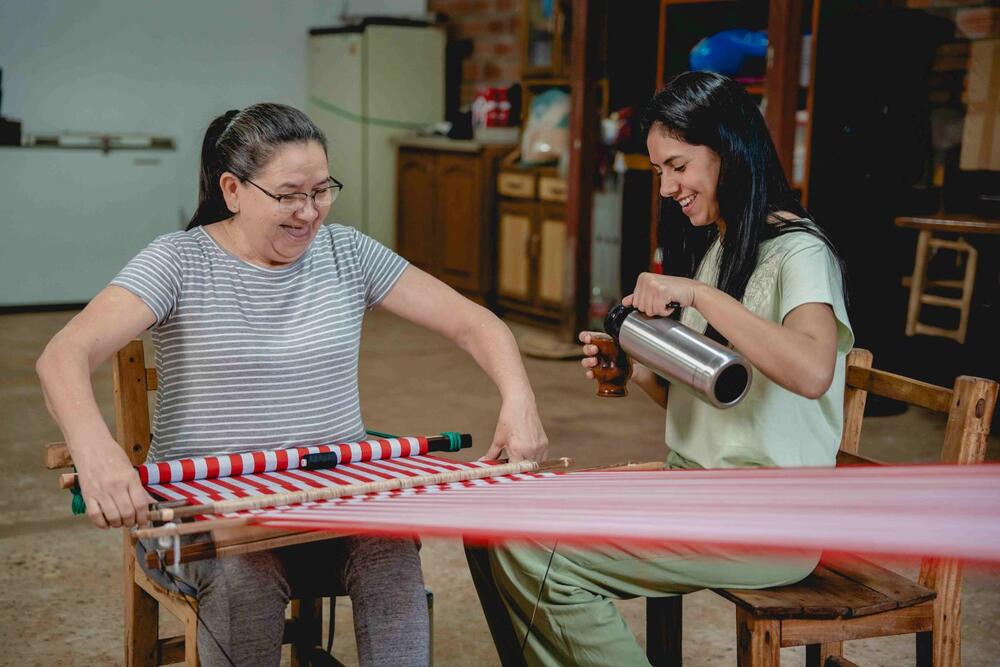
“We were four women working together. My daughter, a niece of mine, and the two women who weave the fringes, Perla and Andrea. My daughter and I worked out exactly how many threads each stripe needed and all the other details. As she always tells me, two heads think better than one.”
Segovia’s work has increasingly gained recognition beyond Paraguay’s borders. In 2025, she travelled to Japan as part of efforts to showcase Paraguayan craftsmanship internationally. Reflecting on her journey, she says the international attention is still difficult to comprehend.
“I always dreamed of promoting the Poncho Para’i de 60 Listas. But I never imagined it would reach this point.”
When the national team ponchos were unveiled and the accompanying video was released, Segovia says the experience was overwhelming.
“It was incredible. We felt that excitement, that fluttering feeling. I wanted to cry. I was laughing, but I wanted to cry. In my heart, it was beating a thousand times a minute. I am very emotional and very thankful for the acceptance from people. They have given a value to our work that I did not expect.”
A tradition built on skill and precision
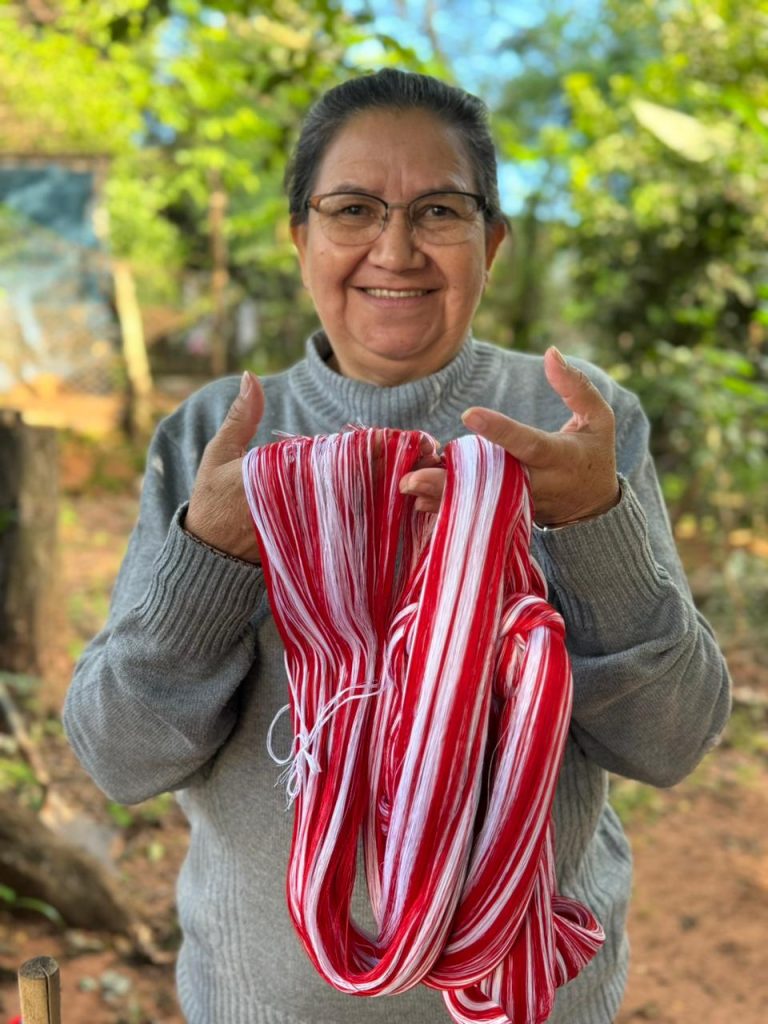
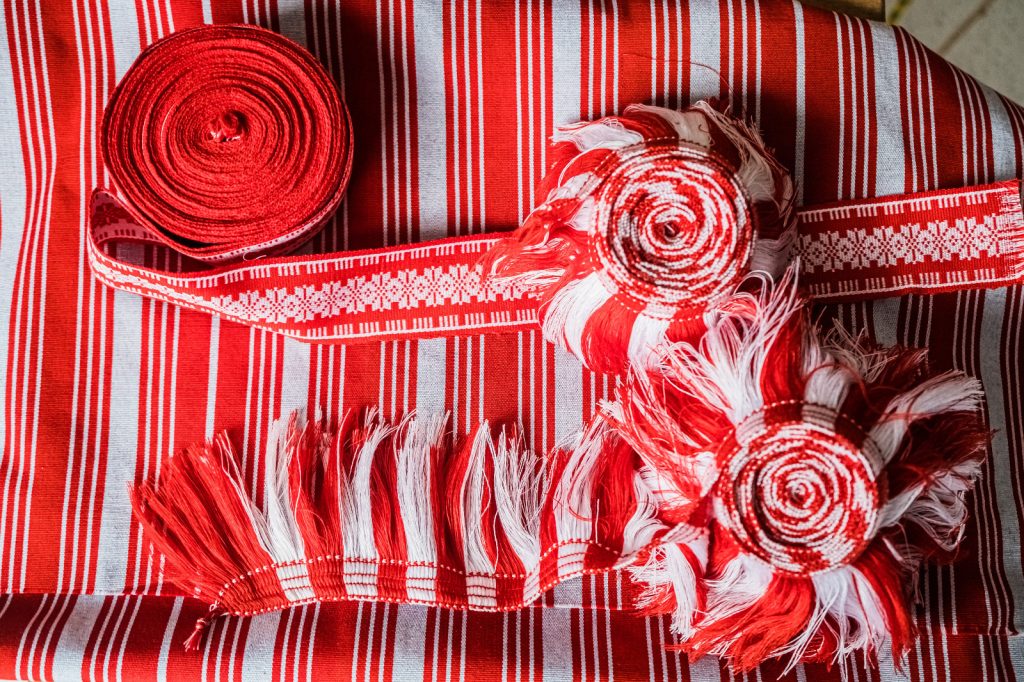
Behind every Poncho Para’i de 60 Listas lies an extraordinary amount of work, particularly in the creation of the decorative band, known as the fajita or guarda. The artisan first imagines the design before beginning the weaving process, carefully planning the symbols, shapes, colours, and patterns that will appear in the finished piece.
The decorative band is woven on a small loom using approximately 380 threads. Two artisans work together through the traditional stages of thread preparation (ñemyangy’o), thread selection and arrangement (jeporavo), and weave beating (ñembota), the latter named after the striking motion used to compact the threads and form the intricate patterns.
Creating the decorative band alone can require around 40 hours of work under suitable weather conditions. The process demands creativity, mathematical thinking, patience, concentration, and meticulous attention to detail, qualities that Segovia believes can only truly be learned through experience.
“It is very demanding work. People should remember that it is made from 100% cotton.”
Demand continues to grow
Following the attention generated by the national team project, orders have increased dramatically.
“We have so many requests. Many people want the national team stripes. Others want their full names woven in, and some want the name of a particular person. The 60 Listas design and the red-and-white versions continue to be among the requests. We already have orders through to the end of July and into the beginning of August.”
A traditional Poncho Para’i de 60 Listas currently costs around ₲5,000,000 (approximately US$819). Custom embroidery is an additional expense due to the complexity of the work involved.
“What makes me happiest is that people can see the value of the work we do. I always hoped people would see the value of the meticulous work required to complete a poncho.”
Made entirely from cotton and requiring weeks of skilled labour, each Poncho Para’i de 60 Listas remains a living expression of Paraguayan culture. Thanks to artisans like Rosa Segovia, that tradition continues to thrive, both in Paraguay and increasingly around the world.
Find more of Rosa Segovia’s work on Instagram or contact Rosa on WhatsApp.