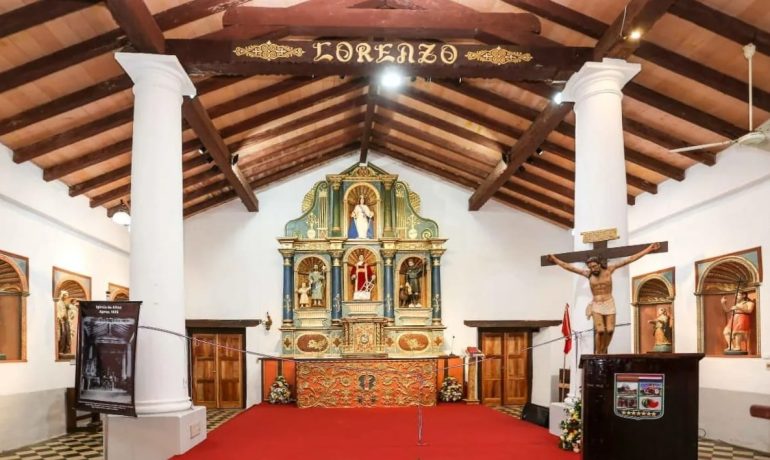

The restoration of the San Lorenzo Mártir church in the city of Altos, about 50 kilometres east of Asunción, is entering its final phase, according to Paraguay’s Ministry of Public Works and Communications (MOPC). This project is focused on the recovery and conservation of one of Paraguay’s oldest and most important religious heritage sites.
The work, conducted by the ministry’s Historical Heritage Unit (UPH), aims to preserve the building’s profound historical and cultural value for future generations.
Numerous layers of old paint
Current efforts are concentrated on the intricate details of the building’s openings, including its doors and window frames. Restoration specialists are undertaking the delicate task of removing numerous layers of old paint that have accumulated over many decades.
Using specialised techniques, the teams are carefully stripping these coatings to reveal the original wood underneath, ensuring the authentic character of the structure is preserved.
A focus on authentic preservation
Once the original timber is exposed, each piece undergoes a series of crucial conservation treatments. This process is designed to protect the wood from environmental damage and ensure its long-term stability. Following this, skilled artisans perform wood grafts where necessary. This involves carefully inserting new pieces of timber to replace sections that have been irreparably damaged, seamlessly blending the new with the old to maintain structural integrity and historical accuracy.
This stage of the project requires a deep understanding of historical building materials and techniques. The goal is not merely to repair the church but to stabilise its original components, thereby safeguarding the craftsmanship of the artisans who constructed it centuries ago. Every intervention is guided by the principle of minimal interference, preserving as much of the authentic fabric of the building as possible.
The colonial baroque centrepiece restored
A major milestone has already been achieved with the completed restoration of the church’s main altarpiece, known as the retablo mayor. This magnificent structure is widely considered one of the most significant surviving expressions of the Paraguayan colonial baroque style. The restoration of the altarpiece was an exceptionally complex undertaking, reflecting its ornate design and immense cultural importance.
To carry out the work effectively, the entire structure had to be carefully dismantled into more than 300 individual pieces. This painstaking process allowed conservators to access every part of the altarpiece for essential treatment. Each component was methodically treated for termite infestation and damage caused by humidity, two of the most significant threats to wooden heritage in the region. This thorough approach was vital for securing the future of this irreplaceable artwork.
Uncovering centuries-old artistry
The restoration work on the altarpiece has successfully recovered its original polychromy, or colour scheme, which had been concealed for years. Layers of deteriorated varnish and various subsequent interventions had obscured the vibrant colours and fine details of the original design. Through meticulous cleaning and conservation, the team has revealed the brilliant tones and intricate patterns intended by its creators.
This rediscovery has returned the entire ensemble to its former glory, allowing its original details and rich tonalities to be appreciated once more. The project has effectively turned back the clock, offering a rare and authentic glimpse into the artistic vision of the colonial era.
Strengthening local heritage and identity
Officials from the MOPC have emphasised that the overarching goal of the intervention extends beyond the physical preservation of the building. The project, according to them, is fundamentally about safeguarding the historical and cultural value that the San Lorenzo Mártir church represents. It also serves to strengthen the unique patrimonial identity of the city of Altos, which has a long and celebrated tradition of Paraguayan wood carving.
By restoring this architectural and artistic masterpiece, the project honours the region’s rich artistic legacy and reinforces a profound sense of local pride and cultural continuity.
Also read about the restoration of another Paraguayan treasure: The San Buenaventura church.