
Paraguay’s meat exports sector generated revenues of US$1.158 billion during the first six months of 2026. This performance comes amid a landscape of lower export volumes but improved international prices, according to official data released by the National Service for Animal Quality and Health (Senacsa). The report highlights a trend of product diversification, with the formal inclusion of the sheep sector and a significant expansion in poultry shipments.
According to the official figures, the country exported a total of 267.1 million kilograms of meat products between January and June 2026. This figure represents a 23.6% decline when compared to the same period in the previous year. However, the financial impact of this volume reduction was mitigated by a notable rise in the average price per kilogram. Specifically, the price increased from US$3.73 in 2025 to US$4.33 in 2026. Consequently, the total value of exports reached US$1.158 billion, marking a more modest decrease of 11.28% from the US$1.305 billion recorded in the first half of 2025.
A detailed look at the beef sector
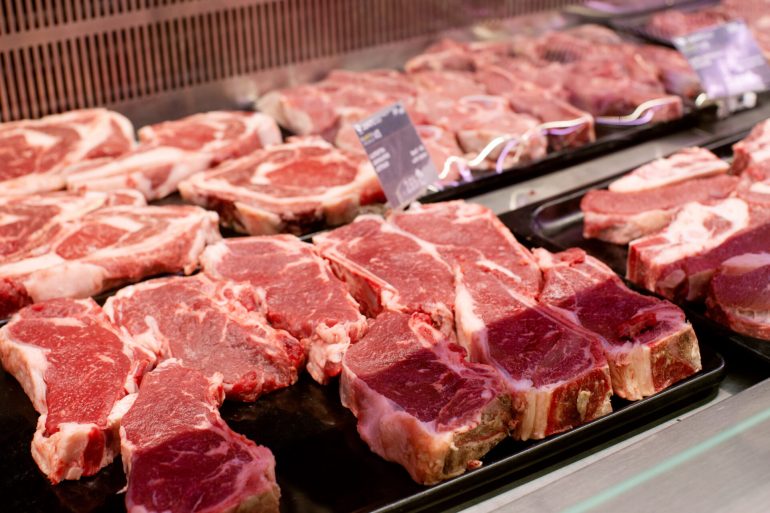
The beef sector, a cornerstone of Paraguay’s exports, also experienced a contraction in volume. Shipments amounted to 132.3 million kilograms during the period. Despite this, the sector benefited from a strong international valuation, achieving an average Free on Board (FOB) price of US$6.81 per kilogram. In contrast, bovine giblets faced a more significant downturn in both volume and revenue. This particular segment saw its foreign currency earnings fall by 29.82%, highlighting challenges in specific sub-sectors within the broader beef industry.
Analysis of meat exports destinations shows that Chile continued its role as the primary market for Paraguayan beef, absorbing 33% of all exports. Following Chile, Israel was the second-largest market, accounting for 17% of total shipments. The United States and Taiwan also remained significant buyers, with market shares of 15% and 12% respectively. This distribution underscores the importance of a few key partners for the nation’s beef producers.
Poultry exports show exceptional growth
The poultry sector emerged as a standout performer in the first semester, demonstrating substantial growth and increased penetration into international markets. Exports surged to 4,593,163 kilograms, generating US$7,000,907. This marks a considerable increase from the 2,646,157 kilograms and US$4,177,599 recorded in the same period of 2025. In terms of growth, these figures translate to a remarkable 73.58% rise in volume and a 67.58% increase in FOB value, signalling a successful expansion of the industry.
The leading destination for Paraguayan poultry was Iraq, which purchased 39% of the total volume. Other key markets included Vietnam with a 16% share, followed by Kosovo at 9% and Albania at 4%. This diverse range of destinations reflects the sector’s growing global reach and its ability to secure new commercial partnerships.
Sector diversification and key pork markets
A notable development in 2026 was the official inclusion of the sheep sector in national export statistics. The industry made its formal debut by shipping 11,478.81 kilograms of sheep meat, valued at US$58,830.72 FOB. At present, the United Arab Emirates is the sole destination for these products, purchasing 100% of the initial shipments and establishing a new trade avenue for Paraguayan agriculture.
Meanwhile, the pork sector showed a heavy concentration in its export markets. Taiwan was the dominant buyer, accounting for an overwhelming 86% of all pork exports from Paraguay. Brazil followed as a distant second, purchasing the remaining 10% of the volume. This data highlights the strategic importance of the Taiwanese market for the country’s pork producers and the concentrated nature of its current export strategy for this particular product.
Overall, Paraguay’s meat exports sector is becoming more diversified and price-driven, rather than volume-dependent, as it adjusts to changing global demand.