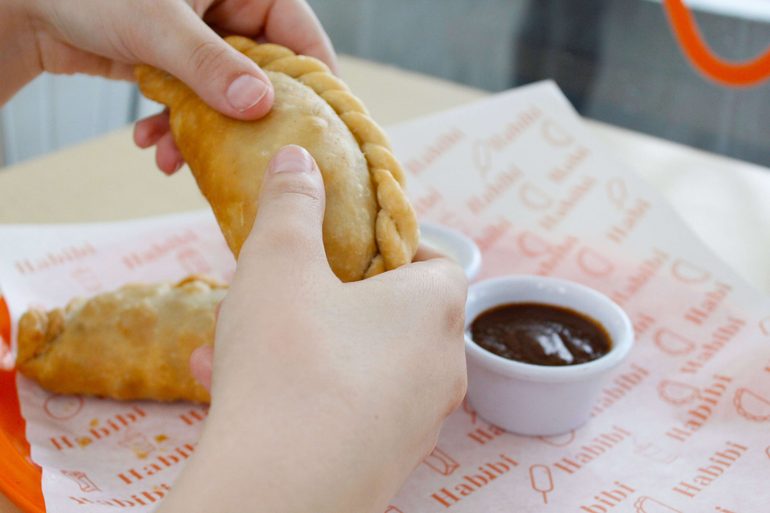

Paraguay celebrates Empanada Day every 4 October, marking it with the stuffed pastry, eaten from mid-morning breaks to late-night orders. Many enjoy it inside a bread roll, known as the sandwinada. Two regional recipes now carry official national heritage status. Meanwhile, the street-corner snack has become a business worth several billion guaraníes, according to producers.
A pastry for every occasion
An empanada is a pastry folded around a filling, then fried or baked. In Paraguay, common fillings include beef, chicken, and ham and cheese. Local media date the celebration to 1930, although researchers have not well documented the origin of the date. Historian Margarita Miró Ibars notes that Paraguayans traditionally called the pastry “pastel“, and “empanada” has also spread in recent decades.
The pastry is not originally Paraguayan. Its journey from ancient Persia, through Spain, to the Americas is traced in this The Asunción Times article on the empanada’s origins. Delivery platform PedidosYa ranks the empanada among the three most requested items in Paraguay, in its Foodie Radar 2025 report. Traditional flavours reportedly still hold about 70% of the market.
Tereré rupa: The morning companion
Tereré is a cold infusion of yerba mate, a South American herbal tea, often mixed with medicinal herbs. In 2020, UNESCO added tereré to its list of Intangible Cultural Heritage of Humanity, a first for Paraguay. The salty snack eaten before drinking it is known as tereré rupa, literally “a bed for tereré“. People usually enjoy it mid-morning, with empanadas widely regarded as the perfect accompaniment.
Sandwinada: An empanada inside a bread roll
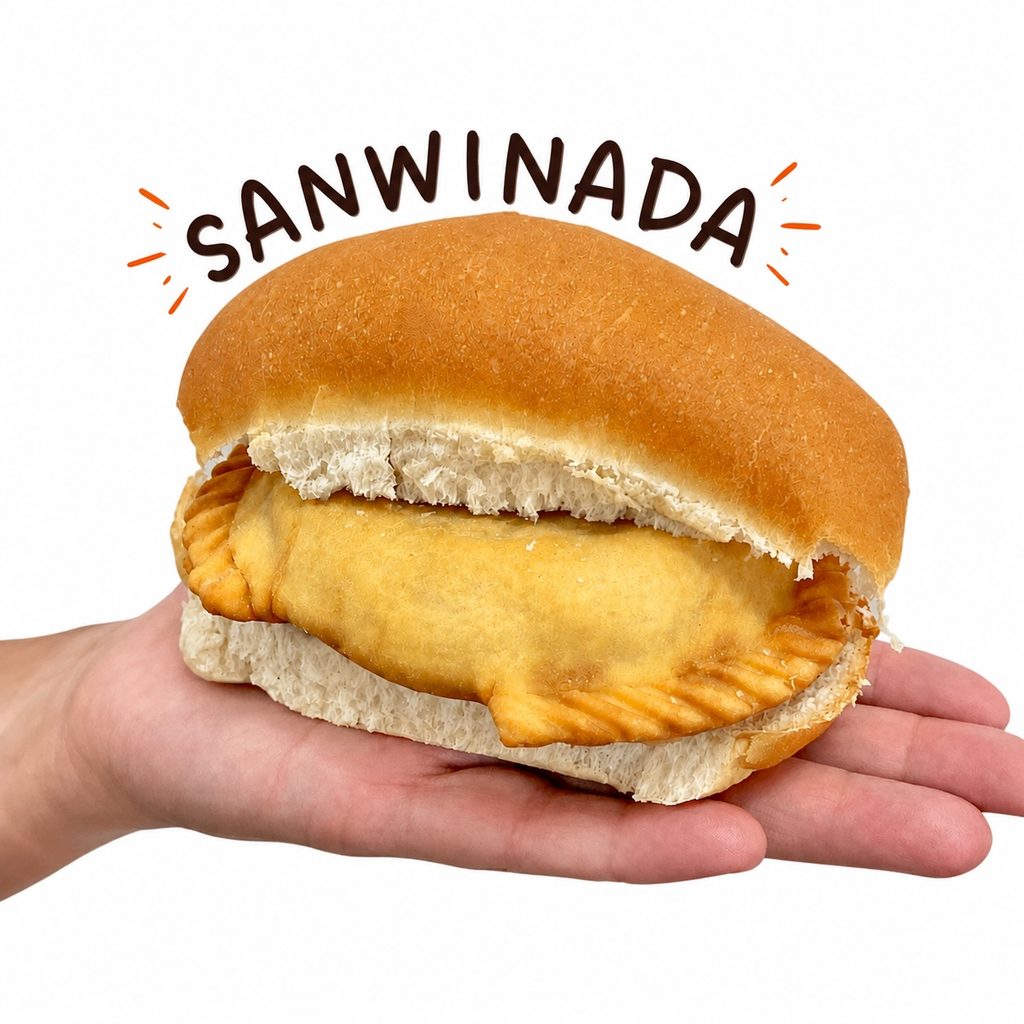
Bread often accompanies the empanada. Many Paraguayans slip a fried empanada into a split bread roll. Local media call the result the sandwinada, a blend of “sandwich” and “empanada“. Some add a spicy sauce.
Argentine cook Dana Buttigliero tried one on a visit to Paraguay and shared her verdict in a social media video. She noted that Argentines do not usually combine the empanada with other food. “With an empanada and a bread roll, you can eat, keep working and everyone ends up full and satisfied,” she said.
Pastel mandi’o: Cassava and heritage
Pastel mandi’o is a cassava-based version of the empanada. Mandi’o means cassava in Guaraní, Paraguay’s second official language. Miró Ibars writes that wheat was scarce in colonial and early independent Paraguay, while cassava was plentiful. Women began making the dough from cooked cassava instead. Today it is mixed with egg, butter and cornmeal, then filled with beef.
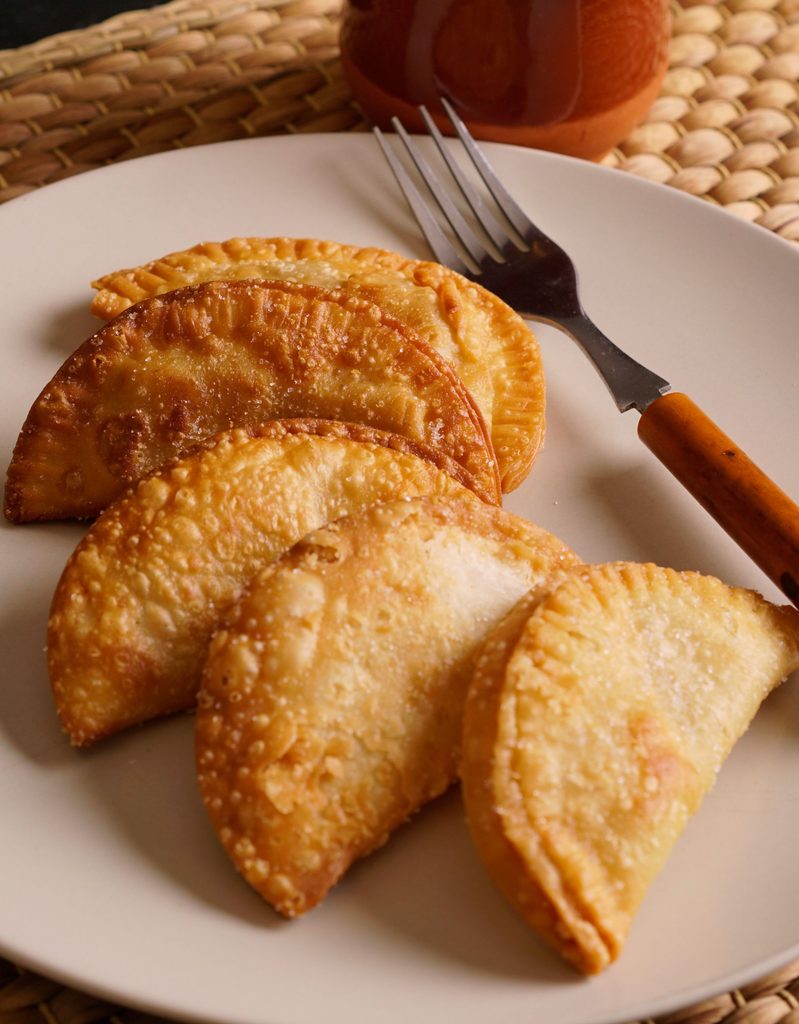
In October 2024, the National Secretariat of Culture (SNC) declared the pastel mandi’o of Coronel Oviedo a National Intangible Cultural Heritage.
Coronel Oviedo is a city in the department of Caaguazú. The declaration was presented at a ceremony at the Caaguazú Governorate. “Great master cooks preserve the cultural heritage of peoples through gastronomy,” Culture Minister Adriana Ortiz said at the event.
The recognised techniques include pounding the beef in a mortar and a cooking method called maimbe. This means frying the pastry briefly on each side in a pan lightly greased with pork fat. The status gives those who keep the tradition alive access to legal benefits meant to support its preservation. Cassava empanadas also take a central place in Paraguay’s San Juan festival in June.
Another empanada has won official recognition. In July 2025, the SNC declared the traditional cecina empanada of Villa Hayes national intangible heritage. Cecina is sun-dried meat, and the recipe was born in the Chaco region. The declaration was presented at the Jajotopa Fest 2025 gastronomic festival.
Honouring history: from kitchen to industry
There are no official figures for the empanada business. Producers say franchises, delivery and gourmet versions drive its growth. Production rises in Paraguay by up to 30% on key dates such as Empanada Day. Consumption is also shifting towards the evening, although tereré rupa remains a pillar.
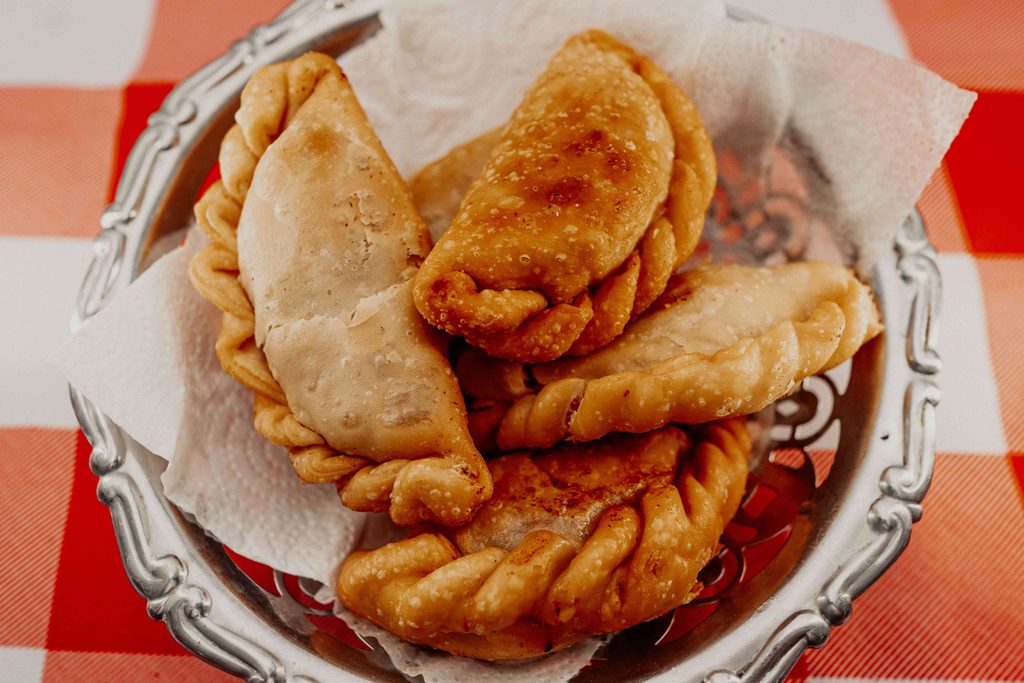
One example is Ña Virginia, which began in 1982 as a home-kitchen initiative run by a Paraguayan woman. Today it makes 2,500 to 3,000 empanadas a day, with daily revenue of about ₲30 million (roughly US$5,000). Empanadas account for about 60% of its income, and its estimated profitability is around 20%. Operations manager José Marcelo Jiménez tells local media: “Every day we open our doors is a way of remembering where we come from, to honour our history.”
Costs are rising for empanada makers, however. Paraguay is a major beef exporter, yet international prices have lifted the cost of cuts by 10.5% on average. In some cases the increase exceeds 30%. Producers have responded by offering more pork and chicken.
Ángel Campos created the Ña Pocho brand in Barrio Obrero, an Asunción neighbourhood. His brand employs nine women and aims to reach 100 mobile sales points. He is also forming a guild of entrepreneurs.
“Informality holds back growth,” he says in a local media interview. He argues that formal businesses can reach the financial system instead of relying on moneylenders.
Empanada Day in Paraguay: One dish, many traditions
The empanada is a partner to tereré and a filling for bread rolls. It is also a recipe recognised as national heritage and a business that supports families and small brands. On 4 October, Paraguayans will again debate their favourite: fried or baked, beef or chicken, with bread or without.