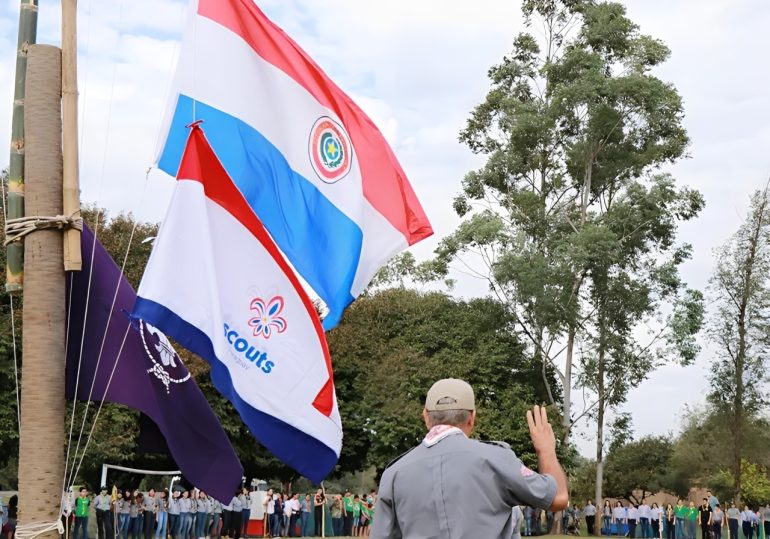

The Scout Association of Paraguay celebrates its anniversary on 7 November, marking more than six decades of educating young people through service, responsibility and community involvement. Established in 1960, the association emerged from earlier efforts to maintain and organise scouting in Paraguay. The date commemorates the establishment of the present national association, rather than the arrival of scouting in Paraguay, which dates back to 1913. Six Scout groups founded the association after decades of interruptions and efforts to keep the movement alive.
More than camping and outdoor activities
Scouting is often associated with camping, uniforms, outdoor adventures and learning practical skills. However, these activities are only part of a broader educational approach. The Scout Association of Paraguay describes itself as a non-profit educational organisation dedicated to the overall development of children and young people. Its work is based on non-formal education, complementing the roles of families and schools by providing opportunities to learn through experience.
Its programme is organised into age groups, with activities adapted to different stages of development. Younger members participate in games, exploration and group activities. Meanwhile, older Scouts take on greater responsibilities, develop leadership skills and become more involved in community projects.
The beginnings of scouting in Paraguay
The Scout movement began in Paraguay on 5 October 1913, six years after its establishment in England. Its first association brought together prominent figures from public and cultural life, including Viriato Díaz Pérez, a Spanish-born writer, historian and academic, and José Rodríguez Alcalá, an Argentine-born journalist and author. Enrique L. Pinho, a lawyer who later held several positions within the country’s judicial system, was also among them. Atilio Peña became the association’s first president. Robert Baden-Powell, a British Army officer who founded the worldwide Scout movement in 1907, served as its honorary president.
However, the movement’s development faced difficulties during the Chaco War, which marked a period of crisis. Following the conflict, efforts were made to reorganise its activities. In 1938, the Paraguayan Scouting Federation was established through the merger of the Don Bosco Explorers and the former Association of Boy Scouts of Paraguay. The federation eventually disappeared before receiving recognition from the World Organization of the Scout Movement.
The foundation of the present association
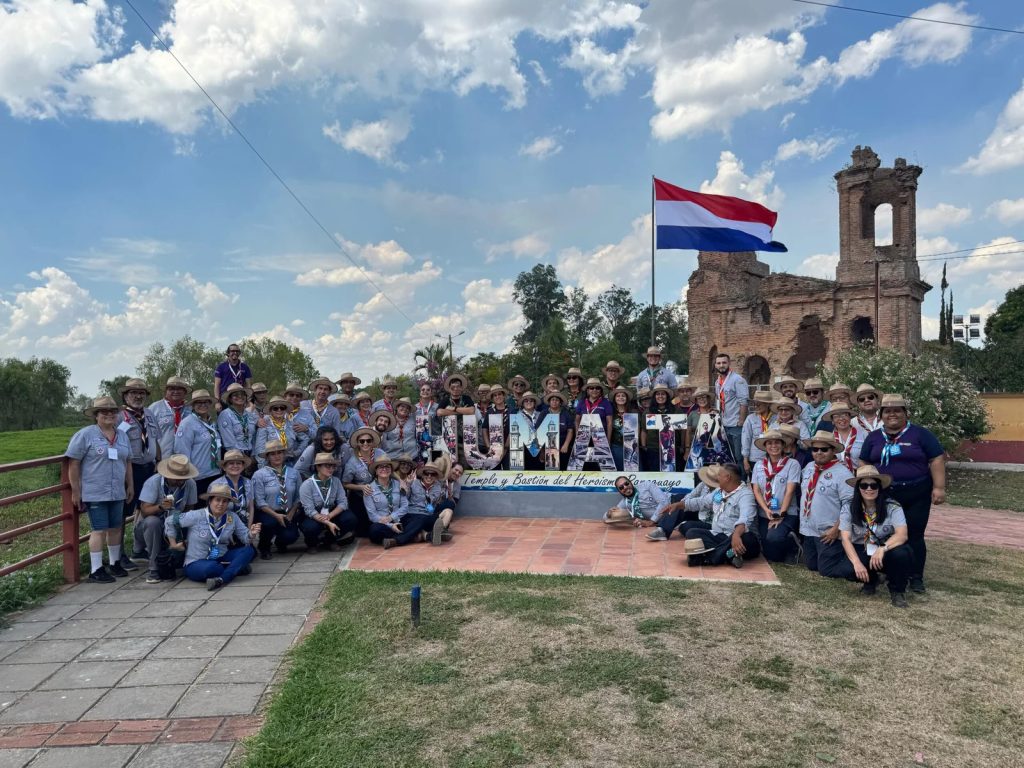
These efforts eventually led to the foundation of the Scout Association of Paraguay on 7 November 1960. Six Scout groups participated in its establishment, including Capitán Figari, Nanawa, Colegio Nacional de la Capital and San José. Most of these original groups eventually ceased to exist, but their contribution formed part of the foundation of the national association.
The establishment of the association marked a new stage in the organisation of scouting in Paraguay. It provided a national structure through which Scout groups could develop their activities and educational programmes. Today, the association is part of the World Organization of the Scout Movement, connecting Paraguay’s Scouts with an international network. This network promotes youth education, personal development and active citizenship.
A shared set of values
At the centre of the Scout movement are the Scout Promise and Scout Law, which provide a framework for members’ behaviour and commitments. The Promise represents a personal commitment to principles, including service to God and country, working for peace and following the Scout Law. The Law, in turn, encourages members to put values such as honesty, respect, solidarity and responsibility into practice.
The association’s educational vision sees scouting as a voluntary movement involving both young people and adults. It aims to support lifelong learning and the development of individuals who can contribute positively to their communities. Scouting is also based on inclusion and respect for different backgrounds. As a non-political educational movement, it seeks to create an environment where people can learn, cooperate and participate. Its principles promote participation without discrimination based on race, religion, nationality or social background.
Learning through service and community
Community service is an important part of the Scout experience. Rather than treating volunteering as an occasional activity, the movement incorporates service into its educational philosophy. Through group projects and community initiatives, young people are encouraged to identify needs, work alongside others and contribute to their surroundings. These experiences allow them to understand the importance of cooperation and active participation in society.
Respect for nature is another central element. Outdoor activities provide opportunities to explore the environment while learning about conservation, sustainability and the responsibility to protect natural resources. The Scout Method brings these principles together through learning by doing, teamwork, personal progression and outdoor experiences. More than six decades after its foundation, the Scout Association of Paraguay continues to promote an educational approach centred on personal growth, service and community participation.
For more information, check the Scout Association of Paraguay’s official website.