
With the impeachment of Paraguayan President Santiago Peña on 6 November 2026, precipitated by the collapse of the digital bank Ueno, the country has once more been plunged into another institutional crisis in Paraguay’s political history. Peña tendered his resignation on 5 November, yet Congress declined to accept it, thereby clearing the way for removal proceedings that would deny him the lifetime Senate seat and associated immunities customarily conferred on former elected presidents.
The Asunción Times delved into the turbulent political history of Paraguay, tracing how the current crisis fits a longer pattern of institutional fragility, contested power and repeated challenges to democratic continuity.
Paraguay’s political history: Resilience amid persistent fragility
Paraguay’s modern political history has been shaped by recurring institutional crises, military interventions, authoritarian governments and persistent struggles over political power. From decades of political instability before 1954 to the democratic transition of 1989 and the constitutional confrontations that followed, the country has faced considerable challenges in establishing lasting democratic institutions.
Although Paraguay has experienced some of the longest periods of authoritarian rule in South America, its contemporary history also reflects the resilience of its democratic system and the continuing struggle to strengthen constitutional governance.
The Stroessner era: Thirty-five years of dictatorship
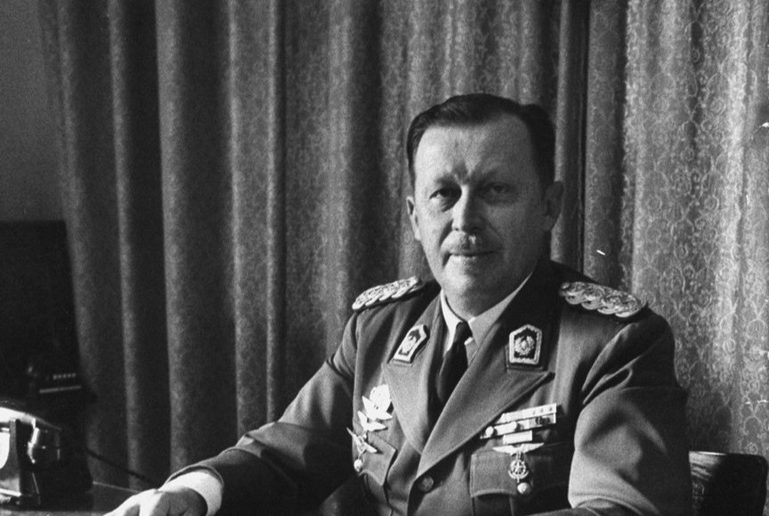
Alfredo Stroessner came to power through a military coup on 4 May 1954, establishing a dictatorship that lasted until 3 February 1989, when General Andrés Rodríguez overthrew him.
His regime was sustained by a political alliance between the Government, the Armed Forces and the National Republican Association (ANR), commonly known as the Colorado Party. This structure enabled the concentration of political power through patronage, military influence and systematic repression of opposition movements.
Despite maintaining formal political institutions and elections, the regime severely restricted political competition and civil liberties. Political opponents, students, trade unionists and suspected dissidents faced surveillance, arbitrary detention, torture and exile. Paraguay also participated in Operation Condor, the regional campaign through which South American dictatorships coordinated the persecution of political opponents.
Economic growth coexisting with political patronage
Economically, the period witnessed infrastructure development and significant projects, particularly the construction of the Itaipu Hydroelectric Dam alongside Brazil. However, economic growth coexisted with inequality, concentrated land ownership and extensive political patronage.
By the late 1980s, internal divisions weakened the regime. Rodríguez’s coup in February 1989 ended thirty-five years of authoritarian rule and initiated Paraguay’s transition towards democracy.
The democratic transition and the 1992 Constitution
The fall of Stroessner did not immediately dismantle the political structures inherited from the dictatorship. Although Rodríguez introduced reforms and permitted greater political competition, the Colorado Party maintained considerable influence over state institutions.
A major milestone came with the adoption of the 1992 Constitution, which established a democratic and representative republic, strengthened civil liberties, introduced institutional safeguards and prohibited presidential re-election.
The 1993 elections brought Juan Carlos Wasmosy to power, establishing the first civilian administration elected under the new constitutional framework. Nevertheless, military influence, party divisions and institutional weaknesses continued to challenge the consolidation of democracy.
The Paraguayan March
One of the most serious democratic crises occurred in March 1999, during the presidency of Raúl Cubas Grau. His administration was closely associated with former General Lino Oviedo, whose political influence had generated considerable controversy following his involvement in the 1996 military confrontation with President Wasmosy.
Cubas’s decision to release Oviedo despite a Supreme Court ruling intensified tensions between the Executive, judiciary and Congress. The crisis escalated on 23 March 1999, when Vice-President Luis María Argaña was assassinated in Asunción. His death triggered massive demonstrations demanding Cubas’s resignation.
On 26 March, gunmen opened fire on protesters gathered near Congress, killing eight people and injuring hundreds. Facing mounting domestic and international pressure, Cubas resigned on 28 March and went into exile in Brazil. The presidency subsequently passed to Senate President Luis Ángel González Macchi through constitutional succession.
Known as the Marzo Paraguayo, these events became a defining moment in Paraguay’s democratic history, demonstrating both institutional vulnerability and the capacity of citizens to mobilise in defence of constitutional government.
Nicanor Duarte Frutos and the Constitutional Dispute of 2008
During the presidency of Óscar Nicanor Duarte Frutos (2003-2008), another constitutional controversy emerged over presidential succession and parliamentary authority. After winning a Senate seat in the 2008 elections, Duarte Frutos sought to resign from the presidency to occupy an active position in the legislature.
However, Article 189 of the Constitution establishes that former presidents become senators for life, with speaking rights but without voting rights. Congress rejected his resignation in June 2008, similar to the current case of Santiago Peña, preventing the proposed transition. The dispute continued until August 2010, when the Supreme Court’s Constitutional Chamber ruled in his favour regarding the constitutionality of the parliamentary resolutions.
The controversy highlighted the difficulties of interpreting constitutional provisions and defining the limits of political authority within Paraguay’s democratic institutions.
Fernando Lugo: The end of Colorado Party hegemony
In April 2008, Fernando Lugo achieved a historic electoral victory, ending more than six decades of uninterrupted Colorado Party rule. A former Catholic bishop, Lugo campaigned on promises of social reform, improved public services and greater economic inclusion.
His administration expanded social assistance and public healthcare initiatives and achieved an important agreement with Brazil concerning compensation for electricity generated by the Itaipu Dam. However, his government faced considerable difficulties maintaining parliamentary support.
Political divisions, land disputes and tensions with traditional political sectors weakened his administration. These conflicts ultimately culminated in the events of June 2012.
The Curuguaty tragedy and Lugo’s impeachment
On 15 June 2012, a violent confrontation between police forces and landless farmers during an eviction operation in Curuguaty resulted in seventeen deaths: eleven farmers and six police officers. The tragedy intensified political tensions and provided the immediate context for impeachment proceedings against Lugo.
The Chamber of Deputies initiated the process, accusing the President of poor performance of his duties and political responsibility for the deterioration of public security.
On 22 June 2012, the Senate voted 39 to 4 to remove Lugo from office. He was granted an extremely limited period to prepare his defence, raising serious concerns about due process. Vice-President Federico Franco assumed the presidency through constitutional succession.
Several governments and regional organisations questioned the democratic legitimacy of the proceedings. Paraguay was subsequently suspended from Mercosur and UNASUR, although it was not expelled from either organisation. The episode exposed the continuing tension between constitutional legality, political legitimacy and procedural guarantees within the democratic system.
Paraguay before Stroessner: A history of political instability
Paraguay’s institutional instability predates the dictatorship. The War of the Triple Alliance (1864-1870), fought against Argentina, Brazil and Uruguay, devastated the country, leaving enormous demographic losses, economic destruction and weakened political institutions.
The following decades were characterised by frequent changes of government, armed uprisings and political violence. According to the OECD’s historical overview, twenty-one governments succeeded one another during the thirty years following the war.
The twentieth century brought further instability. The Liberal Revolution of 1904 ended Colorado Party dominance, but factional conflicts and military interventions continued. Between 1904 and 1954, Paraguay had thirty-one presidents, many of whom were removed from office by force.
The Chaco War against Bolivia (1932-1935) further strengthened the military’s political influence, while the 1936 revolution and the 1947 Paraguayan Civil War deepened existing divisions. These developments created an environment of institutional fragility that ultimately facilitated Stroessner’s rise to power in 1954.
Democratic resilience: An unfinished but enduring process
Paraguay’s political history reveals a prolonged struggle against authoritarianism, institutional instability and the concentration of political power. From the devastation of the nineteenth century to Stroessner’s dictatorship and the constitutional crises of the democratic era, the country has repeatedly faced challenges to its political continuity.
Significant challenges remain, including corruption, institutional weaknesses, political polarisation and unequal access to power. Democratic consolidation is therefore far from complete. Ultimately, Paraguay’s political trajectory demonstrates that historical instability does not necessarily condemn a country to permanent authoritarianism. Despite repeated institutional ruptures and a difficult authoritarian legacy, Paraguay has continued to preserve its constitutional and electoral framework.