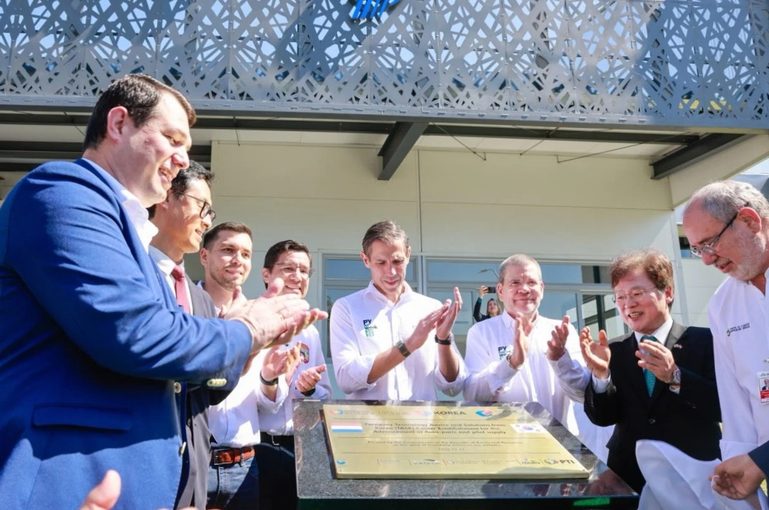

The TASK Paraguay Centre was inaugurated at the facilities of the Itaipu Technological Park in Hernandarias, aiming to develop automotive technology, support the manufacture of auto parts and train specialised professionals for the sector. The opening took place within the framework of Paraguay Business Week 2026 and marks a major step in cooperation with South Korea.
The new space seeks to strengthen the Paraguay’s industrial capabilities, promote innovation and create the conditions necessary for the growth of the automotive industry and electromobility. Officials described the project as a practical tool that will help local companies move beyond basic assembly and into higher-value production.
Boost to the automotive industry
Paraguay’s Minister of Industry and Commerce Marco Riquelme highlighted that the TASK Paraguay Centre represents a strategic advance for the industrialisation of the country. He noted that the centre combines technology, technical training and the development of productive capacities, while also positioning Paraguay as a regional benchmark in die making. The initiative has already included the training of 40 Paraguayan professionals in South Korea in the operation of CNC machines, 3D printing, injection processes and die design.
Riquelme explained that these skills will allow local manufacturers to become less dependent on imports and to revitalise the domestic market. The centre is expected to support companies that want to design, test and produce components for both conventional vehicles and electric mobility solutions.
Investment and modern equipment
Paraguayan director of Itaipu Binacional Justo Zacarías Irún indicated that the total TASK Paraguay Centre investment is around US$20 million. South Korea contributed 75% of the funding, while Itaipu Binacional provided the remaining share. The Paraguayan contribution covered the construction of the buildings and support for the local team, and the Korean contribution supplied advanced machinery and technical know-how.
The complex comprises two buildings. The first is industrial in nature and houses machinery for manufacturing moulds and auto parts, conducting tests and verifying the quality of components. The second building is dedicated to technical training in tool and die making and electric mobility, offering classrooms and workshops for specialised instruction.
Electric vehicles and specialised training
The project’s benefits also include the delivery of 70 electric vehicles, among them five buses, together with the training of Paraguayan technicians for the maintenance of these units. These vehicles form part of a pilot effort to introduce sustainable mobility solutions and to prepare local staff to keep the fleet operational.
Authorities expect the centre to attract further investment, generate specialised employment and help Paraguayan firms enter new segments of the regional automotive supply chain.
Also read: South Korea Hosts Auto Parts Training For Paraguayan Technicians.