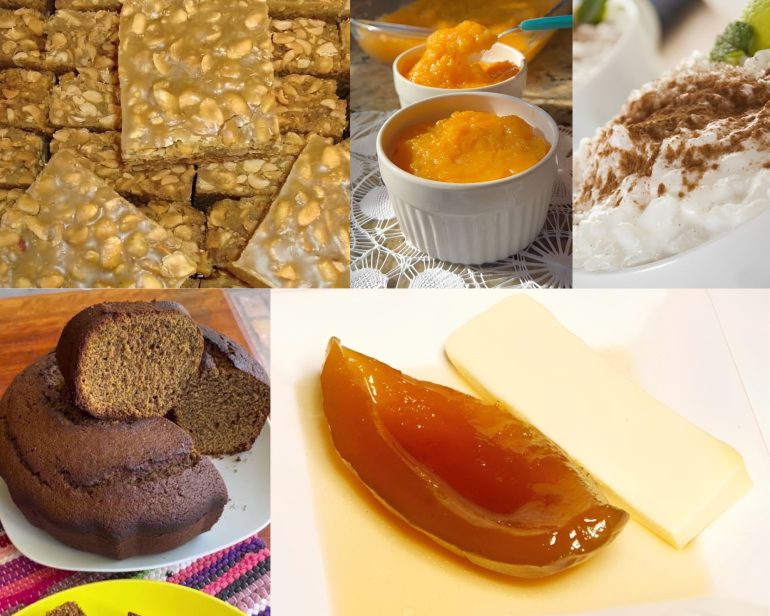

Paraguayan cuisine is known for traditional dishes made with corn, cassava and cheese. However, the country also offers a variety of sweets and desserts that reflect its cultural heritage, local ingredients and family traditions. Often homemade and shared with loved ones, these delicacies hold a special place in the childhood memories of many Paraguayans.
Many traditional recipes make use of local agricultural produce, including corn, pumpkins, and seasonal fruits. Cane syrup, peanuts and Paraguayan traditional cheese are also common ingredients that create a variety of flavours and textures.
A taste of Paraguay’s desserts
Ka’i ladrillo (monkey’s brick): Made with roasted peanuts and sugarcane syrup, ka’i ladrillo is a firm, rectangular sweet bar. Its name includes ka’i (monkey in Guaraní) and refers to a native primate known for loving sweet foods. The word ladrillo in Spanish refers to the rectangular brick-like shape of the sweet bar. This popular snack can be found in shops and supermarkets, but also in a rather unexpected place: traffic lights! Street vendors often approach cars while drivers wait for the light to turn green, offering quick desserts on the go.
Eira hũ or miel de caña (sugarcane syrup) with Paraguayan cheese or peanuts: One of the easiest to prepare. It involves pouring sugarcane syrup in a cup over small chunks of soft Paraguayan cheese (the fresher, the better). Or, with toasted peanuts instead to add some crunchiness. A simple and delicious combination of textures and flavours.
Dulce de mamón con queso (papaya preserve with cheese): It consists of papaya cooked in syrup until achieving a soft texture and sweet flavour. It is often served with pieces of Paraguayan cheese, which creates a contrast between sweet and salty flavours.
Torta hũ (black cake): A traditional cake prepared with dark cane syrup, which gives it a characteristic colour and sweetness. Travellers along Route PY01 can often find this sweet treat at small roadside food stalls. These stalls also sell miel de caña (sugarcane syrup), offering visitors a taste of Paraguay’s traditional flavours during their journey.
Crema pastelera (Paraguayan-style crème brûlée): A creamy, custard-like dessert made with milk, eggs, sugar and vanilla. Often compared to the French crème brûlée, the Paraguayan version features a smooth texture and a layer of caramelised sugar on top. A homemade favourite, it is commonly enjoyed at family gatherings and special occasions.
Other sweet options
Kamby arro (rice pudding): It is a homemade dessert prepared with rice, milk and sugar, and often flavoured with cinnamon. Made with simple ingredients, it is enjoyed throughout Paraguay and Latin America’s homes.
Kaguyjy: Also known as mazamorra, kaguyjy is traditionally prepared with corn, served with milk and sweetened with cane syrup. Connected to indigenous food traditions in Paraguay.
Koserevá (bitter orange preserve): A traditional fruit preserve made from bitter orange peel cooked in dark cane syrup. It combines sweetness with the fruit’s characteristic bitterness.
Kivevé: A dessert made with pumpkin, cornmeal and sugar, it has a soft flavour and creamy texture. Sometimes prepared with milk or cheese.
Mbaipy he’ê (sweet cornmeal cream): A sweet paste made from cornflour cooked in milk and sweetened with sugar or honey.
Andaí kamby (pumpkin with milk): It is traditionally made by cooking a local variety of pumpkin with sugar until soft. Then, it is served with cold milk.
Fruit and sweet potato preserves: Other sweets include dulce de batata (sweet potato jelly), dulce de membrillo (quince paste) and dulce de guayaba (guava paste). These fruit sweets come as firm blocks or spreadable pastes.
Culinary heritage
Paraguay’s sweet culinary traditions originate from a fusion between Guaraní heritage and Spanish colonial influence. Before the arrival of the Spanish, Guaraní people used natural sweeteners, such as bee-honey and ka’a he’ẽ (internationally known as stevia). The Europeans brought sugarcane to the region, and it was later combined with native fruits, grains, and natural products. This contributed to the development of a variety of sweets.
Traditionally, Paraguayan sweets and desserts are usually prepared at home, shared at family gatherings or enjoyed as a daily treat. They represent Paraguayan customs and memories. Discovering them offers a taste of the country’s local produce, cultural heritage and culinary traditions.