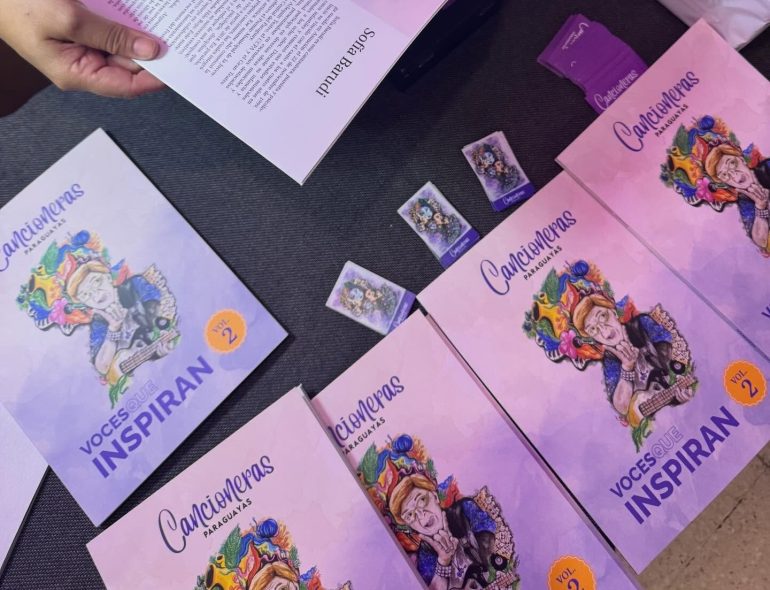

Some voices enchant without asking permission, and linger and resonate in the memory. Voices of women who sang, created, and carried stories, even when they were not recorded in books. Cancioneras (songbook in English) was conceived for that reason, in response to that absence. It is a project that seeks, above all, to make visible, and to document the work of Paraguayan singer-songwriters.
The Asunción Times speaks with María Ríos, a Paraguayan composer and cultural manager. Ríos studied singing at the National Conservatory of Music and graduated in Literature from the National University of Asunción in 2016. From that moment on, she began releasing literary and musical works. In 2024, she founded the collective Cancioneras, together with other national artists.
“Cancioneras was born from a desire to bring a dream to life: to have our first songbook,” says María Ríos. The idea emerged from a personal experience: meeting a Chilean troubadour in Brazil in 2023. Ríos invited other musicians, who agreed almost immediately to get on board with the initiative. In this way, an open, evolving space was created, rooted in commitment and a shared affection for music.
A collective process

The project responds to a clear need: to make women visible within the music scene. “The need for us to be seen, for our songs to exist and be recorded,” Ríos notes. In a country where more than one hundred songbooks exist, the absence of works composed by women marked a gap that the collective chose to address directly.
The creation of the book was, in itself, a collaborative experience. Through an open call, artists submitted their songs, biographies, photographs, and links to their work. All the material was organised and developed collectively. And all composers who met the formal requirements were included in the book. “The idea was never to exclude anyone,” Ríos clarifies.
The result is a publication that contains, in addition to lyrics and chords, QR codes that provide direct access to the works. Thereby creating a bridge between physical and digital formats.
More than a book
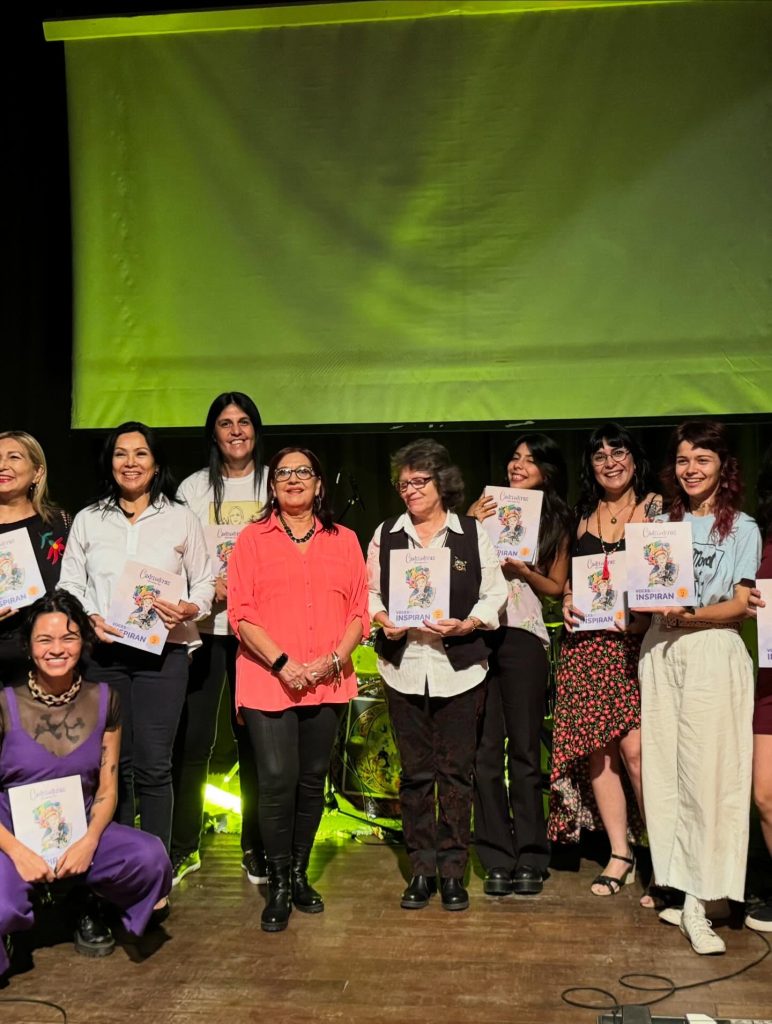
Cancioneras is also a space for coming together. Its launch has become a significant event within the cultural scene. In the first edition, the stage was occupied by singer-songwriters from different regions of the country. In the second, a full band joined them, California Superstars (the first Paraguayan rock group composed entirely of women), in an emotional tribute to the artist Catunga, the first female rock guitarist in Paraguay.
“The audience was happy. Going to a singer-songwriter concert means leaving feeling joyful, content, and safe.” This sense of community and security is an essential part of the project. Some songs available in English by artists who are part of Cancioneras are Raven: You Are My Light or Giovanna Chantal: Time Machine.
Growth and projection
The path of Cancioneras also reflects a process of growth. The first edition was produced without institutional support, thanks to the collective’s self-managed effort. In the second phase, the project secured funding through Emergentes (a platform supporting emerging artists), which enabled it to enhance production and expand its reach.
The public response exceeded expectations: copies sold out quickly, and a new print run of one thousand copies is already planned. In addition, the collective is working on expanding the book into other formats and spaces, including digital platforms, educational institutions, and international fairs. Among the next objectives is also the production of new editions that include tributes to deceased composers who remained historically invisible.
A shared voice
On a personal level, the project marks a profound change for its participants. “I no longer see myself as a solitary composer struggling to exist; now there are many of us,” Ríos says. That individual transformation reflects the collective spirit that sustains Cancioneras: the construction of a shared voice that amplifies the experiences and trajectories of its members.
Cancioneras is not only a book. It is a platform, an archive in progress, and a space for mutual recognition. Above all, it is a way of saying that those songs, which were always there, now also have a place where they can remain. And in that gesture, Cancioneras becomes something more than a publication: a memory in the making, a debt that is beginning to be addressed, and a voice that, far from imposing itself, flows, resonates, and endures.