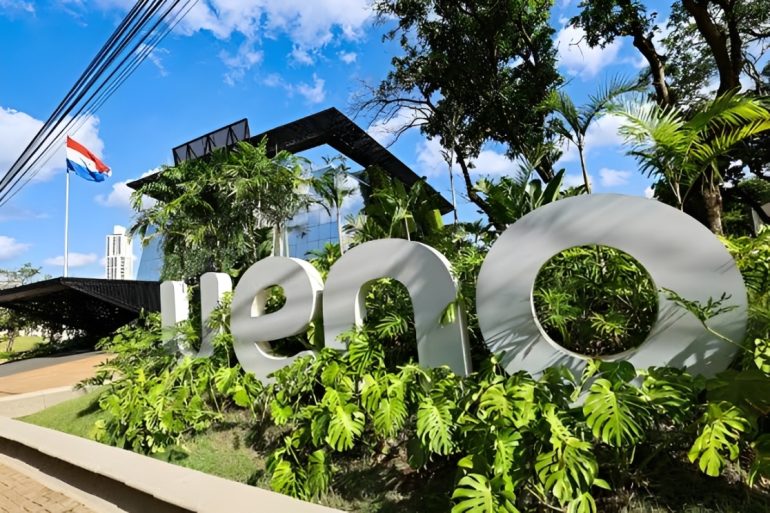

Paraguay’s Ueno Bank crisis entered a new phase as authorities announced emergency repayments for affected depositors. The Central Bank of Paraguay (BCP) confirmed that customers would begin receiving payment instructions on Thursday, 5 November 2026. Meanwhile, prosecutors charged 27 individuals over alleged financial irregularities, and political pressure intensified over the bank’s collapse.
Paraguayan President Santiago Peña promulgated emergency legislation allowing customers to recover up to ₲121,760,000 (approximately US$19,800) in an initial payment. The measure follows the BCP’s decision to begin resolving Ueno Bank, which has left customers unable to access their accounts. The crisis has also affected investment funds, pension payments, bank employees and confidence in Paraguay’s financial system.
How will Ueno Bank customers receive their money?
The BCP announced that depositors will begin receiving official payment notifications. These instructions will explain which financial institution has been assigned to process their repayment. Customers will receive an email from fgdpagos@bcp.gov.py, identifying the bank or financial institution responsible for their funds.
Depositors who already have accounts with other Paraguayan banks or financial institutions will receive their money through an electronic transfer. The BCP indicated that the payment will go to the account with the highest available balance. Those without accounts at other financial institutions will automatically receive a new savings account in their name. The account will be opened at a bank or financial institution assigned through the repayment process. Customers will then be able to download the assigned bank’s application to access and manage their funds.
What happens if customers do not receive an email? The BCP has established an official consultation channel for depositors who do not receive their notification within 24 hours. Customers can check their repayment information through the BCP’s official payment consultation page.
How much money will customers receive?
The emergency legislation authorises advance payments of up to 40 monthly minimum wages per eligible depositor. However, the amount received will depend on each customer’s eligible deposit balance and any overdue obligations to Ueno Bank.
For example, customers with ₲20 million in eligible deposits and no overdue debts could receive their full balance. Those holding ₲150 million would initially receive no more than ₲121,760,000, subject to the applicable deductions. Only overdue debts will be deducted when calculating the initial payment. Outstanding loans that have not yet reached their repayment dates remain subject to their contractual obligations.
The initial payment does not necessarily represent the final amount customers may recover. Paraguay’s Deposit Guarantee Fund (FGD) protects eligible deposits up to the statutory guarantee limit. The remaining amounts will depend on the reconciliation of accounts and the ongoing bank resolution process. The process must be completed within five working days.
Ueno Bank crisis prosecutors charge 27 people
Paraguay’s Public Prosecutor’s Office announced criminal charges against 27 individuals connected to Ueno Bank and associated businesses. The investigation concerns alleged financial misconduct, including breach of trust, attempted fraud and irregularities in commercial accounting.
Prosecutors identified approximately US$166.98 million and ₲343.16 billion in outstanding balances associated with the investigated operations. Authorities are also examining a credit portfolio transfer valued at approximately US$74.4 million.
Prosecutors requested preventive detention for former Ueno Bank chief executive Miguel Vázquez. They also sought house arrest and electronic monitoring for seven other defendants. Asset freezes and restrictions on property transfers have been requested as part of efforts to preserve potentially recoverable assets.
Political pressure grows as President signs emergency law
The crisis has also created significant political consequences for President Santiago Peña and Paraguay’s financial authorities. On Wednesday, Congress approved emergency legislation designed to accelerate payments to affected Ueno Bank customers.
The Senate unanimously approved the amended legislation, which was subsequently promulgated by President Peña as Law No. 7755/26. The legislation allows the Deposit Guarantee Fund to make advance payments before the bank’s complete resolution process concludes. Meanwhile, 35 opposition lawmakers initiated impeachment proceedings against President Peña, citing alleged conflicts of interest and concerns surrounding the handling of public funds.
Central Bank leadership changes amid Ueno Bank crisis
The BCP has experienced leadership changes while managing the bank’s resolution. Following the departure of its president, Liana Caballero assumed the role of interim president. On Wednesday, board member Marco Aurelio González also submitted his resignation, raising concerns about the institution’s ability to maintain the required quorum for decisions.
The Senate subsequently approved Pedro Acosta’s appointment to the BCP board. Proposals to appoint Raúl Vera Bogado as BCP president and Édsel González as another board member were referred for further committee consideration.
What happens to pensioners and bank employees?
Paraguay’s Instituto de Previsión Social (IPS) confirmed that pensioners who previously received payments through Ueno Bank will continue receiving their benefits. Approximately 32,000 pensioners and retirees are expected to be transferred to other financial institutions. The IPS stated that November pension payments and the annual additional benefit, commonly known as aguinaldo (annual bonus), remain guaranteed.
Meanwhile, Ueno Bank’s employees face uncertainty as the resolution process advances. Labour authorities have indicated that employment-related claims will receive priority under the applicable liquidation arrangements.
Banking aliases released and other banks experience technical problems
The BCP confirmed that banking aliases previously registered with Ueno Bank have been released. Customers can now register their numbers as aliases with other financial institutions. This allows affected customers to continue using familiar identifiers when receiving transfers through Paraguay’s banking system. The BCP also reported intermittent problems with some banking applications on Wednesday. According to the regulator, unusually high demand for new accounts caused temporary disruptions to certain digital banking platforms.
The American Chamber of Commerce in Paraguay and other business groups have expressed concern about the wider economic implications of the crisis. For affected customers, the immediate priority remains the return of their deposits. The first official payment notifications are scheduled for Thursday, 5 November, marking the beginning of the emergency repayment process.