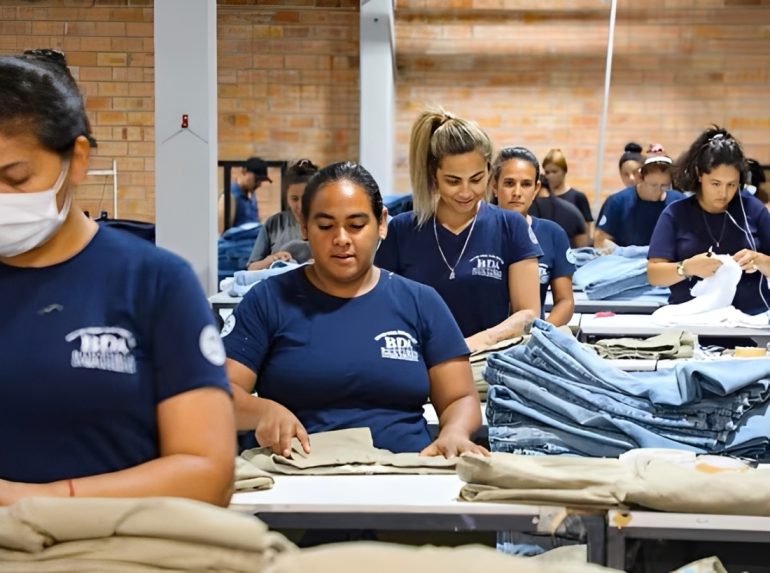

Going into Q4 of 2026, Paraguay’s maquila exports reached US$1.148 billion between January and September, representing a 25% increase compared with the previous year. The figures were highlighted by Diego Peyrat, executive secretary of Paraguay’s National Council of Maquila Industries at the Ministry of Industry and Commerce (MIC). The sector also recorded 36,382 jobs, reflecting its contribution to Paraguay’s industrial development and employment.
Automotive components, clothing, alcoholic beverages and aluminium products accounted for 69% of exports during the first nine months of 2026. Meanwhile, 74% of shipments went to Mercosur countries, highlighting the importance of regional markets for Paraguay’s manufacturing industry.
What is Paraguay’s maquila regime?
Paraguay’s maquila regime allows companies to manufacture products or provide services in the country, primarily for export to international markets. Under this system, businesses can import raw materials, components, and equipment to produce goods that are subsequently exported abroad. The regime offers tax incentives, including a special 1% tax, making Paraguay an attractive location for export-oriented manufacturing. The maquila regime also allows companies to participate in international supply chains while taking advantage of the country’s industrial infrastructure and workforce.
In April 2026, Paraguay introduced new legislation to modernise the maquila regime, replacing the previous framework established in 1997. The reforms aim to encourage investment, strengthen industrial competitiveness and expand opportunities for companies operating in the country.
Automotive components and textiles lead exports
Automotive components remained among Paraguay’s leading maquila exports during the first nine months of 2026, according to official trade figures. The Central Bank of Paraguay (BCP) reported approximately US$352.6 million in automotive wiring exports, representing a 21.3% year-on-year increase.
Clothing and textile exports reached US$141.2 million, while ethanol shipments totalled US$131.4 million during the same nine-month period. Ethanol recorded particularly strong growth, increasing by approximately 147% compared with the corresponding period in 2025.
Other important exports included aluminium products, yarns, fabrics, bottle closures and biodiesel, reflecting the variety of Paraguay’s manufacturing activities. Mercosur remained the main destination, receiving nearly three-quarters of maquila exports, particularly through trade with Brazil and Argentina.
More than 36,000 jobs linked to maquila
The expansion of Paraguay’s maquila industry was accompanied by employment growth, with 36,382 jobs recorded by September 2026. According to the MIC, this represented a 4% increase compared with the same period in the previous year. Clothing manufacturing employed the largest number of workers, with 8,431 positions, followed by automotive components with 7,865 jobs. Intangible services accounted for 3,989 positions, while plastics employed 2,985 people and chemical and pharmaceutical products supported another 2,583.
Together, these five activities represented 71% of employment linked to the maquila regime during the first nine months. The ministry also reported that 92% of companies with approved maquila programmes were concentrated in Alto Paraná, Central, Amambay and Asunción.
Positive trade balance
Alongside export growth, Paraguay’s maquila industry recorded a positive trade balance during the first nine months of 2026. Imports under the regime reached US$605 million, representing a 20% increase compared with the corresponding period in 2025. With exports totalling US$1.148 billion, the difference between exports and imports reached approximately US$543 million during the period. These figures reflect the scale of export-oriented manufacturing activities and the movement of goods under Paraguay’s maquila regime.
The sector is also approaching its total export value for 2025, when shipments reached approximately US$1.3 billion. With three months remaining in 2026, continued growth could allow the industry to surpass last year’s export performance.