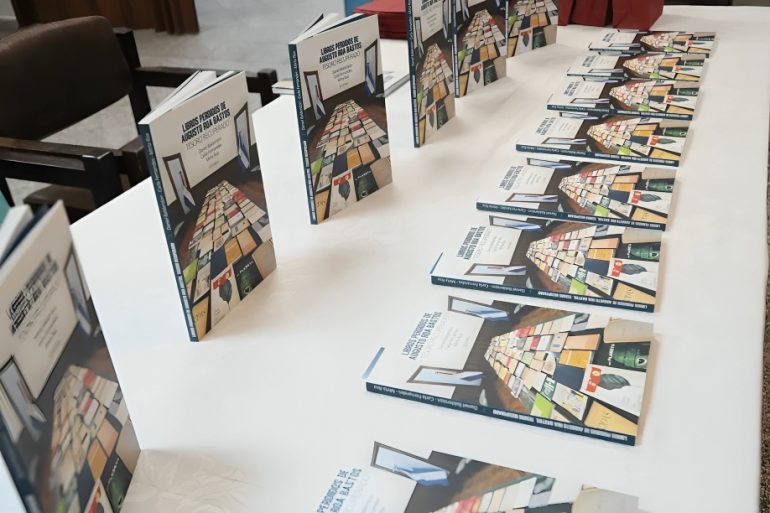

A recovered collection of Paraguayan writer Augusto Roa Bastos’ books offers new insight into his life and work. The findings appear in Libros perdidos de Augusto Roa Bastos. Tesoro recuperado (Lost Books of Augusto Roa Bastos. Recovered Treasure). The book brings together findings of international researchers Daniel Balderston, Carla Fernandes and Mirta Roa.
Augusto Roa Bastos, born 13 June 1917 in the Paraguayan city of Iturbe and died on 26 April 2005 in Asunción, was a novelist, short-story writer, and film scriptwriter of national and international fame. Roa Bastos is widely regarded as the greatest literary figure in the country’s history. And I, The Supreme his magnum opus.
A library lost through exile
The discovery connects directly with a difficult period in Roa Bastos’ life. The Paraguayan writer repeatedly lost parts of his personal libraries while moving between countries. His exiles forced him to leave behind books and other personal belongings. The recovered collection therefore offers a new way to examine his years abroad.
The story began in 2020, when Celina Brittez contacted the Paraguayan Embassy in Buenos Aires. She reported finding numerous books inside a container, including volumes linked to the writer Augusto Roa Bastos. Some carried his signature and handwritten notes, while others contained dedications from notable authors. The collection also included photographs and letters.
The embassy received seven boxes containing 176 inventoried books. Another sealed box held personal documents, with instructions that only Roa Bastos’ heirs should open it. The collection eventually travelled to Asunción and reached Mirta Roa in 2022. The recovery fulfilled Brittez’s intention to return the materials to the writer’s family.
Traces of Yo el Supremo
The books originally formed part of writer Augusto Roa Bastos’ home library in Buenos Aires during the 1970s. He later left Argentina for another period of exile in France. Researchers found several volumes with notes connected to the creation of Yo el Supremo (I, the Supreme). Those annotations now provide clues about the reading behind his most celebrated novel.
Consequently, the research moves beyond simply documenting recovered possessions. The books allow researchers to follow the writer’s intellectual conversations through the pages he read. His annotations reveal what captured his attention during different stages of his work. Each volume therefore becomes a material record of his creative process.
The project brought together researchers working across three countries. Fernandes conducted her research from France, Balderston worked from the United States, and Mirta Roa contributed from Asunción. Fernandes, a researcher and professor at Université Bordeaux Montaigne, has studied Roa Bastos’ work for more than three decades. She previously collaborated with Mirta Roa on La Europa que vio Augusto Roa Bastos (The Europe Augusto Roa Bastos Saw).
A recovered part of his legacy
The new publication documents the books, their characteristics and evidence linking them to Augusto Roa Bastos. Meanwhile, some recovered materials have already appeared at book fairs and cultural spaces. The Casa Bicentenario de las Letras has also displayed part of the collection. Such appearances have brought the recovered library closer to readers.
Ultimately, Libros perdidos de Augusto Roa Bastos. Tesoro recuperado adds another dimension to the writer’s legacy. The recovered books reveal the person behind the celebrated literary works. Through signatures, notes and marks of use, readers can approach Roa Bastos through the books that shaped his thinking.