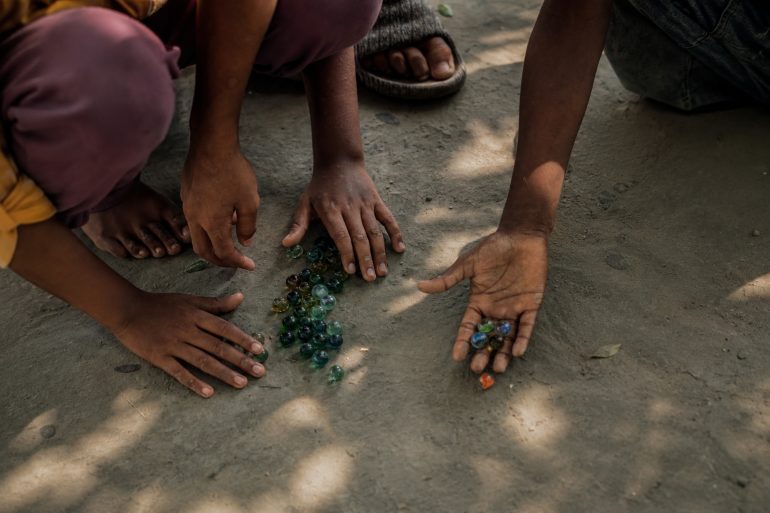

As the country celebrates Children’s Day on 16 August 2026, traditional playground games in Paraguay continue to offer a glimpse into the its cultural heritage. Many of Paraguay’s best-known children’s games have been passed down generations, requiring only imagination and a few simple objects. Here are five typical childhood games that may seem familiar, despite their Guaraní names and uniquely Paraguayan twists.
Tikichuela
One of the most recognisable is Tikichuela, a game played using up to seven peeled seeds, coloured stones, or marbles. Similar to jacks, players throw one marble into the air while collecting the others from the ground in increasingly difficult combinations before catching the airborne piece. A dropped marble or mistake ends the player’s turn.
Success requires steady hands, concentration, and precise timing. Once players complete the main sequence, they use a small round piece known as a toro to score additional points, continuing until they make a mistake and pass the turn to the next player.
Tuka’ẽ Guapý and Tuka’ẽ Kañy
In Tuka’ẽ Guapý, one child is chosen to chase the others. However, players can avoid being tagged by sitting on the ground before the chaser reaches them. This differentiates Paraguayan tag from other versions, if you sit down, you are safe. If the chaser touches them before they sit down, they become the new chaser and the game begins again.
Another favourite is Tuka’ẽ Kañy, a hide-and-seek variation involving a designated meeting point, often represented by a drum or another central object. While one player counts, the others hide. After the countdown ends, the seeker searches for the hidden children. Those who get spotted race back to the drum; if they reach it before the seeker catches them, they are safe. The seeker eliminates any player they tag before reaching the drum, keeping them out until the next round.
Trompo Arasa
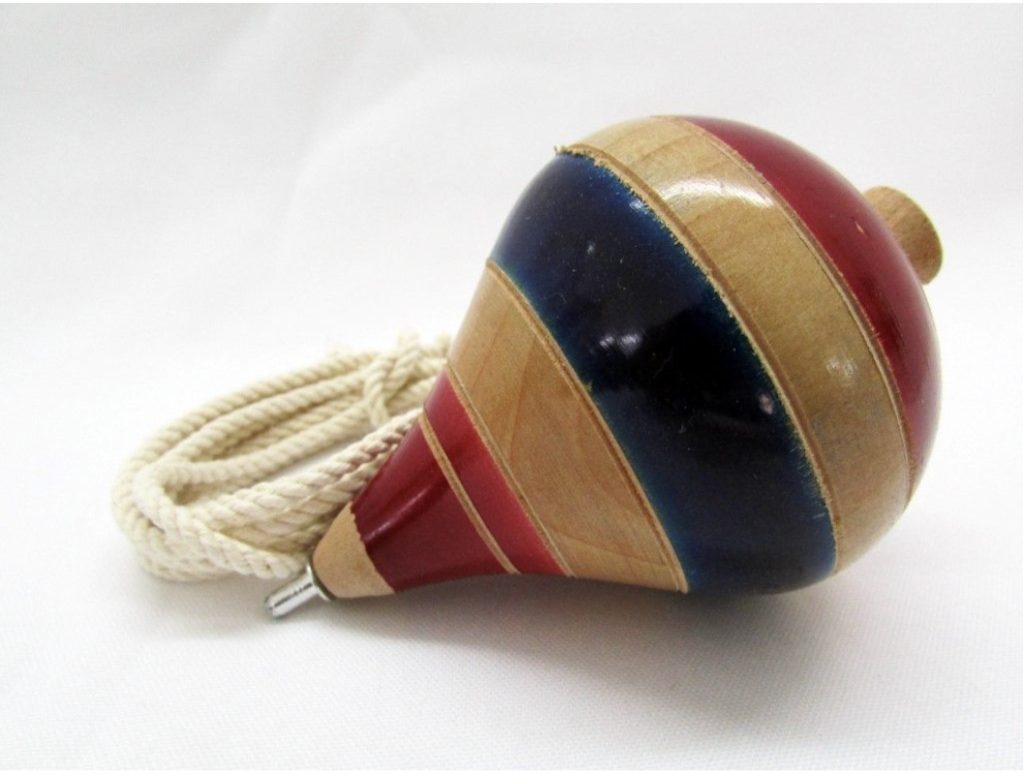
Trompo Arasa is one of several traditional Paraguayan variations of the spinning top, a game based on skill, precision, and control. Players wrap a cord around the top before launching it. They pull the cord as they throw it, making the wooden toy spin rapidly. Traditional versions include trompo sele, trompo kora, trompo ka’ygua, trompo arasa and trompo jehupi.
The name Arasa refers to guava wood, which people traditionally used to make spinning tops. The game also became a symbol of Paraguay’s cultural memory during the country’s 2011 Bicentennial celebrations, when organisers named an official mascot “Trompo Arasâ” after the traditional children’s game.
Pandorga
Known elsewhere as a kite or barrilete, the pandorga is another traditional Paraguayan pastime. Traditionally, people made it with crossed tacuara sticks covered in paper, then added a central string and a tail to help balance the kite as it rose. Making the pandorga was part of the experience itself. Children carefully built the structure so it could catch the wind and remain stable.
Once assembled, players launch the kite and gradually release more string as the wind carries it higher. Children can fly pandorgas alone or with others, making it an activity that brings families and communities together. Although traditional kite-making and flying have become less common, pandorga remains one of the games associated with Paraguayan childhood and is particularly visible during outdoor activities and community events.
Preserving Guaraní through play
Traditional children’s games remain part of Paraguay’s cultural heritage. Their Guaraní names highlight the country’s bilingual heritage, while generations of children have passed down many of the rules orally rather than through written instructions. On Children’s Day on 16 August, traditional playground games in Paraguay continue to feature in school activities and family celebrations, giving children the chance to enjoy pastimes that generations before them have played.