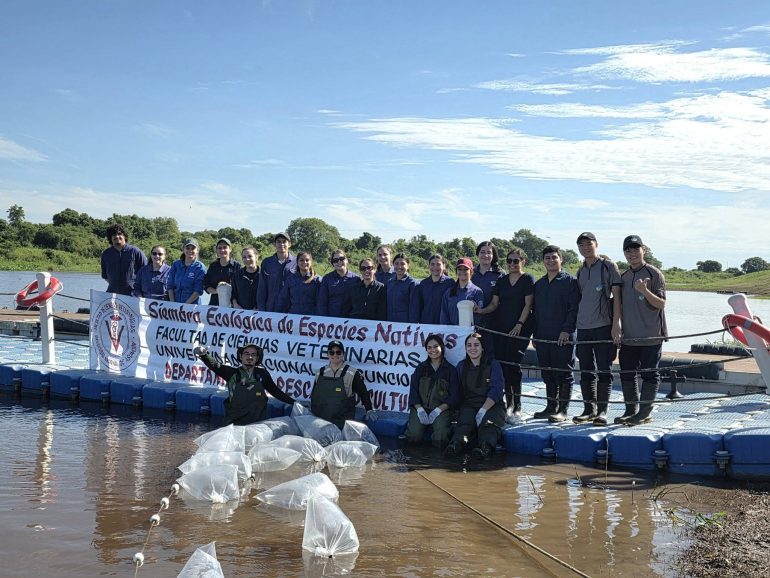

The Paraguayan Ministry of the Environment and Sustainable Development (MADES) accompanied the ecological planting of 46,000 newly hatched fish fry in the Paraguay River at Club Centenario, Surubi’i branch. The event commemorated National Pacú Day, a native fish of Paraguayan rivers. It aimed to strength biodiversity in the country’s aquatic ecosystems.
It was organised by the Faculty of Veterinary Sciences (FCV) of the National University of Asunción (UNA). This ecological planting initiative also had the support of the Taiwan Technical Mission. Furthermore, this type of initiative forms part of ongoing efforts to restore fish populations while promoting sustainable resource management. These native fish population are affected by environmental pressures, such as illegal fishing.
A boost for native fish and food production
The 46,000 native fish consisted of 2,000 pacú, 2,000 Paraná salmon, 2,000 surubí, and 40,000 carimbatá. These native fish were recently hatched. They will grow to become important sources of food and income. These species are native to Paraguay’s river systems and are widely consumed across the country.
They are used in fish farming for breeding and replenishing rivers and ponds. The fry were obtained through artificial reproduction techniques developed in the University’s Department of Fisheries and Aquaculture laboratory. This marks the third consecutive year of ecological planting, reinforcing long-term conservation strategies.
International collaboration
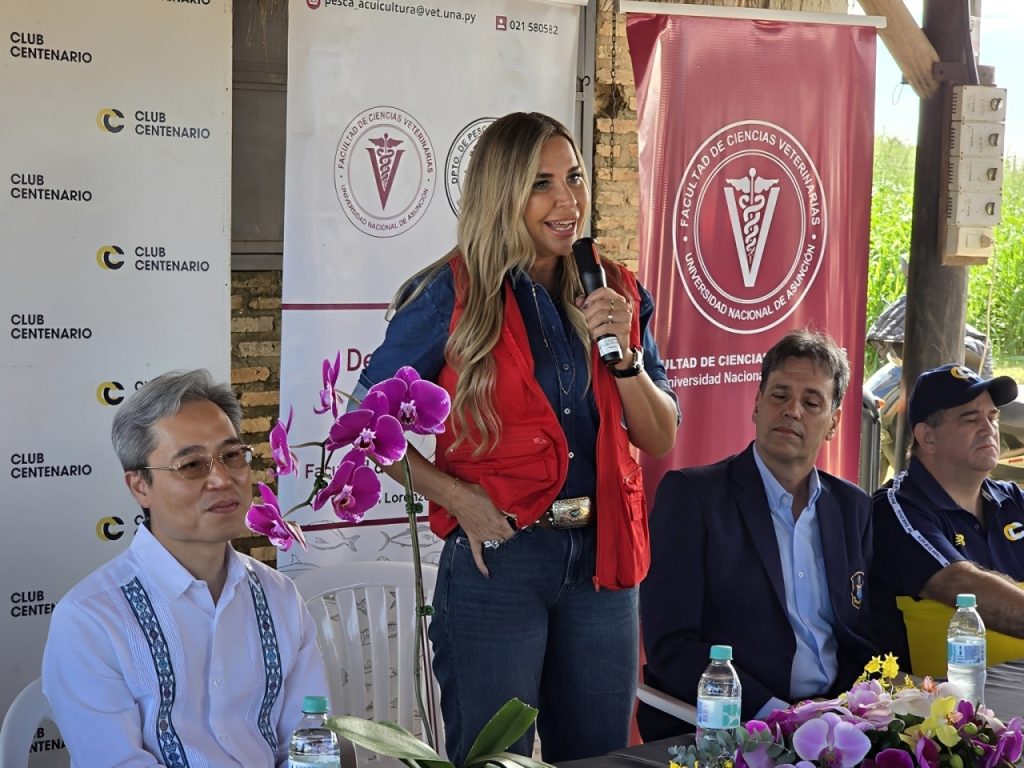
The native fish are the direct result of close collaboration between the Taiwan Technical Mission and UNA. The event included Dr Roberto Pan, head of the Taiwan Technical Mission. Alongside Ambassador Iván Lee and the Director of Fisheries and Aquaculture, Adán Leguizamón, who attended on behalf of MADES. The Dean of the FCV, Professor Viviana María Ríos Morínigo, was also present, along with the Vice Dean, Professor José Ramón Peralta. Students, teachers, and technicians were also present.
Speaking at the opening, the Dean highlighted the university’s commitment to research and extension. She thanked Club Centenario for providing the space for the event, emphasising the importance of institutional cooperation.
A commitment to the future
National Pacú Day represents more than a tribute to one of Paraguay’s most consumed fish. It is also a broader commitment to environmental sustainability to one of Paraguay´s most largest native fish population. The Government of Paraguay, through MADES, continues to promote actions that conserve biodiversity and encourage the responsible use of fishing resources.
The day also featured a talk on native fish and responsible fishing. As well as activities to help the fry acclimatise to the river. These initiatives also help raise awareness about the importance of protecting aquatic ecosystems. As the fry grow and disperse into the San Francisco and Areguá Rivers, they carry with them the promise of healthier, more resilient ecosystems and a more sustainable future for generations to come.