
Paraguay has made a significant leap in childhood vaccination, now ranking second among countries in the region for protecting infants during their first year of life. According to officials, a sustained strengthening of the national vaccination programme has enabled the country to climb from tenth to second place in the regional standings.
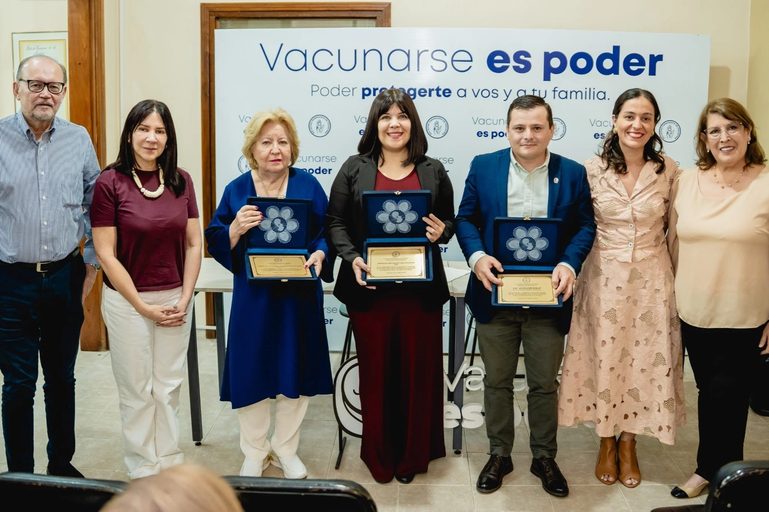
In 2020, Paraguay was ranked tenth for protection during the first year of life. Now the country climbed to second place, a position it shares with Mexico and Panama. The Paraguayan Society of Paediatrics (SPP) highlighted this achievement during a ceremony recognising the collaborative work of the institutions and authorities responsible for the vaccination programme.
A collective achievement recognised
Awards were presented to the Expanded Programme on Immunisation (PAI), its director, Luis Cousirat, and the programme’s team, including Soraya Araya. Ana Campuzano, president of the National Immunisation Technical Advisory Committee (COTENAI), was also recognised. The progress report was presented by Celia Martínez de Cuellar, a specialist in paediatric infectology.
Paraguay’s eight-position rise in the regional ranking is the result of continuous enhancement of the national childhood vaccination schedule. This provides more tools to prevent diseases and protect children from the earliest stages of life. The PAI, part of a global health initiative established by the World Health Organization in 1974, aims to ensure universal access to life-saving vaccines.
Expanded vaccination programme
Initially, the PAI started with four biological products but now boasts a comprehensive schedule that includes 24 biologicals and five immunoglobulins. This reflects the progressive and significant expansion of the national vaccination calendar over the years.
This expansion is complemented by the consolidation of the Electronic Vaccination Register (RVE). The RVE is a critical tool for increasing coverage and improving immunisation tracking. The system currently has more than seven million citizens registered, with over 33 million vaccine doses recorded. Furthermore, more than 1,500 public, private, and social security vaccination centres are operating and reporting in real-time.
Commitment to preventative health
For Paraguayan families, this progress means greater opportunities to protect their children against vaccine-preventable diseases. In 2020, the country was ranked tenth for protection during the first year of life. Now it climbed to second place, a position it shares with Mexico and Panama, according to data from the Observatory of Vaccination Programmes in Latin America and Ibero-America (Observatorio PAI).
The medical society praised the collective effort to strengthen immunisation in Paraguay and the commitment of the various professionals, institutions, and teams involved in the process.
“We have to understand that preventive health is the most important thing: preventing before curing. Vaccines are one of the pillars for the prevention of child health. For us, recognising the people who work every day to make this immunisation system a source of pride for Paraguay and an example in the region is extremely important,” Julia Acuña, president of the Paraguayan Society of Paediatrics, stated.
The challenge, according to the Paraguayan Society of Paediatrics, is to sustain the progress made. They aim to continue strengthening the national scheme and, crucially, ensure that this protection effectively reaches every child in the country.
Also read: National Measles Vaccination Drive Sees Coverage Reach 89% In Paraguay.