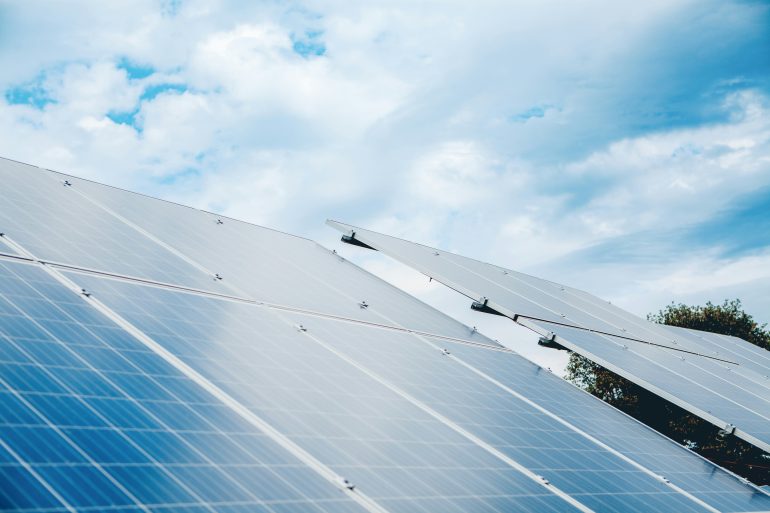

Imagine a December evening in Asunción. The temperature remains high, air-conditioning units are running, and a power cut leaves the neighbourhood in darkness. Yet one house still has its lights on, its refrigerator running and its occupants enjoying a cool room. The difference could be a solar power system with battery storage. One of the advantages of solar power in Paraguay.
Solar panels in Paraguay are becoming an option for homeowners seeking reliable electricity, businesses managing energy consumption and rural properties beyond the electricity network. Even apartment residents and renters have alternatives for keeping essential appliances running.
This guide explains the equipment, installation costs, legal considerations and questions to ask before buying, drawing on an interview with Felix Letkemann, one of the founders of Chaco Solar, a Paraguay-based company and one of the country’s leading specialists in designing and installing residential solar and battery systems.
Is solar power in Paraguay worth it?
Solar power in Paraguay is particularly attractive for people seeking reliable electricity and greater independence from the national grid. Financial savings are possible, although the value depends on electricity consumption, installation costs and the type of system. Paraguay benefits from comparatively inexpensive hydroelectricity, supplied primarily through Itaipú and Yacyretá. This means reducing monthly bills alone may not justify every residential solar investment.
According to ANDE’s published Tariff Schedule No. 21, updated in November 2024, the normal residential low-voltage tariff ranges from ₲311.55 to ₲435.51 per kilowatt-hour (kWh), depending on consumption. For households considering solar, the calculation should include maintaining refrigeration, internet access, lighting and air-conditioning when the grid becomes unavailable.
“We have built solar power plants that are price competitive with ANDE prices at today’s level,” Letkemann explains. “Customers can generate electricity for daily consumption while maintaining a backup system during outages.”
How solar can reduce electricity bills
Solar power in Paraguay can reduce electricity bills in two ways: by lowering the amount of electricity purchased from ANDE and, in some cases, by moving a household into a lower consumption-based tariff band. ANDE’s residential tariffs vary according to monthly electricity consumption. This means households using more electricity may pay a higher rate per kilowatt-hour than those with lower consumption.
When a solar installation supplies part of a home’s electricity needs, the amount purchased from the national grid decreases. Depending on the household’s consumption and applicable tariff, this reduction may also result in a lower electricity rate. Chaco Solar has developed an online savings calculator that considers both factors when estimating potential savings.
Why does the power go off in Paraguay?
Power cuts in Paraguay can occur despite the country’s substantial hydroelectric generation. Local distribution problems, severe weather and periods of high demand can interrupt supply even when electricity generation is sufficient.
Paraguay shares Itaipú with Brazil and Yacyretá with Argentina and has historically exported substantial electricity. Itaipú generated approximately 72.88 million MWh in 2025, of which 25.77 million MWh were supplied to Paraguay through ANDE. Itaipú is binational, so the remainder should not simply be described as Paraguayan exports.
Storms can damage power lines and distribution equipment. During hot weather, simultaneous air-conditioning use increases demand. ANDE reported a record national peak of 5,752 MW on 26 January 2026, 816 MW above the January 2025 peak.
How does a home solar system work?
A home solar system converts sunlight into usable electricity and, when fitted with batteries, stores energy for later. The main components are solar panels, an inverter, battery storage and the home’s electrical connections. Solar panels produce direct-current electricity. An inverter converts it into alternating current for ordinary household appliances. During daylight, a home can consume solar electricity directly; surplus may charge batteries or, where permitted, enter the grid.
At night, stored energy can supply the home until the battery reaches its programmed limit. Grid electricity remains available for hybrid systems when production and storage are insufficient. On-grid systems normally stop supplying electricity during blackouts for electrical safety. Hybrid systems with suitable backup configuration can keep selected circuits running. Off-grid systems operate without a grid connection, making them suitable for remote land and estancias.
Batteries: The part that keeps the lights on
A home battery stores electricity for periods when solar generation or grid power is unavailable. The battery capacity determines the energy available, while the inverter determines how much equipment can operate simultaneously.
Letkemann recommends sizing storage around the household’s actual problem rather than automatically buying the largest battery. “There is nothing I would say typical, because you can basically do any size.” He estimates a refrigerator or freezer uses roughly 1 kWh per day, or approximately 0.5-0.7 kWh overnight. For one ordinary air-conditioning unit overnight, he estimates approximately 5-7 kWh.
A 5 kWh battery may provide less than 5 kWh of usable electricity because of conversion losses and reserved capacity. The inverter must also handle the appliances’ simultaneous load and starting demand.
Lithium iron phosphate (LiFePO4) batteries generally offer longer cycle life and more usable capacity than traditional lead-acid batteries, but both technologies require appropriate temperature management. A correctly configured hybrid system detects loss of grid power and transfers to backup automatically. Exact switching time depends on the inverter.
Which solar option is right for your home?
The best solar power in Paraguay solution depends on whether the property is owned, rented, under construction or disconnected from the electricity network. Space, permissions and consumption all matter.
Houses you own
Homeowners generally have the greatest flexibility to install rooftop or ground-mounted hybrid solar. In Paraguay, north-facing panels often provide favourable annual exposure, although roof shading, structural capacity and consumption patterns influence the design. Decide which circuits require backup before requesting a quotation. Keeping refrigerators, internet and lights operating is different from powering every air-conditioning unit.
Apartments you own
Apartment owners may be able to install battery backup even without rooftop panels. “Something you could do for apartment owners is to just install the inverter and the battery,” Letkemann says. Such a system charges from the grid and provides backup during cuts, but does not generate solar electricity. Rooftop panels or permanent wiring modifications may require condominium approval, building permissions and a qualified electrician.
Renting
Renters can consider portable power stations that require no permanent electrical installation. Depending on capacity and output, these may run routers, phones, laptops, lights and some refrigerators. Smaller stations generally cannot support air-conditioning. Check usable capacity, maximum continuous output, appliance starting requirements and charging options.
Building a new house
New construction offers an opportunity to plan roof orientation, cable routes, electrical distribution and safe battery space before building work finishes. This may reduce later modifications. Discuss future air-conditioning, water pumping and other major electrical requirements with the architect and electrician.
Places with no power line
Off-grid solar can be valuable when extending the national electricity network is expensive or impractical. Letkemann describes a rural installation where a landowner withdrew permission for an existing electricity line to cross private property. The affected farm would have needed a replacement line running for several kilometres along public land, costing more than ₲100 million.
Instead, the property owner installed an off-grid solar system, eliminating the need for the costly new connection. According to Letkemann, the installation continues operating today, providing the farm with an independent electricity supply.
Businesses, estancias and water pumps
Shops, offices, farms and agricultural properties may benefit from solar. Letkemann says businesses form a growing share of Chaco Solar’s projects, partly because some customers want to manage contractual grid-demand limits. On estancias, solar water pumps can supply cattle operations away from power lines. A suitable design must account for water demand, pumping height, seasonal conditions and storage.
How much does solar power in Paraguay cost?
“The normal range for private homes is, I would say, between ₲40 million and ₲85 million, roughly,” Letkemann explains.
Installation prices also depend on roof type, electrical upgrades, property location, equipment availability and the complexity of the project. For this reason, homeowners should request a quotation based on their property’s specific requirements rather than relying on general price estimates. Chaco Solar also offers financing or instalment plans for selected projects. Letkemann says approximately half its projects involve financing, but approval is discretionary, including for foreign residents. Customers should confirm deposits, repayment periods and charges.
Paraguay has legislation supporting renewable energy investment, but homeowners should not assume an automatic tax exemption. Law No. 7599/2025 provides a framework for non-hydroelectric renewable electricity and refers to incentives under existing law; project-specific tax treatment should be verified with DNIT.
Can you sell solar power back to ANDE?
Paraguay has established a legal framework for selling surplus solar electricity, but a nationwide paid feed-in programme has not yet been implemented, according to Chaco Solar. Law No. 7599/2025 establishes a framework allowing eligible residential, commercial and industrial users to generate electricity for self-consumption and supply surplus energy to the national network.
Although Paraguay has established a legal framework for selling surplus solar electricity, paid grid feed-in has not yet been confirmed as operational nationwide. The specific rate ANDE would pay residential producers also remains to be confirmed.
According to Letkemann, selling surplus solar electricity is already possible in some Mennonite communities in the Paraguayan Chaco, including those around Loma Plata. Letkemann expects similar opportunities to become available throughout Paraguay.
Exporting does not guarantee payment at the same rate charged for household consumption. Before purchasing a grid-export system, ask the installer about registration, ANDE interconnection approval, metering and the remuneration arrangement.
Does solar work well in Paraguay’s climate?
Yes. Paraguay has favourable solar resources. The Global Solar Atlas provides location-specific solar irradiation and photovoltaic potential. High temperatures can reduce photovoltaic efficiency as cell temperature rises. Installers should account for this in expected production and provide adequate ventilation and appropriate inverter placement.
Solar panels are designed for outdoor conditions, but resistance depends on ratings, mounting and installation. Letkemann says that following a major hailstorm on 3 October 2026, Chaco Solar replaced fewer than ten panels across its customers.
Letkemann also reports that some customers have successfully claimed lightning damage through household insurance, but coverage depends on the policy.
Cleaning needs vary with roof angle and dust. Rain can help wash angled panels, while flat or heavily soiled panels may need cleaning. Letkemann says his own roof has operated for more than two years without manual cleaning. Inverters, batteries, electrical protections and mounting structures still need periodic checks. Some inverter ventilation filters may require simple cleaning.
How to choose a solar installer in Paraguay
A reliable installer should explain what the system will do, provide a detailed written quotation and offer clear after-sales support. Begin by identifying the problem to solve: cooling, essential backup, lower grid use or off-grid supply.
Letkemann cautions against treating solar like a diesel generator used only during outages: “Because you basically use it all of the time, not only when you have got a power outage.”
1. Ask what warranties cover panels, batteries, inverters and workmanship, and who handles claims.
2. Request the battery chemistry, brand, model, usable capacity and warranted performance.
3. Establish whether installation is performed by employees or subcontractors.
4. Ask who provides after-sales service, replacement parts and repairs, and how quickly.
5. Request references from customers with similar installations.
6. Confirm that the installer can explain technical details in a language you understand.
7. Insist on a written component-by-component quotation listing brands, models, protections and exclusions.
From first enquiry to switch-on: what happens?
A typical installation begins with a discussion of needs, followed by assessment, quotation, approval, equipment preparation, installation, testing and handover. The installer should assess electricity bills, roof space, wiring and appliances, then specify equipment and backup circuits. After approval, technicians install and test the system, explain monitoring and provide warranty documents.
Letkemann says the largest delay is often the customer’s decision. Once approved, many Chaco Solar projects are operational in one or two weeks. Imports, weather, building changes and regulatory approvals may lengthen the process. Planning before the hottest months can help households prepare for summer demand, although installation is possible throughout the year.
The future of solar power in Paraguay
Solar is becoming part of a broader conversation about Paraguay’s electricity supply. Letkemann says his interest began when he saw diesel generators running under strong sunlight.
“I have seen diesel generators running in bright sun. And that just did not make sense to me,” he recalls.
He expects residential and commercial solar to become increasingly common and predicts solar could supply 20% or more of Paraguay’s electricity within five years.
For households, the decision begins with a practical question: which appliances need to continue operating when the grid fails? A carefully designed system can provide that reassurance while generating electricity throughout the year.
For more information, check Chaco Solar’s official website or message Chaco Solar on WhatsApp. Review annually for prices, regulations and technical developments.
Read more: Solar Power In Paraguay: Frequently Asked Questions About Panels And Backup Power For Your Home.