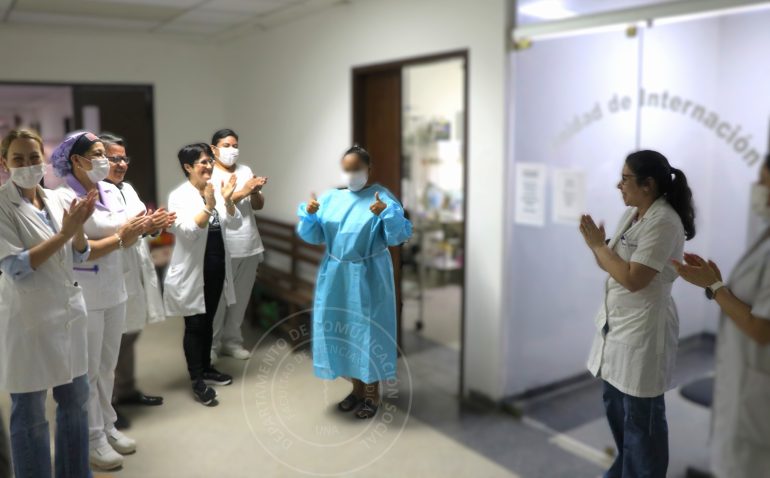

The Faculty of Medical Sciences at the National University of Asunción (FCMUNA) has celebrated a major achievement in its transplant programme, following the successful discharge of its 200th kidney transplant patient. The 200th kidney transplant milestone procedure was performed at the Hospital de Clínicas, where a 22-year-old woman received a kidney from a deceased donor and has since made a favourable recovery.
This significant milestone highlights the continued success of the hospital’s organ transplant programme, which was reactivated in 2014. The achievement underscores nearly a decade of dedicated work by a multidisciplinary team, reinforcing the hospital’s position as a leading centre for complex medical care in Paraguay. The successful outcome for the young patient serves as a powerful symbol of the programme’s life-saving impact.
200th kidney transplant milestone: A new chapter for the patient
Dr. Johana Silvero, a physician involved in the patient’s care, explained that the young woman suffered from chronic kidney disease. As a result of her condition, she had been undergoing regular haemodialysis treatments since 2021. This essential but demanding therapy was administered through an arteriovenous fistula, significantly impacting her daily life. The transplant, therefore, represents a transformative improvement in her overall quality of life and long-term health prospects.
For individuals with end-stage renal disease, a kidney transplant is widely considered the optimal treatment. It liberates patients from the rigorous schedule of dialysis, which often requires several sessions per week, and allows for a return to a more normal life. Consequently, a successful transplant can lead to improved physical and psychological well-being, enabling recipients to resume work, studies, and other routine activities without the constraints of frequent hospital visits.
The crucial role of organ donation
Dr. Norma Arévalos Galeano, head of the Department of Organ Transplantation, stated that this achievement reflects the sustained progress of the programme and the unwavering commitment of the medical team. She emphasised that each successful operation is the result of extensive collaboration, precise surgical expertise, and diligent post-operative care. Arévalos Galeano also took the opportunity to highlight the fundamental importance of organ donation.
She stressed the vital role that donors and their families play in the entire process. “Without a donor, there is no transplant.”
Arévalos Galeano expressed profound gratitude to the families who, during times of great loss, make the compassionate decision to donate their loved one’s organs. She described their choice as a remarkable act of solidarity that directly makes saving lives possible. The success of the national transplant system is entirely dependent on such selfless acts.
A national centre for excellence and training
Carolina Vázquez, the Coordinator of Adult Renal Transplantation, commented on the institution’s broader impact on healthcare in Paraguay. She highlighted that the Hospital de Clínicas serves as a national reference centre, tackling some of the most complex medical cases in the country. The hospital is not only a provider of the 200th kidney transplant milestone and other advanced treatments, but also an important institution for medical advancement and knowledge sharing.
Furthermore, Vázquez underscored the programme’s integral role in professional development. A key objective of the institution is the training of highly qualified specialists who are capable of establishing and leading similar transplant programmes in other regions of Paraguay.