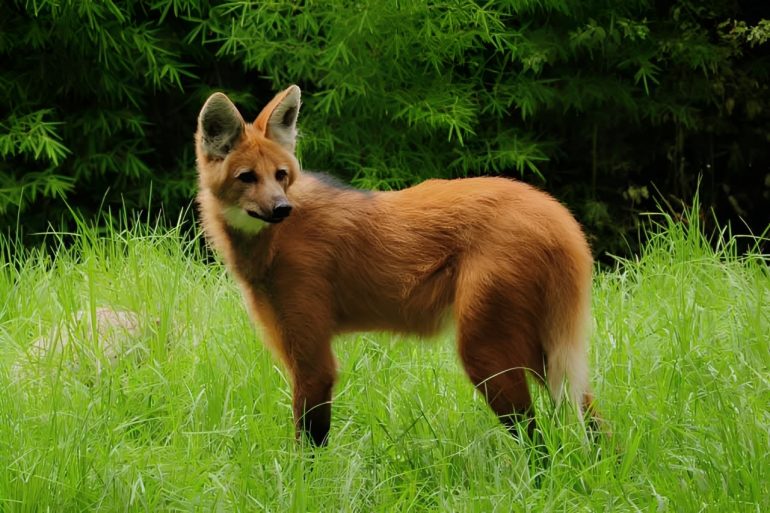

The aguará guazú is one of Paraguay’s most striking animals, yet at the same time, one of the rarest to encounter. Known scientifically as Chrysocyon brachyurus, it is often associated with foxes due to its appearance, although the animal is actually more closely related to wolves. This unique combination of features makes the aguará guazú one of the most distinctive “foxy” canines in the world.
Across South America, the aguará guazú has become both a biological curiosity and a cultural symbol. Its presence in Paraguay reflects not only the country´s biodiversity, but also the fragile balance between wildlife and human expansion. Despite its size and imposing figure, it remains a harmless and deeply misunderstood animal.
The aguará guazú, a shy animal
The aguará guazú is present in Paraguay, Argentina, Uruguay, Brazil, Bolivia, and Peru. Its name comes from Guaraní and means “big fox”. Its name in English would be maned wolf. It is the largest canine in South America, yet it poses no threat to humans or cattle. In fact, it plays a vital ecological role, particularly as a seed disperser, much like the taguá.
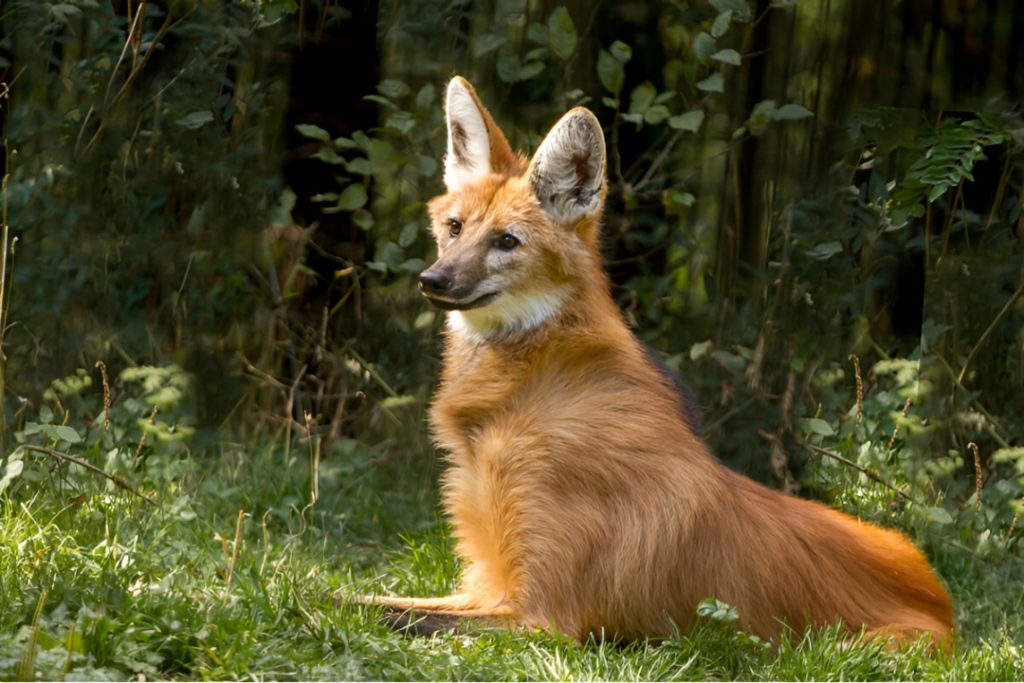
This species is primarily nocturnal. During the day, it remains hidden, venturing out at night to hunt and forage. It is an omnivorous animal, feeding on fruits, roots and small animals such as rabbits, birds and lizards. Rather than relying on speed alone, it is an excellent stalker, although it can run long distances when necessary. It has long legs to help it see and hunt in tall grass.
Its diet contributes directly to ecosystem regeneration. By consuming fruits and dispersing seeds across large areas, the aguará guazú helps maintain the biodiversity of grasslands and forests. It typically inhabits open environments such as wet or dry grasslands, although it may enter forested areas in search of food.
Despite its size, sightings are rare. This is due not only to its nocturnal habits, but also to its solitary nature and declining population. Today, it is more common to spot one along roads and highways than in its natural habitat, often as a victim of vehicle collisions.
A solitary and territorial species
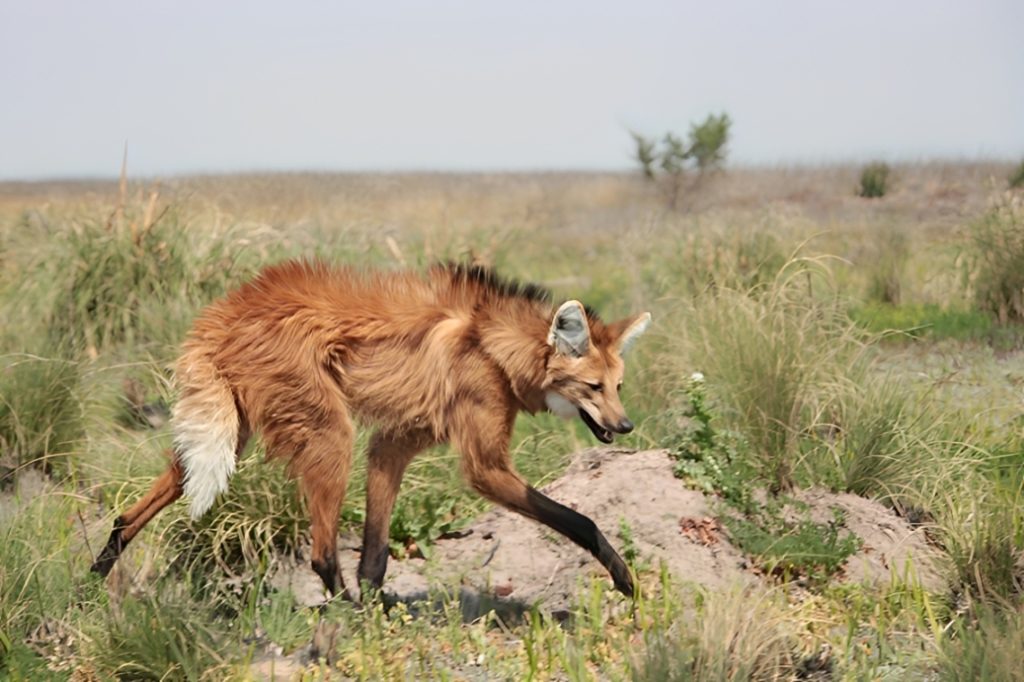
The aguará guazú does not live in packs like other canines. It is a solitary and highly territorial animal. Males often defend their hunting grounds and avoid sharing space with others. Even in captivity, it is difficult for them to coexist within the same territory.
However, pairs may share a common habitat during breeding periods. They occasionally use the same burrows and protect their offspring together until they reach approximately one year of age. After that, the young disperse to establish their own territories.
One of its most distinctive traits is its vocalisation. The aguará guazú produces a deep, hoarse bark or howl that can reach up to 90 decibels. This sound is to mark territory or attract a mate and is especially common during the Paraguayan winter months, between July and August.
Cultural importance and myths of the aguará guazú
Beyond its ecological role, the aguará guazú holds deep cultural significance. For several Indigenous communities, such as the Tobá, it is a sacred animal. They speak of a mythical giant version known as “Kalak Nta” or “Nonga Lta”, the king of the plains and protector of animals.
In Guaraní culture, the aguará guazú is associated with protection, particularly of grasslands and palm groves. It is also regarded as the father of all dogs. In Brazil, it is linked to the origin of fire, believed to have brought it to humans.
However, myths distorted its image. It became associated with the legend of the “Luisón”, a South American werewolf said to be the seventh son of a family. This superstition led to fear, persecution and hunting of the species. The fear of the werewolf was so big that families usually did not recognize or abandon this seventh son. That is why in Argentina a law was made for the president to be the godfather of the child. In Paraguay, on the other hand, it was common to seek for the president´s blessing and potentially, becoming the godfather of the child.
Threats to its survival
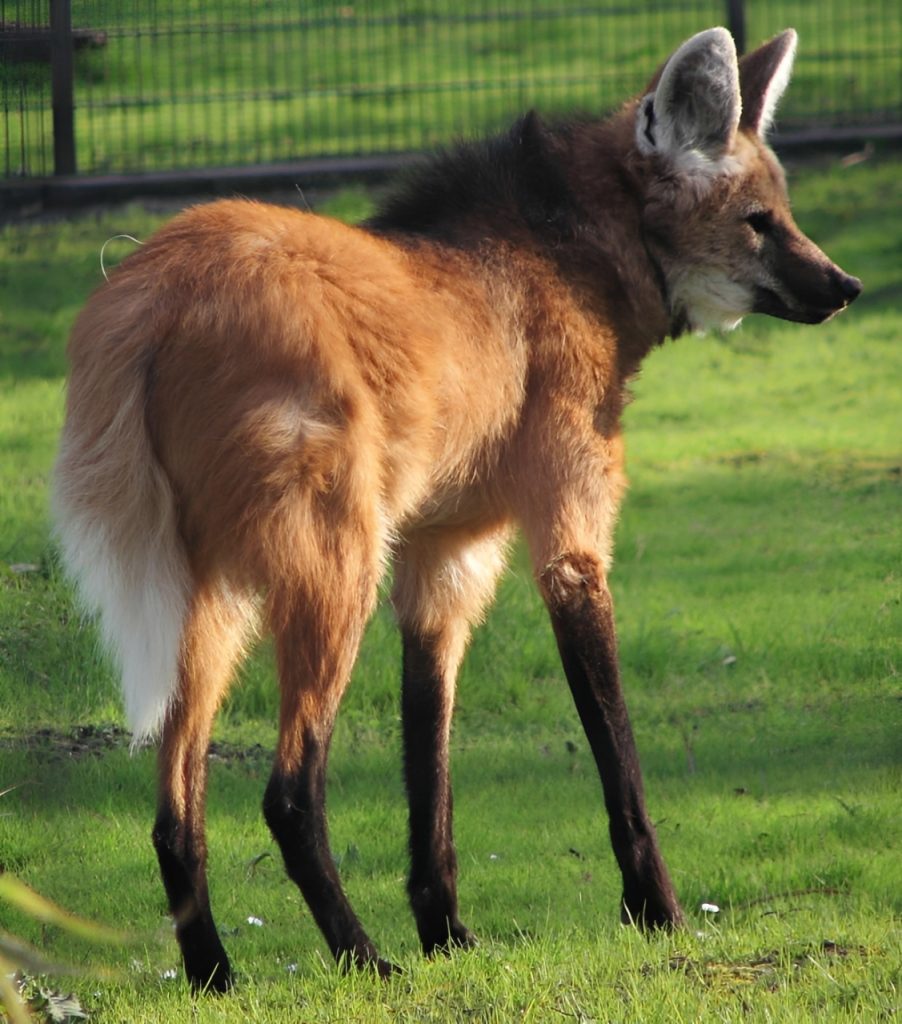
Today, the aguará guazú is considered an endangered species throughout much of its range. Its population decline is driven by multiple factors, most notably habitat loss. Grasslands are increasingly converted into agricultural land, reducing the areas where the species can live and hunt.
Road accidents have also become a major threat, as expanding infrastructure cuts through its natural environment. Additionally, it is still hunted in some regions due to lingering myths or out of fear for livestock, despite posing little real danger. Forest fires further exacerbate the situation, destroying not only the animal itself but also its food sources. While conservation efforts exist, particularly in protected areas, the species does not adapt well to captivity, making in situ preservation essential.
A symbol worth protecting
The aguará guazú stands as a powerful symbol of Paraguay’s natural heritage. Its presence reflects the health of ecosystems that are increasingly under pressure. Protecting this species is not only about preserving a single animal, but about safeguarding entire environments and cultural identities linked to it.
As Paraguay continues to develop, the challenge lies in balancing growth with conservation. The survival of the aguará guazú will depend on awareness, protection of habitats, and the gradual disappearance of myths that have long placed it at risk. In the silence of the grasslands, this shy giant continues to roam. Ensuring that it remains part of Paraguay´s landscape is a responsibility that extends beyond conservation, reaching into the very identity of the country itself.