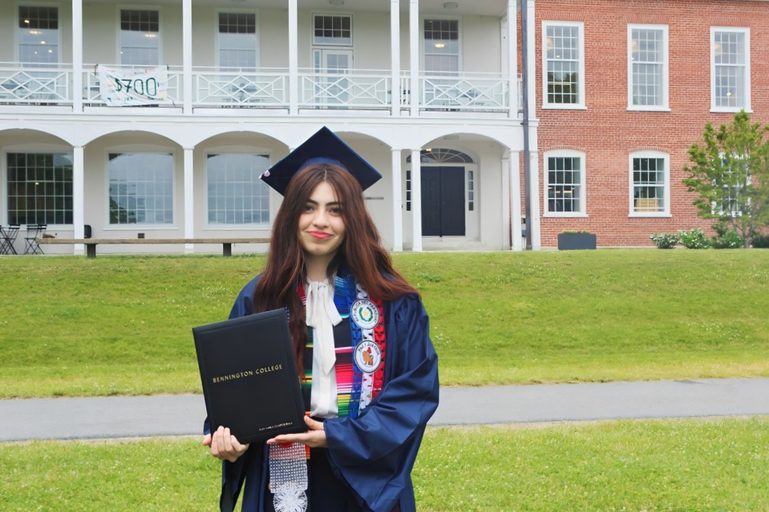

After participating in international aerospace programmes and a microgravity flight in California, 26-year-old Paraguayan educator Alma Ocampos has returned to Paraguay. From mathematics competitions in the city of Capiatá to opportunities connected to NASA, her journey reflects a passion for science, education and social justice. Now, she hopes to use her international experiences to make science more accessible and create opportunities for young Paraguayans.
“My goal was never to be part of NASA. I wanted to explore what I had been interested in since childhood, and make the most of the opportunities available to me,” Ocampos says to The Asunción Times.
From mathematics competitions to aerospace programmes
Alma Ocampos’ interest in science began at school, when her mathematics teacher enrolled her in an Olympiad.
“Two or three years later, I realised I had a talent for science, and I started enjoying it. I studied to pass the different rounds and reach the final. Then, I realised mathematics was not necessarily the headache people make it out to be. I could also see it as something enjoyable.”
That discovery eventually influenced her academic and professional decisions. Through the Jóvenes Embajadores (Young Ambassadors) programme, she proposed teaching mathematics in public schools. Her initiative aimed to help students prepare for the National Mathematics Olympiad. After receiving a scholarship, she studied mathematics and education at Bennington College in the United States. She also spent a semester in Japan through an exchange programme. Following graduation, Ocampos decided to explore astronomy and applied to the Space Camp programme through AEXA, a private Mexican space agency.
To the International Space Station
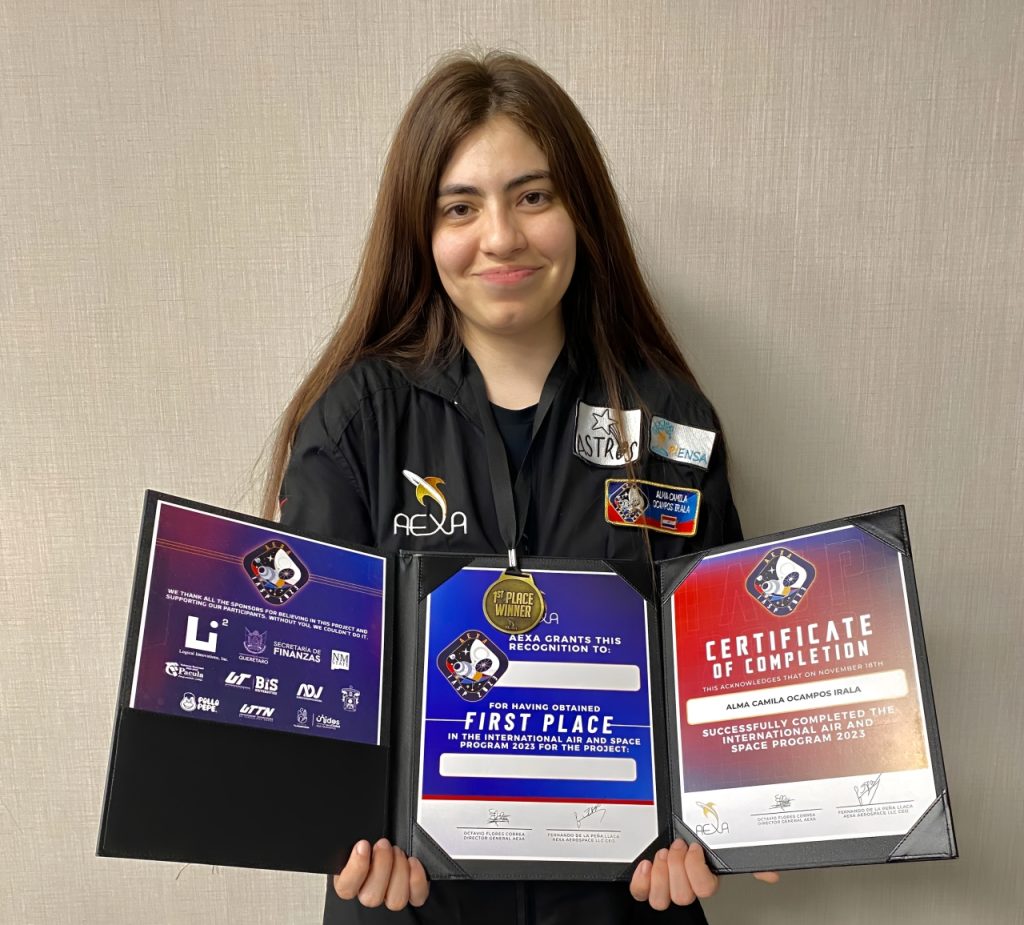
“Within the programme, AEXA gives you the opportunity to present a proposal as a team. If your project wins, it goes to the International Space Station to be tested.”
Her team, which included Mexican engineers, won first place. The project was subsequently developed, and the team awaited its testing date aboard the International Space Station.
“That was when a spark started. I thought, ‘Wow, my first programme has already been such an incredible experience.’ So I decided to apply for more opportunities.”
She later joined NASA L’SPACE, an online programme that teaches participants how to prepare proposals for NASA. She also attended educational workshops and international aerospace conferences. Another significant experience came through Space for Humanity, an independent organisation that selected six people worldwide for a microgravity flight in California.
Connecting science, education and social justice
Ocampos’ aerospace experiences connect with interests she had already developed through other projects. These include turtle conservation in Panama, educational workshops in Ecuador and work with immigrant women in New York.
“At Latin Women Action, I worked closely with people who had experienced domestic violence, abuse and many other difficulties. Over time, my interest developed further into reaching people through science. There is so much need in Paraguay. Many children and young people are affected by poverty, and then there are even more serious situations involving abuse, mistreatment and exploitation.”
For now, Ocampos wants to continue teaching, helping young Paraguayans apply to universities and sharing what she has learnt. “I am not going to change the whole country by myself. But I can contribute within my community, give mathematics or other subject lessons, and help Paraguayans apply to universities.”
Science communication is another important part of her work. She began creating TikTok videos about astronomy before expanding into other scientific subjects. Through her content, she hopes to make science more accessible and encourage public interest.
“I noticed that many scientists and people doing interesting work in Paraguay are reluctant to appear publicly. That is understandable to a certain extent, but science eventually becomes disconnected from the general public. People continue thinking science is difficult and not for everyone. Then nobody wants to study mathematics or physics.”
Creating opportunities
One lesson Ocampos has taken from international programmes is the importance of helping others access similar opportunities. At the Space Exploration Educators Conference, the Paraguayan delegation grew from two women in 2025 to eleven in 2026.
“I did not want to go alone. I had already participated in too many programmes by myself. And I specifically wanted another Paraguayan woman to come with me. During the conference, we said we could not keep this opportunity to ourselves. We had to bring more Paraguayan women. That is how we started creating a network of people interested in participating and contributing.”
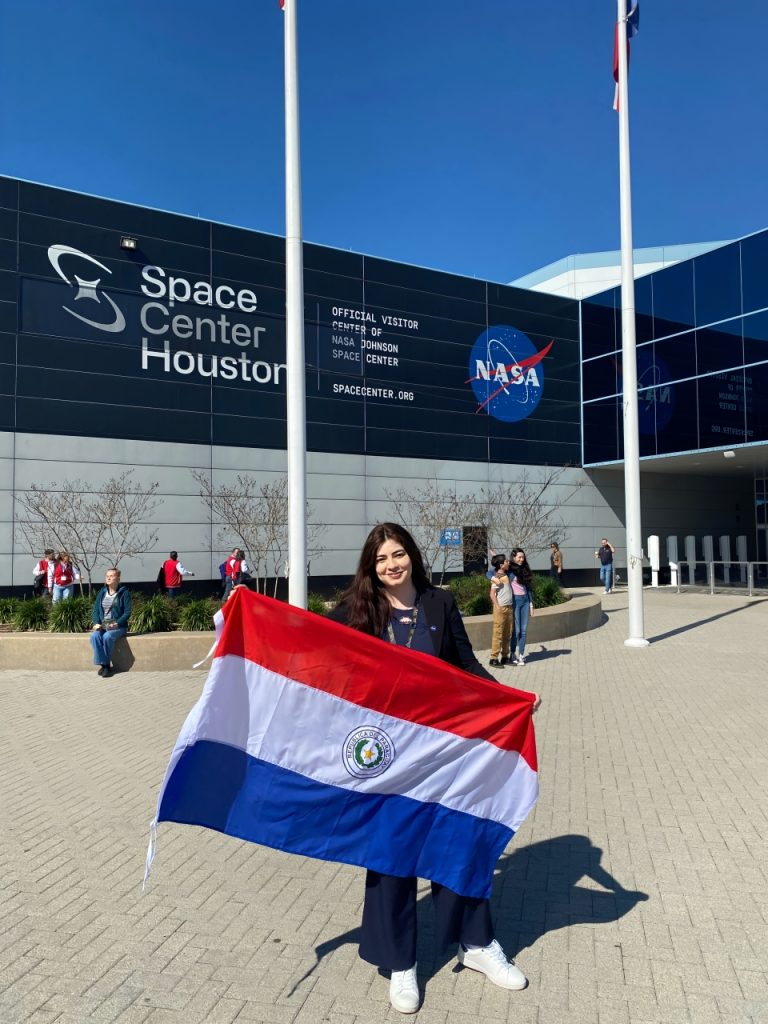
She also wants to make application processes easier for others by offering practical guidance rather than general encouragement.
“I do not want to give someone the typical advice of doing their best or simply being themselves. I want to explain which form to complete, what to emphasise, which recommendation letter to request and whom to contact.”
She estimates that she has applied to more than 300 or 400 programmes throughout her journey.
“Every day, I have breakfast with rejection emails. People see the opportunities that made me appear in newspapers or on television, but those are only the tip of the iceberg. You have to apply even when you are afraid. It might not be your best application, but you will always learn what you can improve. You will fail many times, but persistence will take you far.”
Representing Paraguay beyond borders
For Ocampos, representing Paraguay internationally also carries responsibility. She often meets people who have never encountered a Paraguayan before, making these exchanges particularly meaningful.
“It is a mixture of humility, privilege and great responsibility. You want to do your best because you are representing your country, and people may form their first impression through you.”
As she considers her next academic and professional steps, Alma Ocampos remains focused on connecting education, science and social change. Despite her experiences in aerospace, becoming an astronaut was never her ultimate ambition.
“I never wanted to become an astronaut or anything else people might have assumed. My path has been from social justice to space, and then back to social justice.”
To learn more about her journey and upcoming projects, follow Alma Ocampos on Instagram.
Also read: From Paraguay To The Stars: Hernando Gauto And His Key Role In NASA’s Artemis II Mission.