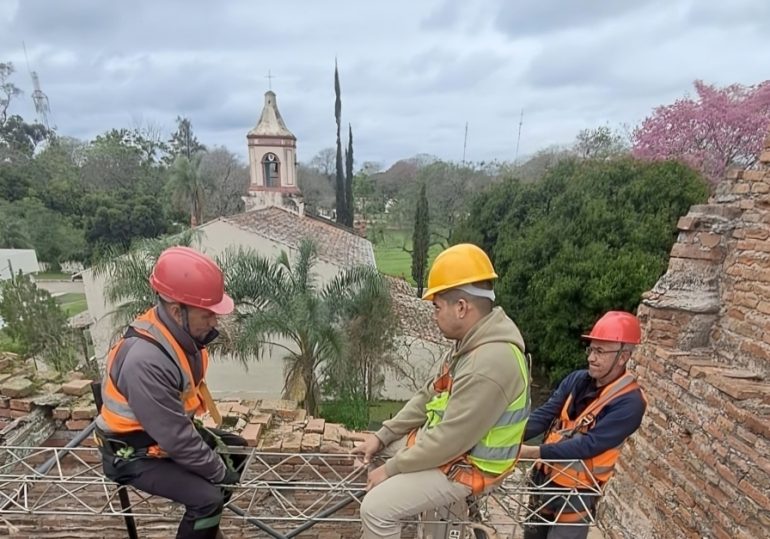

Maintenance and cleaning work has concluded at the ruins of the San Carlos de Borromeo temple in the city of Humaitá, within Paraguay’s Ñeembucú department. The site is one of the most significant historical symbols of the War of the Triple Alliance.
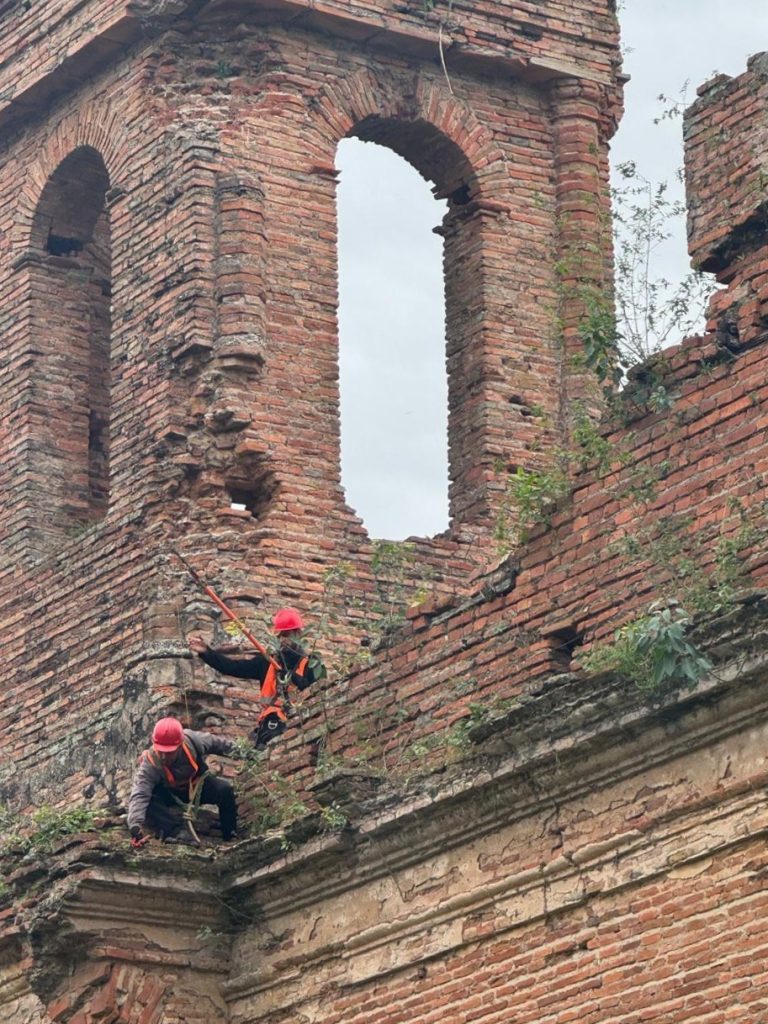
The project involved the careful removal of overgrown vegetation from the emblematic structure. This task was carried out by technicians specialising in heritage protection and conservation. The work was coordinated by Edgar Paredes, the technical head of the Jesuit Mission of Trinidad in Itapúa.
A site of major historical importance
The temple is a central feature of a location of great relevance to Paraguay’s history. During the first phase of the War of the Triple Alliance, Humaitá was enclosed by a quadrilateral-shaped fortification. This made it the scene of major confrontations. The temple in question – the Church of San Carlos Borromeo – still stands as a powerful symbol of that era’s devastation and resilience.
Its thick walls and partially ruined façade bear the scars of intense bombardment by Brazilian, Argentine, and Uruguayan forces, who sought to breach Humaitá’s formidable defenses between 1866 and 1868. Despite the surrounding fortifications eventually falling and the fortress itself being abandoned, the temple endured as one of the few structures left standing. Later it became a national monument that quietly commemorates both the strategic importance of the site, and the heavy human cost of Paraguay’s struggle for survival.
Tribute to a Catholic reformer
The church of San Carlos de Borromeo was inaugurated on 1 January 1861. However, it sustained severe damage from bombardments throughout the conflict. The Humaitá garrison eventually withdrew during the night of 24 July and the early morning of 25 July 1868.
The temple was dedicated to Saint Charles Borromeo, a cardinal and archbishop of Milan. He is recognised by the Catholic Church as a saint and is considered one of the leading reformers of the period following the Council of Trent.
A collaborative preservation effort
The request for the Humaitá ruins maintenance work came from the Municipality of Humaitá to the National Secretariat of Culture (SNC). The project received broad support from several key bodies. These included the National Secretariat of Tourism (Senatur), the Yacyretá Binational Entity (EBY), and the Governorate of Ñeembucú. The local council also provided assistance.
Furthermore, the initiative was supported by the Vice President of the Republic, Pedro Alliana. This collaboration highlights the national importance of preserving the historic site for future generations.