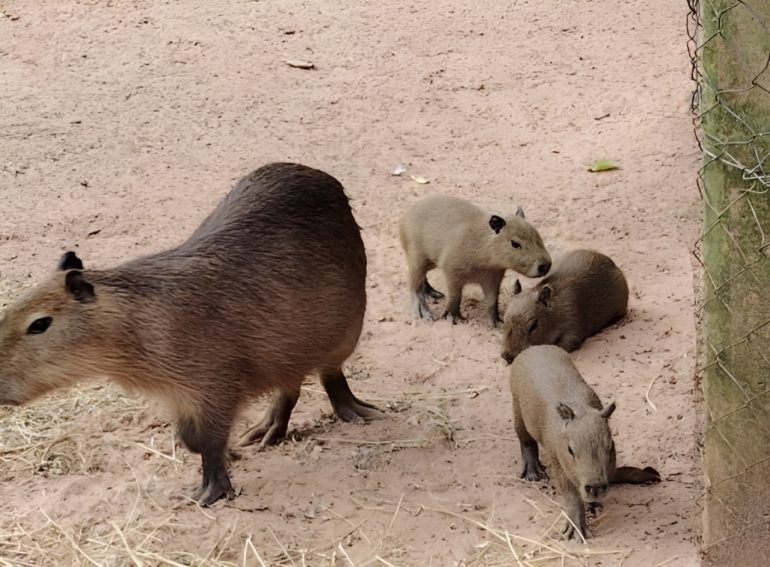

Three capybaras were born at the Asunción Zoo in early August. Now, the total number of native mammals living at the municipal facility is ten. The births mark the fourth successful litter at the zoo. The arrival of the three newborns reflects the institution’s ongoing efforts to provide suitable conditions for one of Paraguay’s most recognisable wildlife species.
The newborns are currently staying close to their mother under the care of the zoo’s veterinary team. According to Estela Lucina Espínola, head of the zoo’s Veterinary Department, the young capybaras are feeding on their mother’s milk while gradually beginning to eat vegetation. Their diet includes alfalfa, grass, seasonal fruit, squash and other vegetables.
“The fact that they continue to reproduce shows that the animals are adapting well to their environment and receiving appropriate care,” said Estela Lucina Espínola Olmedo, the veterinarian in charge of the Municipal Zoo’s Veterinary Area.
Native to Paraguay’s wetlands
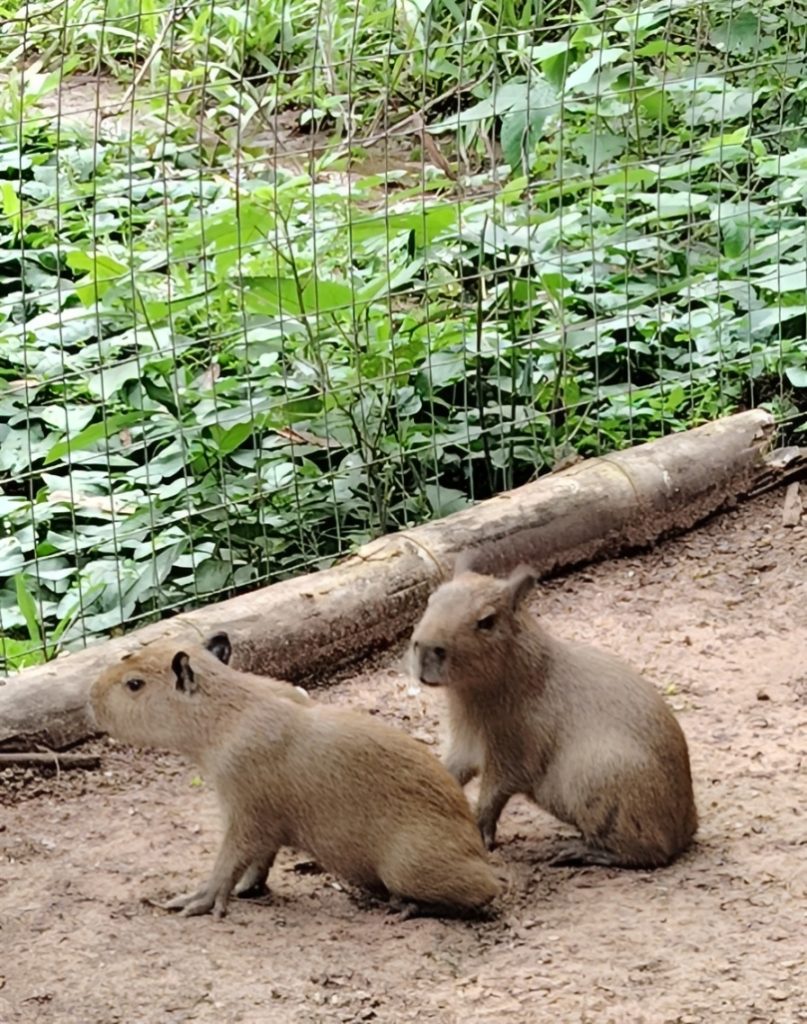
Known locally as carpinchos, capybaras (Hydrochoerus hydrochaeris) are the world’s largest rodents and are native to much of South America, including Paraguay. They inhabit wetlands, rivers, marshes and lagoons across the country. Capybaras rely on freshwater and abundant vegetation for food and shelter.
Highly social by nature, capybaras typically live in family groups. They spend much of their time grazing or resting in the water. Their partially webbed feet make them excellent swimmers, allowing them to escape predators and regulate their body temperature during Paraguay’s hottest months.
Although the species is common in the wild and currently classified as Least Concern by the International Union for Conservation of Nature (IUCN), conservationists continue to emphasise the importance of protecting wetland habitats, which support not only capybaras but hundreds of other native species.
Planning for a growing population
Espínola explained that capybaras reproduce readily in captivity, prompting the zoo to begin planning improvements to the enclosure as the group expands. The changes aim to ensure responsible management of the animals while preventing inbreeding as future generations are born.
She also reminded visitors that, despite their gentle and calm temperament, direct contact with the animals is not permitted. Feeding or handling capybaras can cause unnecessary stress and may expose them to unsuitable foods that could affect their health.
The capybaras have become one of the zoo’s most popular attractions, particularly among children and families visiting the Botanical Garden and Zoo of Asunción. The arrival of the three newborns is expected to draw even more visitors in the coming weeks. The Zoo’s visiting hours are from Tuesday to Sunday, from 09:00 to 16:00. On Mondays, it is closed for maintenance work and for the animals to rest a little.
Capybaras generally live for around ten years in captivity. Zoo officials hope the latest births will help raise awareness of Paraguay’s native wildlife.