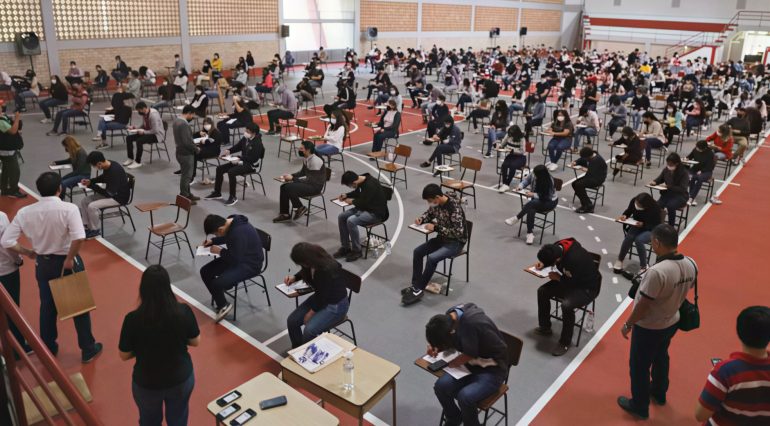

Exam season is approaching, and everyone knows it is one of the most challenging parts of student life. In Paraguay, however, the experience differs depending on the level of education. While primary and secondary schools follow a standardised assessment system established by the Ministry of Education and Sciences (MEC), universities enjoy greater academic autonomy, allowing each institution, and often each faculty, to design its own examination process.
Paraguay follows the Southern Hemisphere academic calendar, with the school year generally running from February to November. As a result, students take mid-year exams around June and July, while they complete final examinations toward the end of the year.
Primary and secondary school years
Most primary and secondary students divide their academic year into dos etapas (two assessment periods). Unlike some countries, Paraguay’s public education system does not use four grading periods. Instead, students are evaluated during two assessment stages before taking a comprehensive final exam.
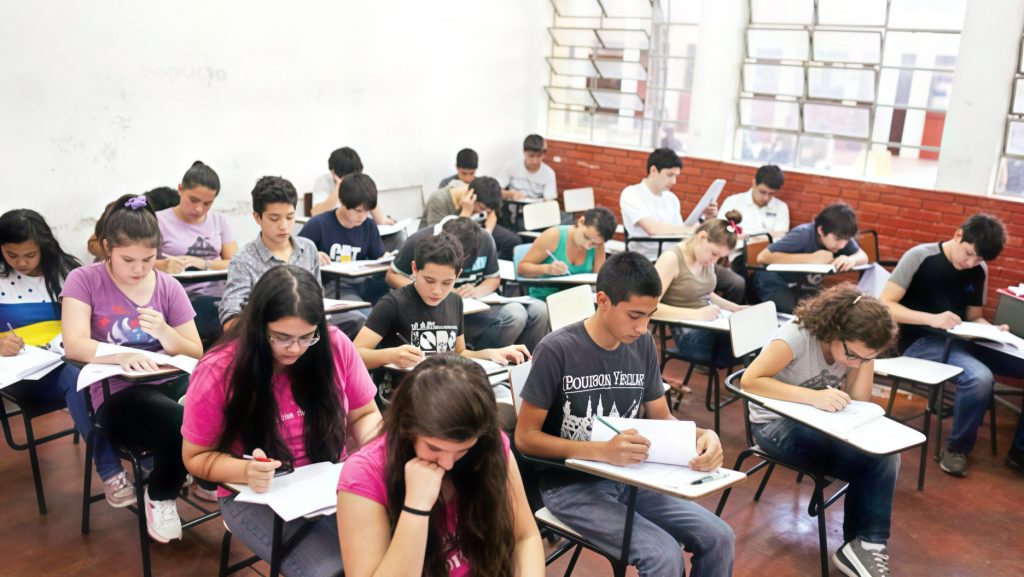
Students complete assessments throughout each stage and then take a final exam, which plays a key role in determining whether they pass the subject.
For many years, students who failed a subject had another chance through make-up exams held in February. A final opportunity was available in March if needed. Most students who needed to retake exams traditionally managed to pass during the February session, making the term febrerista—a student who passes in February—a familiar part of Paraguayan student culture.
That tradition is now changing. Beginning with the 2026 academic year, the MEC will move make-up exams from February to December. According to education authorities, the reform aims to simplify school administration. It will allow enrollment to be completed before the new academic year begins. Officials also expect it to prevent delays in distributing school supplies and other educational resources.
University students face different rules
Higher education presents a much more diverse picture. Unlike the national school system, Paraguay has no single examination model for universities. Universities have broad autonomy to establish their own academic regulations. These include grading systems, attendance requirements, and opportunities to retake exams. As a result, students may experience very different academic expectations depending on where, and even what, they study.
Private Universities
At private universities such as UNIDA and Columbia, the structure is relatively straightforward. Students generally complete one semester of coursework, take a partial examination, and then sit for a final exam. Students who fail or miss the final exam can usually take an extraordinary exam, although they often have to pay an additional fee. If students repeatedly fail, they may be required to re-enroll in the course, adding further financial pressure to their studies.
Public Universities
Public universities can be considerably different. At the National University of Asunción (UNA), examination systems vary from one faculty to another. For example, students in the Faculty of Philosophy complete a full academic year of classes before taking two partial examinations and a final exam.
Unlike many private institutions, students are generally offered up to three opportunities to pass the final examination without paying additional fees. However, they must first meet strict attendance requirements, typically at least 70% attendance in theoretical classes and 80% in practical sessions, to qualify for the final exam.
From Febreristas to Diciembristas
Exam season in Paraguay has become more than an academic requirement, it is also a cultural experience. Students who pass their February make-up exams have long used the nickname febrerista with humor and pride. It represents resilience after an academic setback. With make-up exams moving to December, some students have jokingly started calling themselves diciembristas. The term shows how educational reforms can quickly enter everyday language.
Although examinations are a universal part of education, Paraguay’s system reflects its own academic traditions and institutional diversity. From the structured assessment process in primary and secondary schools to the flexible and varied rules governing universities, exam season remains one of the defining milestones of student life. As the country prepares to phase out the long-standing February make-up exams, both students and educators are entering a new chapter in Paraguay’s educational landscape.
The changes to exam schedules are among several recent education reforms introduced by the MEC, including the incorporation of Animal Welfare as a compulsory subject in primary and secondary schools beginning in 2026.