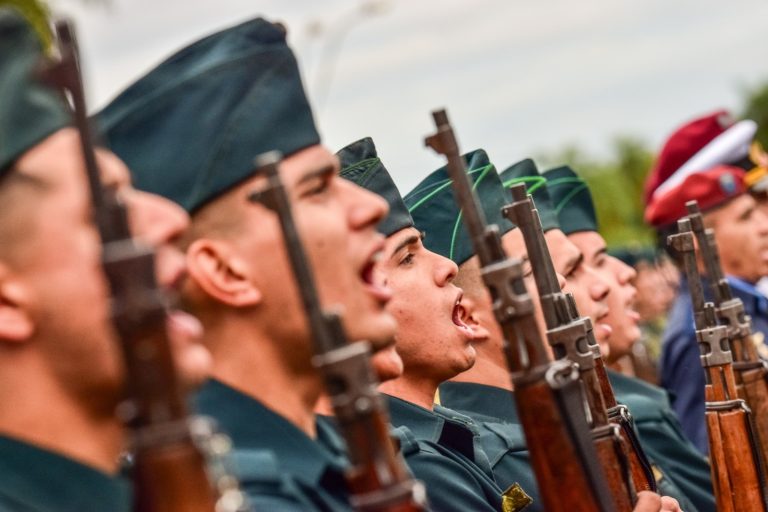

A solemn ceremony, led by Acting Paraguayan President Pedro Alliana, was held on Friday to commemorate the 91st anniversary of the signing of the Chaco Peace protocol. This historic agreement effectively ended the last major war in South America, which was fought between Paraguay and Bolivia. The commemoration honoured the Chaco War heroes ann veterans of the conflict, and reaffirmed the nation’s commitment to peace.
The 12th of June is one of the most significant dates in Paraguayan history, marking the end of the war fought in defence of the sovereignty of the Paraguayan Chaco. The conflict, which began in 1932, concluded with the signing of a ceasefire protocol on 12 June 1935. Consequently, this date is now observed in Paraguay as a national holiday for the ‘Peace of the Chaco’.
A historic day of remembrance

The main commemorative event took place in the early hours of the morning at the Cuartel de la Victoria, located in the Reducto area of the city of San Lorenzo. Vice President of the Republic, Pedro Alliana, acting as President, led the tribute to the heroes of the war. Many of their remains are interred at the ‘Defensores del Chaco’ Memorial, which was erected within the barracks.
Amidst the sound of martial hymns that have been part of Paraguay’s combative tradition since the war, Vice President Alliana ceremoniously laid a floral wreath on behalf of the Government. This act served as a poignant tribute to the soldiers who fought and sacrificed during the three-year conflict.
Honouring national heroes
The Minister of National Defence, Oscar González, spoke with the press about the importance of the date. He stressed the need to remember the sacrifices made for the nation’s sovereignty.
“We must always celebrate this historic date that marked the heroism of the Paraguayan soldier. We must honour our heroes, those who have already departed and the few who are still with us.”
In his remarks, González clarified that the protocol commemorated on this day brought an end to the battles in the Chaco territory. However, he noted that the final Peace Treaty was only reached in 1938 after several rounds of negotiations. This distinction highlights the long and complex process of securing a lasting peace following the cessation of hostilities.
The last surviving veterans
As part of the day’s commemorations, Minister González announced he would visit one of the two surviving Paraguayan veterans of the Chaco War. The visit was planned for Don Canuto González, who is 110 years old and lives in the city of Luque. This personal gesture underscores the government’s deep respect for the last living links to that historic conflict.
The other surviving veteran is Don Juan Bautista Cantero, aged 109, who resides in the Itakyry district. The continued presence of these Chaco War heroes provides a powerful, living connection to a pivotal period in the nation’s past, reminding current generations of the human cost of the war and the value of the peace that followed.
The legacy of the Victory Barracks
The commander of the Cuartel de la Victoria, Colonel Alen Eduardo Aguiar Cardozo, provided details about the memorial site. He explained that the ‘Defensores del Chaco’ Memorial, the scene of the commemoration, is the final resting place for the remains of 556 veterans. Among them, in a prominent location, lie the remains of the first Paraguayan casualty of the conflict, Lieutenant Adolfo Rojas Silva.
Colonel Aguiar Cardozo also explained the historical role of the barracks. After the war, the Cuartel de la Victoria was provided for the free use of Chaco veterans. Over time, an entire community formed around it, complete with homes, a school, and a church. This illustrates how the site served not only as a military installation but also as a centre of life for those who had served their country.
Chaco War heroes resided on the premises until 2017. Today, it is a space dedicated to memory and homage to the nation’s heroes. The memorial, described as ‘sacred ground where the heroes rest’, was inaugurated in 2015 and is regularly visited by student groups and the general public.