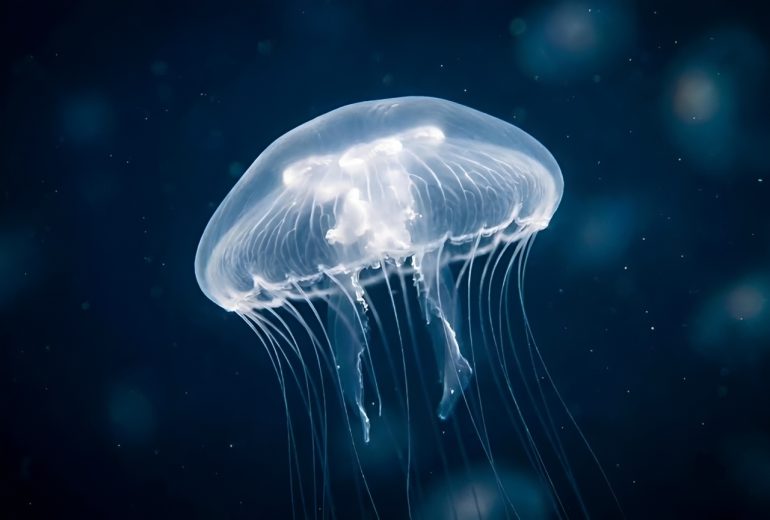

A species more commonly associated with lakes in Asia, Europe, and North America has now been officially recorded in Paraguay. Researchers recently confirmed the country’s first scientific record of a freshwater jellyfish. This finding marks a significant addition to Paraguay’s known aquatic biodiversity. The discovery was made in a flooded quarry in Ypacaraí by researcher Romina Melissa González de Dos Santos. The researcher is from the Faculty of Exact and Natural Sciences (FACEN) at the National University of Asunción.
Later, researchers published the findings in the scientific journal Ecosistemas, marking the first documented presence of the species Craspedacusta sowerbii in Paraguay.
A tiny jellyfish with a global reach
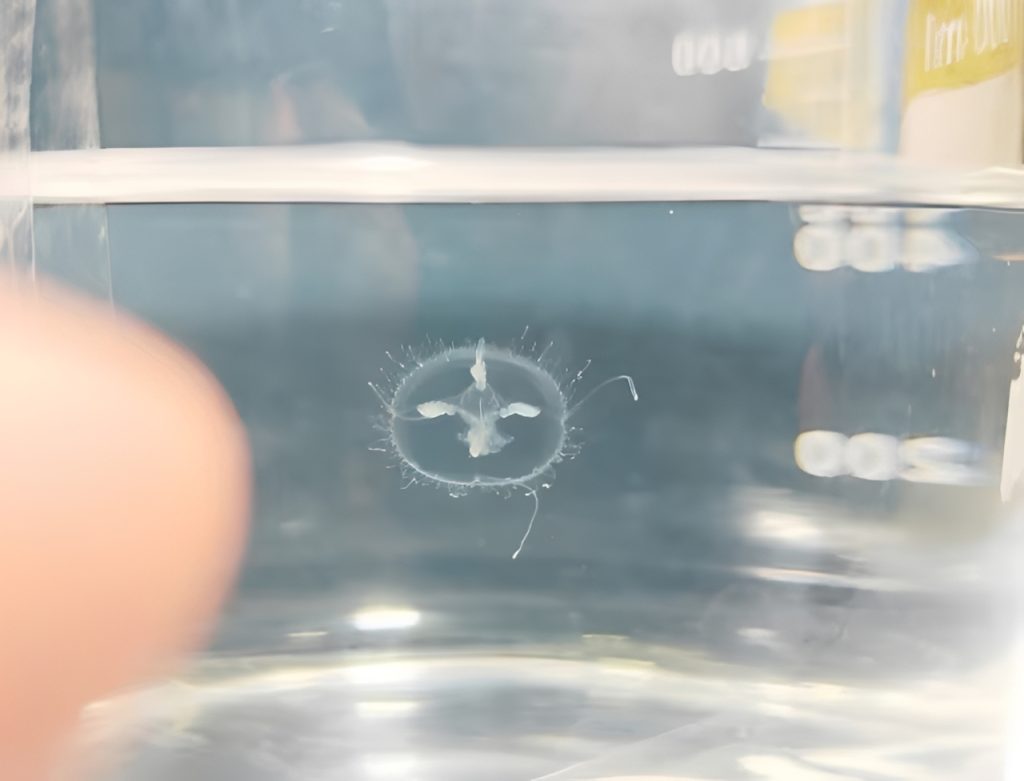
Unlike the large marine jellyfish often seen in oceans, Craspedacusta sowerbii is remarkably small. Adult specimens typically measure between one and 2.5 centimetres in diameter. Also, they have a nearly transparent bell-shaped body surrounded by fine tentacles.
Originally native to the Yangtze River basin in China, the species has spread across every continent except Antarctica. Scientists consider it one of the world’s most widespread freshwater invasive species, although many people remain unaware of its existence due to its small size and sporadic appearances.
Freshwater jellyfish most commonly inhabit ponds, reservoirs, quarries, and other slow-moving or still freshwater environments. The flooded quarry in Ypacaraí, where researchers collected the specimens, matches the type of habitat where scientists frequently record the species worldwide.
How did it arrive in Paraguay?
One of the most intriguing questions surrounding the discovery is how the species reached Paraguay. The quarry where it was found has no direct connection to nearby rivers or streams, making natural dispersal less likely. Researchers believe the species may have arrived accidentally through human activity. Tiny polyp stages or dormant structures can attach themselves to boats, diving equipment, aquatic plants, or other materials transported between water bodies. Once introduced, the species can remain undetected for years because the visible jellyfish stage appears only under specific environmental conditions.
This unusual life cycle is one reason freshwater jellyfish are often described as elusive. Most of their lives are spent as microscopic polyps attached to underwater surfaces. The familiar jellyfish form emerges only during certain periods, which explains why populations can suddenly appear and then seemingly vanish for years.
What does the discovery mean?
The discovery does not appear to pose a significant threat to humans. Freshwater jellyfish possess stinging cells used to capture microscopic prey; however, they are generally considered harmless to humans. Their diet consists mainly of zooplankton and other tiny aquatic organisms. Scientists are increasingly interested in their ecological role. Recent studies suggest that even relatively small populations can influence freshwater food webs by feeding on zooplankton, potentially affecting the balance of aquatic ecosystems.
For Paraguay, the finding is significant because it expands the country’s biodiversity records and opens new opportunities for research into freshwater ecosystems, invasive species, and environmental change.
Also explore Ypacaraí’s cultural charm, including the Lady of Good Counsel Church, a peaceful sanctuary set among Paraguay’s green fields.